Land Acquisition Guidance: Navigate Legal Procedures
Land Acquisition Guidance – Land acquisition affects landowners, businesses, institutions, NGOs, and NRIs across India. Government authorities acquire land for infrastructure and…
Land Acquisition Guidance – Land acquisition affects landowners, businesses, institutions, NGOs, and NRIs across India. Government authorities acquire land for infrastructure and public projects. However, acquisition proceedings must follow statutory requirements strictly. Therefore, affected parties should understand their rights before responding. The Right to Fair Compensation and Transparency in Land Acquisition, Rehabilitation and Resettlement Act, 2013 governs acquisitions. This legislation emphasizes fairness, compensation, rehabilitation, and transparency. Paramount Law House: Property Lawyers 24×7 assists clients throughout acquisition proceedings. Legal support helps identify procedural irregularities and compensation deficiencies. Moreover, professional guidance protects ownership interests effectively. Landowners should review notices, surveys, compensation assessments, and rehabilitation proposals carefully. Early legal intervention often prevents unnecessary disputes. Consequently, stakeholders can pursue lawful remedies and negotiate fair outcomes. Proper representation strengthens objections and safeguards valuable property rights during acquisition proceedings.
Land Acquisition Guidance: Navigate Legal Procedures – Paramount Law House
Key Stages in the Land Acquisition Process
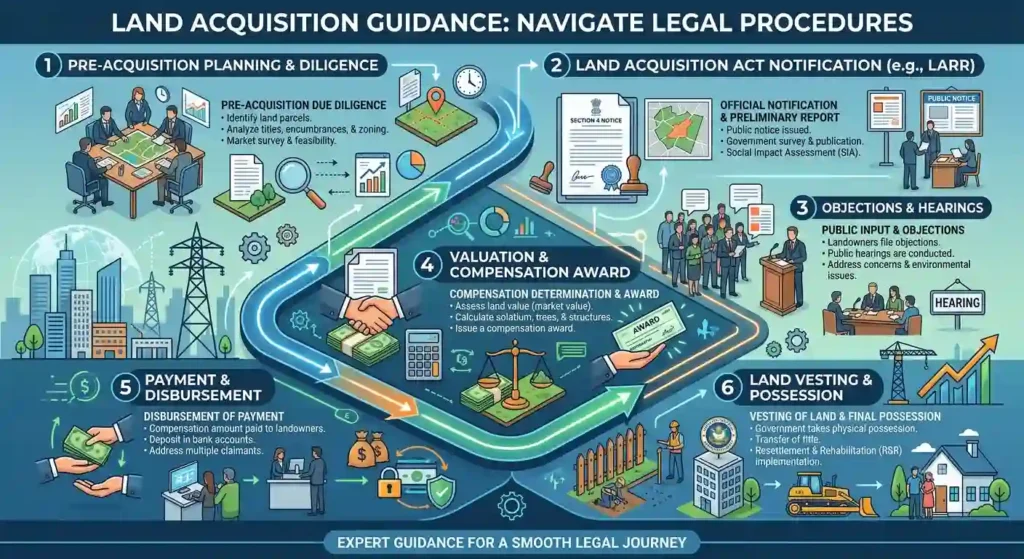
Land acquisition follows several statutory stages and procedural requirements. Authorities begin with notifications and preliminary investigations. Subsequently, officials conduct surveys and assess public purpose requirements. Interested parties receive opportunities to submit objections. Important acquisition stages include:
- Preliminary notification
- Social impact assessment
- Public hearings
- Objection consideration
- Declaration of acquisition
- Compensation determination
- Rehabilitation measures
Each stage carries important legal implications. Therefore, affected owners should monitor proceedings carefully. Procedural violations may provide grounds for legal challenges. Timely legal advice ensures compliance review and evidence preservation. Professional representation improves protection against arbitrary administrative actions and valuation errors.
Social Impact Assessment and Public Participation
Social Impact Assessment remains a crucial acquisition safeguard. Authorities evaluate social, economic, and environmental consequences before acquisition. Moreover, affected families receive opportunities to express concerns. Public participation promotes transparency and accountability throughout proceedings. Assessment factors include:
| Assessment Area | Purpose |
|---|---|
| Livelihood Impact | Economic protection |
| Social Effects | Community welfare |
| Environmental Impact | Sustainable development |
| Rehabilitation Needs | Resettlement planning |
| Public Purpose | Necessity evaluation |
Stakeholders should participate actively during consultations. Therefore, documented objections become valuable during future proceedings. Legal assistance ensures effective presentation of concerns and evidence. Proper participation strengthens protection against unjustified acquisition measures.
Compensation Rights Under Acquisition Laws
Fair compensation remains central to lawful acquisition proceedings. Authorities must determine compensation using statutory principles. Market value, assets, and rehabilitation benefits influence calculations. Furthermore, affected families may receive additional entitlements. Compensation components include:
- Market value assessment
- Solatium benefits
- Rehabilitation assistance
- Resettlement support
- Asset valuation
- Interest payments
Disputes frequently arise regarding valuation methodologies. Therefore, independent legal and valuation review remains advisable. Landowners should examine compensation awards carefully. Proper scrutiny often reveals calculation errors and omissions affecting final compensation amounts.
Common Legal Issues in Land Acquisition Matters
Acquisition disputes involve several recurring legal challenges. Incorrect valuation often triggers objections and litigation. Likewise, inadequate rehabilitation measures affect affected families significantly. Common legal issues include:
- Low compensation assessments
- Defective notifications
- Procedural violations
- Ownership disputes
- Rehabilitation disagreements
- Public purpose challenges
- Boundary disputes
These issues require strategic legal evaluation and representation. Moreover, documentary evidence often determines case outcomes. Paramount Law House assists clients in identifying viable legal grounds. Consequently, stakeholders can pursue effective remedies through appropriate forums and authorities.
Forums, Authorities and Jurisdiction in Acquisition Cases
Land acquisition matters involve administrative and judicial authorities. District Collectors often play significant roles during proceedings. Revenue departments supervise several acquisition stages. Additionally, courts review disputed acquisition decisions. Relevant authorities include:
| Authority | Function |
|---|---|
| District Collector | Acquisition administration |
| Revenue Department | Land records |
| State Government | Project approval |
| Civil Courts | Certain property disputes |
| High Courts | Writ jurisdiction |
| Supreme Court | Constitutional remedies |
Jurisdiction depends upon dispute nature and relief sought. Therefore, legal assessment remains essential before initiating proceedings. Proper forum selection improves procedural efficiency and litigation outcomes.
Legal Remedies Against Unlawful Acquisition
Affected parties possess several remedies against unlawful actions. Administrative representations may resolve issues during early stages. Courts can review procedural irregularities and jurisdictional errors. Furthermore, compensation disputes may require formal adjudication. Available remedies include:
- Objections before authorities
- Review applications
- Compensation enhancement claims
- Writ petitions
- Civil proceedings
- Appeals before competent forums
Timely action remains essential because limitation periods apply. Therefore, stakeholders should seek legal guidance immediately after receiving notices. Early intervention strengthens available legal remedies and procedural protections.
CPC, BNS, BNSS and BSA in Property Disputes
Property disputes sometimes involve fraud and criminal misconduct allegations. Civil proceedings generally follow the Code of Civil Procedure, 1908. Fraudulent documentation may attract provisions under the Bharatiya Nyaya Sanhita, 2023. Investigation procedures follow the Bharatiya Nagarik Suraksha Sanhita, 2023. Electronic evidence gains recognition under the Bharatiya Sakshya Adhiniyam, 2023. Important issues include:
- Forged title documents
- Land record manipulation
- Fraudulent transactions
- Digital evidence disputes
- Misrepresentation claims
Proper legal analysis determines suitable civil and criminal remedies. Consequently, stakeholders receive broader protection against unlawful conduct affecting property rights.
Police Complaints and Property Fraud Investigations
Certain acquisition disputes reveal fraudulent activities requiring criminal investigation. Forged records may affect ownership verification and compensation rights. Moreover, impersonation and fraudulent claims create additional complications. Nearby police stations and specialized units may investigate such matters. Common criminal concerns include:
- Forgery
- Cheating
- Criminal breach of trust
- Identity misuse
- Record tampering
Lawyers coordinate with investigating authorities effectively. Therefore, clients can protect ownership rights while pursuing compensation claims. Strong evidence preservation remains crucial during parallel civil and criminal proceedings.
Why Paramount Law House: Property Lawyers 24×7 Matters
Land acquisition proceedings involve substantial legal and financial consequences. Property owners often face complex procedures and technical documentation. However, informed legal guidance improves decision-making significantly. Paramount Law House: Property Lawyers 24×7 provides comprehensive acquisition support. Services include title verification, compensation review, objection preparation, negotiations, litigation, and appeals. Furthermore, our team evaluates procedural compliance and statutory protections carefully. We represent individuals, companies, NGOs, institutions, and NRIs across acquisition matters. Strategic advocacy strengthens compensation claims and legal challenges. Consequently, clients secure stronger protection for valuable property interests. Professional legal support helps navigate acquisition procedures confidently while pursuing fair compensation, rehabilitation benefits, and lawful remedies under applicable property and acquisition laws.
Frequently Asked Questions
Q1. What law governs land acquisition in India?
The Right to Fair Compensation and Transparency in Land Acquisition, Rehabilitation and Resettlement Act, 2013 primarily governs acquisitions.
Q2. Can I challenge a land acquisition notification?
Yes. Affected parties may file objections, representations, or judicial challenges depending upon circumstances and legal grounds.
Q3. How is compensation calculated during acquisition?
Authorities consider market value, solatium, assets, rehabilitation benefits, and statutory entitlements under applicable provisions.
Q4. What if compensation offered appears inadequate?
Landowners may seek review, enhancement, objections, or judicial remedies against unfair valuation assessments.
Q5. Can NRIs challenge acquisition proceedings affecting inherited property?
Yes. NRIs possess legal rights to contest acquisitions, compensation assessments, and procedural violations through authorized representation.
Q6. When should I consult a property lawyer?
Consult immediately after receiving acquisition notices, compensation awards, ownership disputes, or rehabilitation-related communications.
Read More
- Land Development Joint Venture Agreement Review: Legal Expertise
- Land Fraud Prevention: Safeguard Your Property Rights
- Land Grabbing Complaint Resolution: Legal Assistance
- Land Purchase Legal Opinion: Expert Advice for Informed Decisions
- Land Sub-division Services: Regulatory Compliance Assurance
- Department of Land Resources (DoLR), Ministry of Rural Development