Land Development Joint Venture Agreement Review: Legal Expertise
Land development joint venture agreement help landowners and developers combine resources for profitable projects. Therefore, careful legal review remains essential before execution….
Land development joint venture agreement help landowners and developers combine resources for profitable projects. Therefore, careful legal review remains essential before execution. These agreements define ownership rights, development obligations, revenue sharing, approvals, and dispute mechanisms. Moreover, poorly drafted clauses often create litigation and financial losses. Landowners must verify title records, encumbrances, zoning compliance, and development permissions. Developers should evaluate project feasibility and regulatory requirements. Consequently, legal due diligence protects both parties. Applicable laws include the Transfer of Property Act, Registration Act, Real Estate regulations, CPC, BNS, BNSS, and BSA. Regulatory departments may include revenue authorities, planning authorities, and registration offices. Professional legal assistance identifies risks and strengthens contractual protections. Proper review ensures enforceability and reduces future disputes.
Land Development Joint Venture Agreement Review: Legal Expertise – Paramount Law House
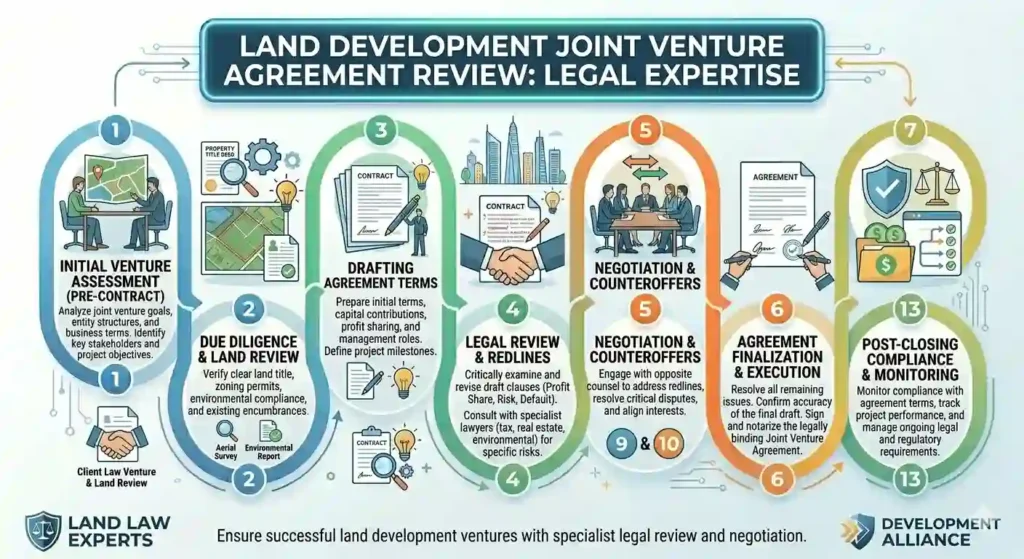
| Key Aspect | Purpose |
|---|---|
| Title Verification | Ownership Confirmation |
| Revenue Sharing | Profit Allocation |
| Approvals | Regulatory Compliance |
| Dispute Clause | Conflict Resolution |
Importance of Legal Review Before Signing
A joint venture agreement creates significant legal and financial obligations. Therefore, parties should never sign without professional review. Lawyers examine ownership documents, approval requirements, and commercial terms carefully. Additionally, they identify ambiguous clauses and hidden liabilities. Development projects often involve substantial investments and long timelines. Consequently, contractual clarity becomes crucial. Legal review also ensures compliance with local planning regulations and land-use restrictions. Well-drafted agreements reduce uncertainty and protect stakeholder interests. Professional scrutiny helps prevent costly disputes and project delays. Furthermore, early legal intervention improves negotiation outcomes and strengthens contractual balance.
Common Legal Issues in Joint Venture Projects
Land development ventures often face complex legal challenges. Ownership disputes, title defects, and encumbrances frequently affect project viability. Moreover, disagreements may arise regarding construction obligations and profit distribution. Delays in approvals can create additional financial burdens. Therefore, parties should address foreseeable risks through contractual safeguards. Environmental clearances and zoning compliance also require attention. Consequently, legal review becomes a critical risk-management measure. Lawyers evaluate existing disputes, pending litigation, and regulatory concerns before project commencement. Effective planning reduces exposure to legal complications and financial losses.
Due Diligence and Title Verification
Due diligence forms the foundation of every successful land development venture. Lawyers verify ownership records and identify potential defects. Furthermore, title investigations reveal mortgages, liens, and encumbrances affecting the property.
Essential Due Diligence Tasks
- Title verification
- Encumbrance review
- Revenue record examination
- Litigation search
- Zoning verification
Therefore, parties gain confidence regarding ownership and legal status. Proper due diligence significantly reduces future disputes.
Regulatory Approvals and Government Compliance
Development projects require several statutory approvals. Authorities assess zoning, environmental, and construction compliance before granting permissions. Moreover, local planning bodies monitor development activities carefully. Therefore, parties must understand regulatory obligations before execution. Legal advisors review approval requirements and compliance timelines. Consequently, projects proceed with reduced regulatory risk.
Common Authorities
- Revenue Department
- Registration Department
- Planning Authority
- Municipal Authority
- Environmental Authority
Revenue Sharing and Commercial Terms
Revenue sharing remains a central component of every joint venture arrangement. Parties must define allocation formulas and payment schedules clearly. Furthermore, agreements should address escalation costs and unexpected expenses. Therefore, legal drafting must eliminate ambiguity. Transparent commercial terms help maintain business relationships and prevent disputes. Consequently, stakeholders gain certainty regarding financial expectations.
Essential Clauses in Joint Venture Agreements
Strong agreements contain detailed provisions addressing project risks and responsibilities. Therefore, lawyers carefully evaluate every contractual clause. Ownership rights, obligations, approvals, and timelines require clear drafting. Moreover, agreements should include force majeure and termination provisions. Well-structured clauses reduce uncertainty and strengthen enforceability. Consequently, parties achieve better legal protection throughout project execution.
Dispute Resolution and Jurisdiction Clauses
Disputes may arise despite careful planning. Therefore, agreements should establish effective resolution mechanisms. Arbitration, mediation, and court proceedings offer different remedies. Furthermore, jurisdiction clauses determine appropriate forums for legal action. Proper drafting reduces procedural complications and forum disputes. Consequently, parties resolve conflicts more efficiently.
| Dispute Type | Forum |
|---|---|
| Contract Dispute | Civil Court |
| Commercial Dispute | Commercial Court |
| Property Conflict | Civil Court |
| Regulatory Issue | Tribunal or Authority |
Remedies for Breach of Agreement
Legal remedies protect parties against contractual violations. Courts may grant injunctions, damages, specific performance, and declaratory relief. Moreover, agreements often provide contractual remedies and compensation mechanisms. Therefore, parties should understand enforcement rights before execution. Lawyers assess available remedies and recommend appropriate action. Consequently, affected stakeholders can protect commercial interests effectively.
Courts, Tribunals and Legal Proceedings
Land development disputes may reach several forums. Civil courts address contractual and property-related claims. Additionally, commercial courts hear qualifying commercial disputes. Certain matters may proceed before land authorities and regulatory tribunals. Therefore, jurisdiction analysis remains important. The Code of Civil Procedure governs civil proceedings and enforcement. Electronic evidence receives recognition under the Bharatiya Sakshya Adhiniyam, 2023. Consequently, documentation and record preservation become critical. Legal representation helps parties navigate procedural requirements effectively.
Impact of BNS, BNSS and BSA on Land Disputes
Certain land disputes involve allegations of fraud, forgery, or cheating. Therefore, criminal provisions may become relevant. The Bharatiya Nyaya Sanhita, 2023 addresses fraudulent conduct and property-related offences. Furthermore, the Bharatiya Nagarik Suraksha Sanhita, 2023 governs investigations and prosecutions. Police stations and investigating agencies may examine criminal complaints. Consequently, coordinated legal strategies become essential. Lawyers manage both civil and criminal proceedings effectively. Proper legal guidance protects rights and minimizes risks.
Legal Support for Landowners and Developers
Landowners and developers require tailored legal support throughout project lifecycles. Lawyers assist with due diligence, negotiations, drafting, and dispute management. Moreover, legal professionals review approvals and compliance obligations carefully. Therefore, stakeholders avoid costly errors and contractual weaknesses. Strategic legal assistance promotes smoother project execution. Consequently, parties achieve stronger commercial and legal outcomes.
Why Choose Paramount Law House
Paramount Law House provides comprehensive support for land development joint venture matters. The firm assists landowners, developers, investors, companies, NGOs, and NRIs. Furthermore, lawyers conduct title verification, agreement review, and dispute resolution services. Clients receive practical advice based on legal and commercial considerations. Therefore, projects proceed with greater certainty and protection. Professional representation helps safeguard investments and contractual rights effectively.
Benefits of Professional Agreement Review
Professional review strengthens contractual certainty and reduces litigation risks. Lawyers identify hidden liabilities, compliance issues, and drafting deficiencies. Moreover, legal analysis improves negotiation leverage and project security. Properly reviewed agreements provide clarity regarding obligations and remedies. Therefore, stakeholders gain confidence before committing resources. Strategic legal support also promotes long-term project success. Consequently, parties protect investments and minimize avoidable disputes.
Frequently Asked Questions
Q1. Why should a joint venture agreement undergo legal review?
Legal review identifies risks, protects ownership rights, clarifies obligations, and improves enforceability before project commencement.
Q2. What documents require verification before signing?
Title deeds, encumbrance certificates, revenue records, approvals, litigation records, and ownership documents require review.
Q3. Can a landowner claim remedies for developer breaches?
Yes. Courts may grant damages, injunctions, specific performance, and other contractual remedies where justified.
Q4. Which courts handle joint venture disputes?
Civil courts, commercial courts, tribunals, and regulatory authorities may handle disputes depending upon circumstances.
Q5. How does due diligence benefit stakeholders?
Due diligence identifies ownership defects, encumbrances, litigation risks, and compliance concerns before execution.
Q6. Can criminal proceedings arise from land development disputes?
Yes. Fraud, forgery, cheating, and related allegations may attract action under applicable criminal laws.
Read More
- Land Fraud Prevention: Safeguard Your Property Rights
- Land Grabbing Complaint Resolution: Legal Assistance
- Landlord-Tenant Issue Resolution: Legal Support Available
- Land Purchase Legal Opinion: Expert Advice for Informed Decisions
- Land Sub-division Services: Regulatory Compliance Assurance
- Ministry of Housing and Urban Affairs