Rent Recovery Services: Effective Solutions for Your Needs
Rent Recovery Services – Rent arrears can seriously affect landlords, businesses, and property investors. Prompt legal action can protect rental income and…
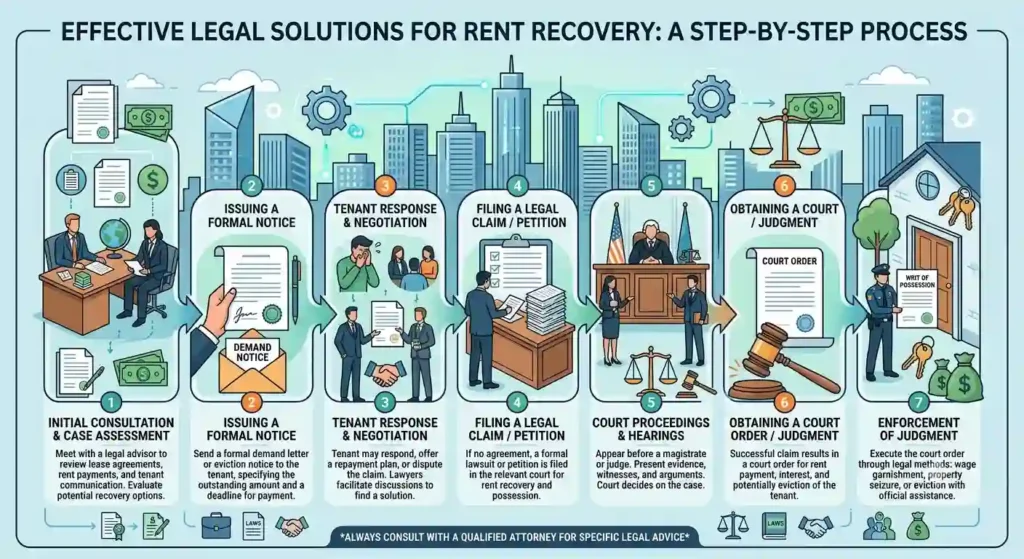
Rent Recovery Services – Rent arrears can seriously affect landlords, businesses, and property investors. Prompt legal action can protect rental income and prevent prolonged occupation without payment. In Tamil Nadu, the Tamil Nadu Regulation of Rights and Responsibilities of Landlords and Tenants Act, 2017 regulates covered tenancies. The Act provides a framework balancing landlord and tenant rights while facilitating dispute resolution. Therefore, landlords should first examine the tenancy agreement and applicable statutory provisions. Lawyers can calculate arrears, verify payment records, and identify contractual defaults. Additionally, counsel can issue a legally appropriate rent recovery notice. The notice should state outstanding rent, applicable interest, and compliance requirements. Supporting documents should include agreements, receipts, bank statements, and communications. Furthermore, lawyers can negotiate payment plans when settlement remains commercially sensible. If negotiations fail, appropriate proceedings can follow before the competent Rent Authority or court. Paramount Law House provides structured rent recovery assistance for residential and commercial properties across Tamil Nadu.
Rent Recovery Services: Effective Solutions for Your Needs – Paramount Law House
Examine the Tenancy Agreement Carefully
A tenancy agreement provides the starting point for determining rent recovery rights and obligations. Lawyers should examine rent amounts, payment dates, security deposits, renewal terms, termination clauses, and default provisions. They should also verify maintenance responsibilities, utility payments, subletting restrictions, and permitted property use. Tamil Nadu’s tenancy framework requires covered tenancy agreements to follow statutory registration requirements. The official tenancy portal states that tenancy agreements should be written and registered with the Rent Authority. Consequently, landlords should maintain properly documented tenancy records. Any mismatch between the agreement and actual payments requires careful reconciliation. Bank statements can establish payment history and outstanding balances. Moreover, text messages, emails, receipts, and notices can support factual assertions. Lawyers can identify clauses supporting recovery, termination, possession, or compensation. Where agreements contain unclear provisions, statutory requirements may influence interpretation. Therefore, professional review can prevent landlords from pursuing unsuitable remedies. A well-documented tenancy strengthens the legal position and facilitates faster resolution of genuine rent disputes.
Calculate Arrears and Other Recoverable Amounts
Accurate calculation remains essential before demanding rent arrears from a tenant. The calculation should identify every unpaid month and distinguish rent from other contractual charges. Security deposits should not automatically receive adjustment without reviewing the agreement and applicable law. Lawyers can prepare a detailed arrears statement showing payment dates and outstanding balances. This statement can support notices, pleadings, settlement negotiations, and evidence. Additionally, interest claims require contractual or statutory justification. Unauthorised occupation may create separate claims depending upon applicable law and circumstances. Utility charges, maintenance dues, and repair costs require separate contractual examination. Therefore, landlords should avoid combining unsupported amounts into one demand. A transparent calculation can encourage settlement and reduce factual disputes. Furthermore, accurate accounting helps courts or authorities understand the precise financial claim. Paramount Law House can review ledgers, bank entries, receipts, and agreements before commencing proceedings. Professional calculation therefore improves both negotiation credibility and litigation readiness.
Send a Strong Rent Demand Notice
A rent demand notice can provide an important opportunity for voluntary payment before formal proceedings. The notice should clearly identify the tenancy, property, outstanding amount, and relevant contractual breach. It should also provide appropriate payment instructions and a reasonable response period. Lawyers should avoid inaccurate threats or unsupported criminal allegations. Instead, the notice should focus on contractual and statutory rights. Moreover, counsel can reserve appropriate remedies for continued default. The notice may also address termination when the agreement or applicable law permits it. Evidence of delivery should remain carefully preserved. Registered post, recognised electronic communication, or other legally appropriate methods may establish communication. Therefore, landlords should maintain the notice, delivery proof, and tenant response together. A carefully drafted demand can encourage payment without unnecessary litigation. However, urgent possession or serious misconduct may require faster legal intervention. Paramount Law House can draft rent recovery notices tailored to residential, commercial, and business tenancy circumstances.
Pursue Recovery Through the Correct Forum
Forum selection directly affects the effectiveness of rent recovery proceedings. Tamil Nadu’s 2017 tenancy framework created Rent Authorities and related dispute-resolution mechanisms for covered tenancies. Therefore, lawyers should determine whether the tenancy falls within that statutory framework. Certain disputes may require proceedings before the Rent Authority or Rent Court. Other property disputes may proceed before competent civil courts under applicable law. The CPC provides the general procedural framework for civil court proceedings. Consequently, counsel should examine jurisdiction, limitation, valuation, pleadings, and available remedies. Chennai matters may involve local Rent Authorities, civil courts, or the Madras High Court on appropriate issues. Appeals and revisions depend upon the governing statute and order challenged. Furthermore, constitutional remedies may arise in exceptional circumstances. Lawyers should avoid filing before an unsuitable forum merely because it appears convenient. Correct forum selection can prevent dismissal, delay, and unnecessary legal expenditure.
Rent Recovery Litigation, Possession and Legal Remedies
Resolve Residential Rent Arrears
Residential rent disputes can arise from persistent non-payment, delayed payments, disputed deductions, or unauthorised occupation. Landlords should first verify whether the tenant has actually defaulted under the agreement. Payment records may reveal partial transfers or adjustments requiring proper accounting. Additionally, landlords should examine whether the tenant claims defects, repairs, or other contractual reasons for withholding rent. Such claims require factual and legal assessment rather than immediate rejection. Lawyers can send notices and attempt structured settlement before formal proceedings. However, repeated default may justify stronger legal action under the applicable tenancy framework. The Tamil Nadu Government describes the 2017 Act as balancing landlord and tenant interests while providing fast dispute adjudication. Therefore, timely action can prevent arrears from accumulating. Counsel can assist with rent statements, notices, authority proceedings, settlement, and possession-related remedies. Where disputes become complex, appropriate civil proceedings may remain necessary. Professional rent recovery services help landlords protect income while following lawful procedures.
Recover Commercial and Business Rent
Commercial rent disputes can involve offices, shops, warehouses, factories, and other business premises. Unpaid rent can create substantial cash-flow problems for property owners. Commercial agreements often contain detailed provisions concerning escalation, maintenance, taxes, deposits, renewal, and default. Consequently, lawyers should review every contractual obligation before calculating the claim. Business tenants may also dispute invoices, service charges, fit-out obligations, or lock-in periods. These issues require separate contractual interpretation. Furthermore, commercial property disputes may involve company directors, guarantors, licensees, or sub-tenants. Counsel should identify every legally relevant party before issuing proceedings. Appropriate forums depend upon the tenancy statute, agreement, property location, and dispute character. The CPC provides procedures for civil suits, interim relief, evidence, judgments, and execution. Therefore, commercial landlords should prepare comprehensive documentary evidence. Paramount Law House can assist with notices, negotiation, recovery proceedings, possession claims, and settlement strategy for commercial landlords.
Address Security Deposit Disputes
Security deposits frequently become contentious when a tenancy ends with outstanding rent or alleged property damage. Landlords should distinguish legitimate deductions from unsupported claims. The tenancy agreement should explain deposit purpose, adjustment rights, refund timelines, and permissible deductions. Lawyers can compare the agreement with payment records and property-condition evidence. Photographs, inspection reports, repair invoices, and correspondence may support legitimate deductions. Conversely, tenants can challenge unreasonable or undocumented deductions. Therefore, both parties benefit from maintaining detailed property records. A landlord should not automatically treat the entire deposit as rent without legal justification. Similarly, tenants should not assume that deposit payment eliminates all outstanding liabilities. Furthermore, the statutory tenancy framework may affect rights and obligations in covered tenancies. Lawyers can negotiate settlement where the parties prefer an economical resolution. If settlement fails, the appropriate authority or court can determine disputed claims. Paramount Law House assists with deposit disputes, rent reconciliation, notices, settlements, and related tenancy proceedings.
Handle Eviction and Possession Proceedings
Rent recovery often accompanies disputes concerning termination and possession of leased premises. Landlords should distinguish simple rent default from legally established grounds for recovery of possession. The applicable tenancy law and agreement determine available termination and possession remedies. Therefore, counsel should examine notice requirements before initiating proceedings. Improper termination can create avoidable procedural objections. Lawyers can prepare pleadings addressing default, termination, possession, arrears, and consequential relief. Interim orders may become relevant when property faces illegal transfer, damage, or interference. The CPC provides mechanisms concerning temporary injunctions and other civil procedural relief. Additionally, execution proceedings become important after obtaining an enforceable possession order. Landlords should not resort to forcible eviction or unlawful disconnection of essential services. Such conduct can create separate legal consequences. Instead, lawful possession procedures should be followed through the competent forum. Paramount Law House provides legal support for eviction strategy, rent recovery, possession proceedings, and execution of orders.
Prevent Unlawful Tenant Occupation
Unauthorised occupation can continue when tenants remain after contractual or statutory rights expire. Landlords should first establish the legal status of the occupant. The occupant might remain as a tenant, licensee, sub-tenant, caretaker, or unauthorised possessor. Each category can create different legal consequences. Therefore, lawyers should examine agreements, correspondence, payment history, and possession documents. A landlord should avoid changing locks or removing belongings without lawful authority. Such actions can create additional disputes and potential criminal allegations. BNS may become relevant where facts disclose genuine offences, while BNSS governs criminal procedure. The official India Code records BNSS as the current criminal procedure statute from 1 July 2024. However, rent disputes ordinarily require careful civil or tenancy-law analysis. Lawyers can pursue possession through the competent forum and seek appropriate interim protection. Evidence should establish the tenancy’s commencement, termination, and continuing occupation. Prompt legal intervention can prevent unauthorised occupation from becoming increasingly difficult to resolve.
Manage Tenant Default and Breach
Tenant default can involve unpaid rent, unauthorised subletting, property damage, prohibited use, or other contractual breaches. Each breach requires separate legal analysis before action begins. Lawyers should identify the relevant agreement clause and applicable statutory provision. Evidence should establish the breach through documents, photographs, inspection reports, or communications. Furthermore, landlords should avoid exaggerated claims that weaken legitimate recovery proceedings. A measured notice can identify the breach and demand corrective action. Continued default may justify termination or proceedings where the law permits. The Tamil Nadu tenancy framework specifically aims to regulate landlord and tenant rights and responsibilities. Therefore, compliance with statutory procedures remains essential. Counsel can negotiate corrective undertakings when preserving the tenancy remains commercially desirable. Alternatively, landlords can pursue recovery and possession when continued occupation becomes untenable. Paramount Law House provides strategic representation for breach notices, rent recovery, possession, and related property disputes. Early legal assessment can prevent procedural errors.
Use Mediation for Faster Settlement
Mediation can resolve rent disputes without prolonged adversarial litigation when both parties remain willing. A neutral process can address arrears, payment schedules, possession dates, deposits, repairs, and future obligations. Lawyers can protect their client’s interests while negotiating practical settlement terms. However, settlement should accurately record every agreed obligation and deadline. A written settlement can reduce uncertainty concerning future enforcement. Additionally, mediation may preserve valuable landlord-tenant relationships for commercial properties. Where parties cannot agree, statutory or judicial proceedings can continue through the appropriate forum. Therefore, mediation should complement rather than replace necessary legal remedies. Counsel can calculate realistic settlement figures before negotiations begin. This helps clients understand their minimum acceptable outcome and litigation exposure. Furthermore, lawyers can identify tax, accounting, possession, and documentation consequences. Paramount Law House can represent landlords or tenants during structured settlement discussions. A professionally negotiated agreement may reduce legal costs and restore predictable rental income. Consequently, mediation can provide an efficient solution for suitable rent recovery disputes.
Prepare Strong Documentary Evidence
Rent recovery claims depend heavily upon reliable documentary evidence. Essential records can include the tenancy agreement, rent receipts, bank statements, notices, delivery proofs, and property photographs. Additional evidence may include emails, messages, maintenance invoices, inspection reports, and account statements. Digital communications require careful preservation because tenants or landlords may later dispute authenticity. The Bharatiya Sakshya Adhiniyam, 2023 provides the current general evidence framework. India Code identifies BSA alongside BNS and BNSS among the 2023 criminal-law enactments. Therefore, lawyers should preserve electronic evidence carefully when proceedings may involve it. Chronological organisation can make a rent claim easier to understand. Counsel should also separate admitted payments from disputed transactions. Furthermore, evidence should support each component of the financial demand. Strong documentation reduces factual disputes and improves negotiation credibility. Paramount Law House can audit tenancy records before issuing notices or filing proceedings. Early evidence review can reveal weaknesses and prevent unnecessary litigation.
Respond to Police and Criminal Complaints
Most rent recovery disputes primarily involve contractual or tenancy-law remedies. However, some cases may include allegations of trespass, intimidation, property damage, cheating, forgery, or other offences. Such allegations require separate legal assessment. The BNS provides the substantive criminal law, while BNSS provides criminal procedure. Police authorities may investigate genuine offences according to applicable law. Nevertheless, parties should not misuse criminal complaints to pressure opponents in ordinary rent disputes. Lawyers can assess whether allegations disclose a genuine criminal offence or remain essentially civil. They can also assist with complaints, responses, representations, and appropriate court proceedings. In Chennai, the relevant police station depends upon the property’s location and alleged incident. Therefore, parties should verify territorial police jurisdiction before approaching authorities. Legal counsel can coordinate civil and criminal strategies where the facts genuinely overlap. This approach protects property rights while avoiding unnecessary escalation. Paramount Law House offers representation concerning tenancy disputes involving related criminal allegations.
Execute Rent Recovery Orders
Obtaining an order does not always guarantee immediate receipt of outstanding rent. A successful landlord may need enforcement or execution proceedings after obtaining an enforceable decision. The CPC contains a comprehensive execution framework for civil decrees. The precise process depends upon the nature of the order and governing tenancy legislation. Lawyers can identify recoverable amounts and available enforcement mechanisms. They can also address objections raised by judgment debtors. Furthermore, possession orders may require separate procedural steps before actual recovery. Accurate computation remains essential during execution because payments can reduce outstanding liability. Counsel should maintain updated statements reflecting every payment and court-ordered amount. Where statutory authorities issue executable orders, their specific enforcement provisions must also be followed. Therefore, legal support should continue after judgment when necessary. Paramount Law House can assist with execution petitions, compliance, recovery calculations, possession implementation, and related objections. Effective post-order strategy converts legal success into practical financial recovery.
Protect Landlords Through Preventive Advice
Preventive tenancy advice can reduce future rent recovery disputes significantly. Landlords should use clear agreements containing rent, deposit, escalation, maintenance, default, termination, and possession clauses. They should also maintain registration and statutory compliance required under applicable Tamil Nadu tenancy law. The official tenancy portal states that covered agreements require registration with the Rent Authority. Property owners should verify tenant identity and retain appropriate supporting records. Periodic rent reconciliation can identify defaults before arrears become substantial. Furthermore, written communication should replace informal arrangements whenever important rights are discussed. Inspection records can document property condition throughout the tenancy. Lawyers can review proposed agreements before tenants take possession. This preventive approach reduces ambiguity and strengthens future enforcement. Paramount Law House provides tenancy agreement review, rent recovery planning, notices, dispute resolution, and litigation support. Therefore, landlords can manage rental properties with greater legal certainty and fewer avoidable disputes.
Protect Tenants Against Unlawful Recovery
Rent recovery law also protects tenants from unfair or unlawful landlord conduct. Tenants may face excessive demands, wrongful deductions, illegal eviction attempts, harassment, or improper interference with possession. Such conduct requires prompt legal assessment and documentary preservation. Tenants should retain agreements, receipts, bank records, notices, photographs, and communications. Lawyers can evaluate contractual rights and statutory protections before responding. Furthermore, tenants should avoid making unsupported allegations that could escalate the dispute. Negotiation can sometimes resolve genuine accounting differences quickly. However, serious unlawful conduct may require proceedings before the appropriate authority or court. Criminal remedies may arise only where facts disclose offences under applicable law. BNSS provides the current procedural framework for criminal matters from 1 July 2024. Civil and tenancy remedies remain distinct from criminal allegations. Paramount Law House can advise tenants regarding notices, deposit disputes, possession issues, rent claims, and lawful defence. Balanced legal representation helps ensure that both contractual rights and statutory protections receive proper consideration.
Secure Comprehensive Rent Legal Support
Paramount Law House provides practical legal assistance for landlords, tenants, property owners, and commercial occupants. Services can cover rent arrears, tenancy agreements, demand notices, eviction strategy, possession disputes, and settlement. Lawyers can also assist with Rent Authority proceedings, civil litigation, injunctions, appeals, and execution. Where relevant, counsel can coordinate property, registration, revenue, and criminal-law issues. The Tamil Nadu Government’s tenancy portal confirms the statutory framework governing landlord and tenant rights and dispute resolution. The CPC remains relevant to applicable civil proceedings and execution processes. BNS, BNSS, and BSA may become relevant where genuine criminal allegations arise. Therefore, each rent dispute requires fact-specific forum and remedy selection. Early legal advice can preserve evidence and prevent missed procedural requirements. Whether the matter involves one month’s arrears or prolonged commercial default, strategic action matters. Paramount Law House helps clients pursue lawful, efficient, and commercially practical rent recovery solutions.
Below is a concise, WordPress-ready article with the requested SEO/AEO structure and current Tamil Nadu tenancy framework. The Tamil Nadu Government states that the 2017 Act repealed the 1960 Rent Control Act and provides a fast adjudication framework.
Rent Recovery Services: Effective Solutions for Your Needs
Professional Rent Recovery and Tenancy Dispute Solutions
Recover Unpaid Rent Through Legal Strategy
Rent arrears can seriously affect landlords, businesses, and property investors. Prompt legal action can protect rental income and prevent prolonged occupation without payment. In Tamil Nadu, the Tamil Nadu Regulation of Rights and Responsibilities of Landlords and Tenants Act, 2017 regulates covered tenancies. The Act provides a framework balancing landlord and tenant rights while facilitating dispute resolution. (Tenancy) Therefore, landlords should first examine the tenancy agreement and applicable statutory provisions. Lawyers can calculate arrears, verify payment records, and identify contractual defaults. Additionally, counsel can issue a legally appropriate rent recovery notice. The notice should state outstanding rent, applicable interest, and compliance requirements. Supporting documents should include agreements, receipts, bank statements, and communications. Furthermore, lawyers can negotiate payment plans when settlement remains commercially sensible. If negotiations fail, appropriate proceedings can follow before the competent Rent Authority or court. Paramount Law House provides structured rent recovery assistance for residential and commercial properties across Tamil Nadu.
Examine the Tenancy Agreement Carefully
A tenancy agreement provides the starting point for determining rent recovery rights and obligations. Lawyers should examine rent amounts, payment dates, security deposits, renewal terms, termination clauses, and default provisions. They should also verify maintenance responsibilities, utility payments, subletting restrictions, and permitted property use. Tamil Nadu’s tenancy framework requires covered tenancy agreements to follow statutory registration requirements. The official tenancy portal states that tenancy agreements should be written and registered with the Rent Authority. Consequently, landlords should maintain properly documented tenancy records. Any mismatch between the agreement and actual payments requires careful reconciliation. Bank statements can establish payment history and outstanding balances. Moreover, text messages, emails, receipts, and notices can support factual assertions. Lawyers can identify clauses supporting recovery, termination, possession, or compensation. Where agreements contain unclear provisions, statutory requirements may influence interpretation. Therefore, professional review can prevent landlords from pursuing unsuitable remedies. A well-documented tenancy strengthens the legal position and facilitates faster resolution of genuine rent disputes.
Calculate Arrears and Other Recoverable Amounts
Accurate calculation remains essential before demanding rent arrears from a tenant. The calculation should identify every unpaid month and distinguish rent from other contractual charges. Security deposits should not automatically receive adjustment without reviewing the agreement and applicable law. Lawyers can prepare a detailed arrears statement showing payment dates and outstanding balances. This statement can support notices, pleadings, settlement negotiations, and evidence. Additionally, interest claims require contractual or statutory justification. Unauthorised occupation may create separate claims depending upon applicable law and circumstances. Utility charges, maintenance dues, and repair costs require separate contractual examination. Therefore, landlords should avoid combining unsupported amounts into one demand. A transparent calculation can encourage settlement and reduce factual disputes. Furthermore, accurate accounting helps courts or authorities understand the precise financial claim. Paramount Law House can review ledgers, bank entries, receipts, and agreements before commencing proceedings. Professional calculation therefore improves both negotiation credibility and litigation readiness.
Send a Strong Rent Demand Notice
A rent demand notice can provide an important opportunity for voluntary payment before formal proceedings. The notice should clearly identify the tenancy, property, outstanding amount, and relevant contractual breach. It should also provide appropriate payment instructions and a reasonable response period. Lawyers should avoid inaccurate threats or unsupported criminal allegations. Instead, the notice should focus on contractual and statutory rights. Moreover, counsel can reserve appropriate remedies for continued default. The notice may also address termination when the agreement or applicable law permits it. Evidence of delivery should remain carefully preserved. Registered post, recognised electronic communication, or other legally appropriate methods may establish communication. Therefore, landlords should maintain the notice, delivery proof, and tenant response together. A carefully drafted demand can encourage payment without unnecessary litigation. However, urgent possession or serious misconduct may require faster legal intervention. Paramount Law House can draft rent recovery notices tailored to residential, commercial, and business tenancy circumstances.
Pursue Recovery Through the Correct Forum
Forum selection directly affects the effectiveness of rent recovery proceedings. Tamil Nadu’s 2017 tenancy framework created Rent Authorities and related dispute-resolution mechanisms for covered tenancies. (Tenancy) Therefore, lawyers should determine whether the tenancy falls within that statutory framework. Certain disputes may require proceedings before the Rent Authority or Rent Court. Other property disputes may proceed before competent civil courts under applicable law. The CPC provides the general procedural framework for civil court proceedings. (India Code) Consequently, counsel should examine jurisdiction, limitation, valuation, pleadings, and available remedies. Chennai matters may involve local Rent Authorities, civil courts, or the Madras High Court on appropriate issues. Appeals and revisions depend upon the governing statute and order challenged. Furthermore, constitutional remedies may arise in exceptional circumstances. Lawyers should avoid filing before an unsuitable forum merely because it appears convenient. Correct forum selection can prevent dismissal, delay, and unnecessary legal expenditure.
Rent Recovery Litigation, Possession and Legal Remedies
Resolve Residential Rent Arrears
Residential rent disputes can arise from persistent non-payment, delayed payments, disputed deductions, or unauthorised occupation. Landlords should first verify whether the tenant has actually defaulted under the agreement. Payment records may reveal partial transfers or adjustments requiring proper accounting. Additionally, landlords should examine whether the tenant claims defects, repairs, or other contractual reasons for withholding rent. Such claims require factual and legal assessment rather than immediate rejection. Lawyers can send notices and attempt structured settlement before formal proceedings. However, repeated default may justify stronger legal action under the applicable tenancy framework. The Tamil Nadu Government describes the 2017 Act as balancing landlord and tenant interests while providing fast dispute adjudication. (Tenancy) Therefore, timely action can prevent arrears from accumulating. Counsel can assist with rent statements, notices, authority proceedings, settlement, and possession-related remedies. Where disputes become complex, appropriate civil proceedings may remain necessary. Professional rent recovery services help landlords protect income while following lawful procedures.
Recover Commercial and Business Rent
Commercial rent disputes can involve offices, shops, warehouses, factories, and other business premises. Unpaid rent can create substantial cash-flow problems for property owners. Commercial agreements often contain detailed provisions concerning escalation, maintenance, taxes, deposits, renewal, and default. Consequently, lawyers should review every contractual obligation before calculating the claim. Business tenants may also dispute invoices, service charges, fit-out obligations, or lock-in periods. These issues require separate contractual interpretation. Furthermore, commercial property disputes may involve company directors, guarantors, licensees, or sub-tenants. Counsel should identify every legally relevant party before issuing proceedings. Appropriate forums depend upon the tenancy statute, agreement, property location, and dispute character. The CPC provides procedures for civil suits, interim relief, evidence, judgments, and execution. (India Code) Therefore, commercial landlords should prepare comprehensive documentary evidence. Paramount Law House can assist with notices, negotiation, recovery proceedings, possession claims, and settlement strategy for commercial landlords.
Address Security Deposit Disputes
Security deposits frequently become contentious when a tenancy ends with outstanding rent or alleged property damage. Landlords should distinguish legitimate deductions from unsupported claims. The tenancy agreement should explain deposit purpose, adjustment rights, refund timelines, and permissible deductions. Lawyers can compare the agreement with payment records and property-condition evidence. Photographs, inspection reports, repair invoices, and correspondence may support legitimate deductions. Conversely, tenants can challenge unreasonable or undocumented deductions. Therefore, both parties benefit from maintaining detailed property records. A landlord should not automatically treat the entire deposit as rent without legal justification. Similarly, tenants should not assume that deposit payment eliminates all outstanding liabilities. Furthermore, the statutory tenancy framework may affect rights and obligations in covered tenancies. Lawyers can negotiate settlement where the parties prefer an economical resolution. If settlement fails, the appropriate authority or court can determine disputed claims. Paramount Law House assists with deposit disputes, rent reconciliation, notices, settlements, and related tenancy proceedings.
Handle Eviction and Possession Proceedings
Rent recovery often accompanies disputes concerning termination and possession of leased premises. Landlords should distinguish simple rent default from legally established grounds for recovery of possession. The applicable tenancy law and agreement determine available termination and possession remedies. Therefore, counsel should examine notice requirements before initiating proceedings. Improper termination can create avoidable procedural objections. Lawyers can prepare pleadings addressing default, termination, possession, arrears, and consequential relief. Interim orders may become relevant when property faces illegal transfer, damage, or interference. The CPC provides mechanisms concerning temporary injunctions and other civil procedural relief. (India Code) Additionally, execution proceedings become important after obtaining an enforceable possession order. Landlords should not resort to forcible eviction or unlawful disconnection of essential services. Such conduct can create separate legal consequences. Instead, lawful possession procedures should be followed through the competent forum. Paramount Law House provides legal support for eviction strategy, rent recovery, possession proceedings, and execution of orders.
Prevent Unlawful Tenant Occupation
Unauthorised occupation can continue when tenants remain after contractual or statutory rights expire. Landlords should first establish the legal status of the occupant. The occupant might remain as a tenant, licensee, sub-tenant, caretaker, or unauthorised possessor. Each category can create different legal consequences. Therefore, lawyers should examine agreements, correspondence, payment history, and possession documents. A landlord should avoid changing locks or removing belongings without lawful authority. Such actions can create additional disputes and potential criminal allegations. BNS may become relevant where facts disclose genuine offences, while BNSS governs criminal procedure. The official India Code records BNSS as the current criminal procedure statute from 1 July 2024. (India Code) However, rent disputes ordinarily require careful civil or tenancy-law analysis. Lawyers can pursue possession through the competent forum and seek appropriate interim protection. Evidence should establish the tenancy’s commencement, termination, and continuing occupation. Prompt legal intervention can prevent unauthorised occupation from becoming increasingly difficult to resolve.
Manage Tenant Default and Breach
Tenant default can involve unpaid rent, unauthorised subletting, property damage, prohibited use, or other contractual breaches. Each breach requires separate legal analysis before action begins. Lawyers should identify the relevant agreement clause and applicable statutory provision. Evidence should establish the breach through documents, photographs, inspection reports, or communications. Furthermore, landlords should avoid exaggerated claims that weaken legitimate recovery proceedings. A measured notice can identify the breach and demand corrective action. Continued default may justify termination or proceedings where the law permits. The Tamil Nadu tenancy framework specifically aims to regulate landlord and tenant rights and responsibilities. Therefore, compliance with statutory procedures remains essential. Counsel can negotiate corrective undertakings when preserving the tenancy remains commercially desirable. Alternatively, landlords can pursue recovery and possession when continued occupation becomes untenable. Paramount Law House provides strategic representation for breach notices, rent recovery, possession, and related property disputes. Early legal assessment can prevent procedural errors.
Use Mediation for Faster Settlement
Mediation can resolve rent disputes without prolonged adversarial litigation when both parties remain willing. A neutral process can address arrears, payment schedules, possession dates, deposits, repairs, and future obligations. Lawyers can protect their client’s interests while negotiating practical settlement terms. However, settlement should accurately record every agreed obligation and deadline. A written settlement can reduce uncertainty concerning future enforcement. Additionally, mediation may preserve valuable landlord-tenant relationships for commercial properties. Where parties cannot agree, statutory or judicial proceedings can continue through the appropriate forum. Therefore, mediation should complement rather than replace necessary legal remedies. Counsel can calculate realistic settlement figures before negotiations begin. This helps clients understand their minimum acceptable outcome and litigation exposure. Furthermore, lawyers can identify tax, accounting, possession, and documentation consequences. Paramount Law House can represent landlords or tenants during structured settlement discussions. A professionally negotiated agreement may reduce legal costs and restore predictable rental income. Consequently, mediation can provide an efficient solution for suitable rent recovery disputes.
Prepare Strong Documentary Evidence
Rent recovery claims depend heavily upon reliable documentary evidence. Essential records can include the tenancy agreement, rent receipts, bank statements, notices, delivery proofs, and property photographs. Additional evidence may include emails, messages, maintenance invoices, inspection reports, and account statements. Digital communications require careful preservation because tenants or landlords may later dispute authenticity. The Bharatiya Sakshya Adhiniyam, 2023 provides the current general evidence framework. India Code identifies BSA alongside BNS and BNSS among the 2023 criminal-law enactments. (India Code) Therefore, lawyers should preserve electronic evidence carefully when proceedings may involve it. Chronological organisation can make a rent claim easier to understand. Counsel should also separate admitted payments from disputed transactions. Furthermore, evidence should support each component of the financial demand. Strong documentation reduces factual disputes and improves negotiation credibility. Paramount Law House can audit tenancy records before issuing notices or filing proceedings. Early evidence review can reveal weaknesses and prevent unnecessary litigation.
Respond to Police and Criminal Complaints
Most rent recovery disputes primarily involve contractual or tenancy-law remedies. However, some cases may include allegations of trespass, intimidation, property damage, cheating, forgery, or other offences. Such allegations require separate legal assessment. The BNS provides the substantive criminal law, while BNSS provides criminal procedure. (India Code) Police authorities may investigate genuine offences according to applicable law. Nevertheless, parties should not misuse criminal complaints to pressure opponents in ordinary rent disputes. Lawyers can assess whether allegations disclose a genuine criminal offence or remain essentially civil. They can also assist with complaints, responses, representations, and appropriate court proceedings. In Chennai, the relevant police station depends upon the property’s location and alleged incident. Therefore, parties should verify territorial police jurisdiction before approaching authorities. Legal counsel can coordinate civil and criminal strategies where the facts genuinely overlap. This approach protects property rights while avoiding unnecessary escalation. Paramount Law House offers representation concerning tenancy disputes involving related criminal allegations.
Execute Rent Recovery Orders
Obtaining an order does not always guarantee immediate receipt of outstanding rent. A successful landlord may need enforcement or execution proceedings after obtaining an enforceable decision. The CPC contains a comprehensive execution framework for civil decrees. (India Code) The precise process depends upon the nature of the order and governing tenancy legislation. Lawyers can identify recoverable amounts and available enforcement mechanisms. They can also address objections raised by judgment debtors. Furthermore, possession orders may require separate procedural steps before actual recovery. Accurate computation remains essential during execution because payments can reduce outstanding liability. Counsel should maintain updated statements reflecting every payment and court-ordered amount. Where statutory authorities issue executable orders, their specific enforcement provisions must also be followed. Therefore, legal support should continue after judgment when necessary. Paramount Law House can assist with execution petitions, compliance, recovery calculations, possession implementation, and related objections. Effective post-order strategy converts legal success into practical financial recovery.
Protect Landlords Through Preventive Advice
Preventive tenancy advice can reduce future rent recovery disputes significantly. Landlords should use clear agreements containing rent, deposit, escalation, maintenance, default, termination, and possession clauses. They should also maintain registration and statutory compliance required under applicable Tamil Nadu tenancy law. The official tenancy portal states that covered agreements require registration with the Rent Authority. Property owners should verify tenant identity and retain appropriate supporting records. Periodic rent reconciliation can identify defaults before arrears become substantial. Furthermore, written communication should replace informal arrangements whenever important rights are discussed. Inspection records can document property condition throughout the tenancy. Lawyers can review proposed agreements before tenants take possession. This preventive approach reduces ambiguity and strengthens future enforcement. Paramount Law House provides tenancy agreement review, rent recovery planning, notices, dispute resolution, and litigation support. Therefore, landlords can manage rental properties with greater legal certainty and fewer avoidable disputes.
Protect Tenants Against Unlawful Recovery
Rent recovery law also protects tenants from unfair or unlawful landlord conduct. Tenants may face excessive demands, wrongful deductions, illegal eviction attempts, harassment, or improper interference with possession. Such conduct requires prompt legal assessment and documentary preservation. Tenants should retain agreements, receipts, bank records, notices, photographs, and communications. Lawyers can evaluate contractual rights and statutory protections before responding. Furthermore, tenants should avoid making unsupported allegations that could escalate the dispute. Negotiation can sometimes resolve genuine accounting differences quickly. However, serious unlawful conduct may require proceedings before the appropriate authority or court. Criminal remedies may arise only where facts disclose offences under applicable law. BNSS provides the current procedural framework for criminal matters from 1 July 2024. (India Code) Civil and tenancy remedies remain distinct from criminal allegations. Paramount Law House can advise tenants regarding notices, deposit disputes, possession issues, rent claims, and lawful defence. Balanced legal representation helps ensure that both contractual rights and statutory protections receive proper consideration.
Secure Comprehensive Rent Legal Support
Paramount Law House provides practical legal assistance for landlords, tenants, property owners, and commercial occupants. Services can cover rent arrears, tenancy agreements, demand notices, eviction strategy, possession disputes, and settlement. Lawyers can also assist with Rent Authority proceedings, civil litigation, injunctions, appeals, and execution. Where relevant, counsel can coordinate property, registration, revenue, and criminal-law issues. The Tamil Nadu Government’s tenancy portal confirms the statutory framework governing landlord and tenant rights and dispute resolution. The CPC remains relevant to applicable civil proceedings and execution processes. (India Code) BNS, BNSS, and BSA may become relevant where genuine criminal allegations arise. (India Code) Therefore, each rent dispute requires fact-specific forum and remedy selection. Early legal advice can preserve evidence and prevent missed procedural requirements. Whether the matter involves one month’s arrears or prolonged commercial default, strategic action matters. Paramount Law House helps clients pursue lawful, efficient, and commercially practical rent recovery solutions.
Frequently Asked Questions
What is rent recovery?
Rent recovery involves legally seeking unpaid rent and other valid contractual amounts from a defaulting tenant through notices, settlement, Rent Authority proceedings, courts, or other available remedies.
Can a landlord recover unpaid rent in Tamil Nadu?
Yes. Landlords can pursue eligible rent claims under applicable tenancy law and agreements. The correct forum and procedure depend upon the tenancy, property, dispute, and governing provisions.
Can a landlord evict a tenant for non-payment?
Potentially, subject to applicable law and agreement terms. Proper notice and prescribed proceedings remain important. Landlords should avoid self-help eviction and seek appropriate legal remedies.
What documents help prove rent arrears?
Important documents include the tenancy agreement, bank statements, receipts, rent ledger, notices, delivery proof, messages, emails, and relevant property records.
Can tenants challenge excessive rent demands?
Yes. Tenants can dispute unsupported arrears, improper deductions, or unlawful demands. They should preserve payment evidence and obtain legal advice before accepting or contesting the claim.
Where can rent disputes be resolved in Tamil Nadu?
Depending on the tenancy and dispute, matters may proceed before the Rent Authority, Rent Court, competent civil court, or appellate forum. Jurisdiction requires case-specific assessment.
Read More
- Property Purchase Agreement Legal Consultation: Expert Advice
- Property Document Verification Services: Ensure Accuracy
- Landlord Legal Support: Protect Your Rights Effectively
- Factory Monitoring Services: Compliance Assurance
- Document Legal Verification: Ensure Authenticity and Legitimacy
- Tamil Nadu Tenancy – Housing and Urban Development Department