DTCP Land Approval Services: Ensure Compliance and Approval
DTCP Land Approval Services – DTCP approval ensures planned development and lawful land utilization across Tamil Nadu. Therefore, Paramount Law House assists…
DTCP Land Approval Services – DTCP approval ensures planned development and lawful land utilization across Tamil Nadu. Therefore, Paramount Law House assists landowners, developers, investors, and buyers with comprehensive approval services. Directorate of Town and Country Planning regulates layouts outside Chennai Metropolitan Area limits. Proper approval reduces risks involving unauthorized layouts, title disputes, and construction restrictions. Moreover, DTCP compliance improves property value and buyer confidence. Our legal team examines ownership documents, planning permissions, revenue records, and development proposals. Additionally, we assist clients throughout application preparation and government coordination. Land approval involves multiple authorities, including local bodies, revenue departments, and planning offices. Strategic legal guidance helps avoid rejection, delays, and future litigation. Proper compliance creates secure opportunities for residential, commercial, and industrial developments.
DTCP Land Approval Services: Ensure Compliance and Approval – Paramount Law House
Legal Framework Governing DTCP Land Approvals
DTCP approvals operate under various planning laws, regulations, and government notifications. Accordingly, understanding the legal framework helps applicants avoid compliance failures. The Tamil Nadu Town and Country Planning Act, 1971 provides the primary statutory foundation. Development control regulations govern layouts, zoning requirements, infrastructure standards, and planning permissions. Furthermore, the Real Estate (Regulation and Development) Act, 2016 impacts residential projects requiring registration and disclosures. The Registration Act, 1908 governs documentation and registration procedures involving land transactions. The Transfer of Property Act, 1882 regulates property transfers and ownership rights. Additionally, CPC principles apply during civil disputes involving land approvals. Legal professionals evaluate every requirement before submission. Proper compliance strengthens approval prospects and protects property interests.
Importance of DTCP Approved Layouts
DTCP approved layouts provide legal certainty for property buyers and developers. Therefore, investors should verify approval status before purchasing plots or initiating construction. Approved layouts confirm compliance with planning norms, road requirements, and public infrastructure provisions. Moreover, banks frequently consider approved layouts before granting property loans. Unapproved developments may create problems involving resale restrictions, building permissions, and ownership disputes. Paramount Law House conducts due diligence before clients enter land transactions. Our lawyers examine approval documents, parent deeds, encumbrance certificates, and government records. Additionally, we identify irregularities affecting property value or future development. Proper verification prevents financial losses and prolonged litigation. Secure land investments require careful legal evaluation before commitment.
DTCP Approval Process and Compliance Requirements
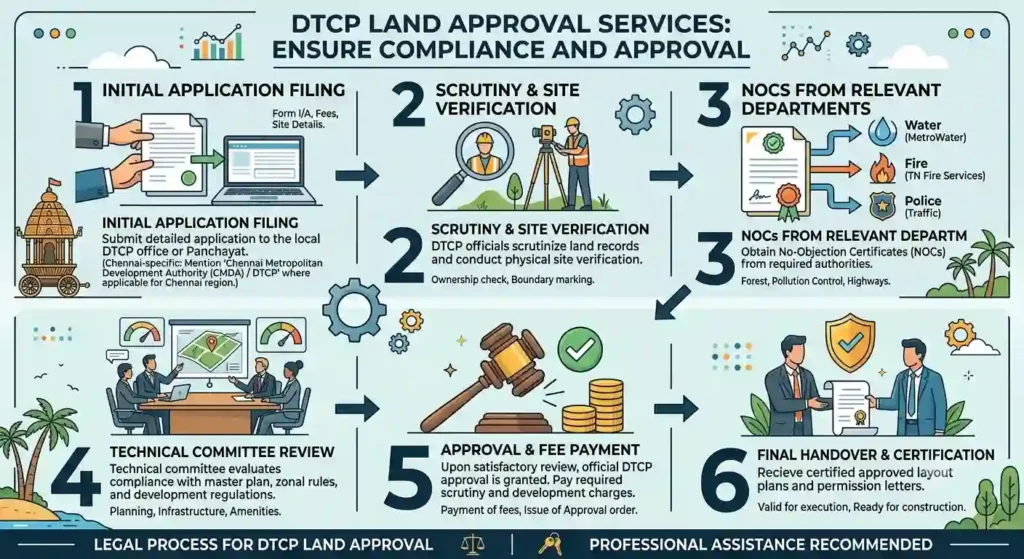
The DTCP approval process requires systematic preparation and coordination with relevant authorities. Therefore, applicants should understand each stage before submitting applications. The process includes document preparation, layout planning, technical review, inspection, and final approval. Moreover, compliance with zoning regulations remains essential throughout the procedure. Applicants must provide accurate ownership details and development proposals. Legal professionals assist with reviewing documents and addressing authority queries. Additionally, technical plans should satisfy applicable planning standards. Proper coordination reduces administrative delays and improves approval efficiency. Government authorities examine applications according to statutory requirements. Successful approval allows lawful development according to sanctioned plans.
| Approval Requirement | Purpose |
|---|---|
| Title documents | Verify ownership |
| Patta records | Confirm revenue details |
| Survey documents | Identify boundaries |
| Layout plan | Assess development |
| Encumbrance Certificate | Check liabilities |
| Tax receipts | Confirm compliance |
Essential Documents for DTCP Approval
Proper documentation forms the foundation of successful DTCP approval applications. Hence, applicants should collect necessary records before approaching planning authorities. Paramount Law House assists clients in reviewing and organizing required documents.
Important documents include:
- Sale deeds.
- Parent documents.
- Patta records.
- Chitta and Adangal records.
- Encumbrance Certificate.
- Survey sketches.
- FMB extracts.
- Layout drawings.
- Planning reports.
- Identity documents.
- Tax receipts.
- Previous approvals.
Additionally, lawyers verify document consistency before submission. Accurate records reduce objections raised by authorities. Legal review also identifies ownership issues before approval applications proceed. Complete documentation improves compliance and supports faster processing.
Common DTCP Approval Issues
Land approval matters frequently involve complex legal and administrative challenges. Accordingly, applicants require professional assistance before investing in properties.
Common issues include:
- Unapproved layouts.
- Title defects.
- Boundary disputes.
- Missing documents.
- Revenue record issues.
- Zoning violations.
- Unauthorized construction.
- Delayed approvals.
- Government land claims.
- Encroachment concerns.
Furthermore, lawyers examine records to identify potential risks before transactions. Early legal intervention prevents expensive disputes and protects property investments. Proper advice helps applicants choose suitable remedies and compliance strategies.
Role of Paramount Law House in DTCP Approval Services
Paramount Law House provides complete legal assistance for DTCP approval and land compliance matters. Therefore, our advocates support developers, landowners, investors, and buyers throughout approval procedures. We examine title documents, planning requirements, government records, and development proposals. Moreover, our team assists with representations before DTCP authorities and local planning bodies. Legal verification identifies risks involving ownership disputes, unauthorized layouts, and regulatory violations. Additionally, we coordinate with surveyors, architects, and relevant officials when required. Our services include approval review, legal opinions, document preparation, and dispute resolution. Proper legal guidance prevents delays and strengthens compliance before government authorities. Experienced representation protects property interests while supporting lawful development opportunities across Tamil Nadu.
DTCP and CMDA Jurisdiction Differences
Understanding jurisdiction remains essential because DTCP and CMDA govern different planning areas. Therefore, applicants must identify the correct authority before filing approval requests. DTCP generally regulates areas outside the Chennai Metropolitan Area. CMDA manages planning permissions within Chennai Metropolitan Area limits. Moreover, incorrect authority selection may cause unnecessary delays and application rejection. Lawyers evaluate property location, planning jurisdiction, and applicable regulations. Additionally, local bodies such as municipalities, corporations, and panchayats may have supporting roles. Proper jurisdiction analysis improves approval efficiency and legal compliance. Paramount Law House assists clients in selecting appropriate forums and authorities. Accurate identification of regulatory requirements prevents future disputes and enforcement issues.
Land Use Conversion and Development Permissions
Land use conversion plays an important role in DTCP approval procedures. Accordingly, applicants must verify whether proposed development matches permitted land classification. Agricultural lands may require conversion permissions before residential or commercial development. Furthermore, revenue records must reflect accurate land classification details. Authorities examine zoning restrictions, infrastructure availability, and environmental considerations. Legal professionals review conversion requirements before submitting applications. Additionally, unauthorized conversion may create penalties and construction restrictions. Proper compliance protects developers from regulatory actions and financial losses. Lawyers assist with applications, representations, and documentation before competent authorities. Effective planning ensures lawful utilization of land according to approved purposes.
Remedies for DTCP Approval Disputes
DTCP disputes require timely legal action to protect ownership and development rights. Therefore, property owners should seek professional advice when authorities reject or delay applications. Legal remedies depend upon facts, documents, and applicable regulations.
Available remedies include:
- Representation before DTCP authorities.
- Appeal against administrative decisions.
- Regularisation applications.
- Civil suits for property rights.
- Injunction proceedings.
- Title declaration suits.
- RERA complaints.
- High Court writ petitions.
- Mediation and settlement.
- Arbitration where applicable.
Moreover, CPC provisions guide civil litigation involving land disputes. Courts examine evidence according to legal principles under applicable laws. The BSA assists with documentary and electronic evidence requirements. Proper legal strategy improves chances of obtaining favourable relief.
DTCP Litigation Before Courts and Forums
Land approval disputes may require proceedings before different judicial and regulatory forums. Accordingly, choosing the correct forum remains important for effective remedies. Civil Courts handle title disputes, ownership claims, and injunction matters. High Courts may examine administrative decisions through writ jurisdiction. Furthermore, RERA Authorities address applicable real estate project disputes. The RERA Appellate Tribunal hears appeals against regulatory decisions. Additionally, arbitration may resolve contractual disputes between developers and buyers. Lawyers prepare pleadings, evidence, and legal arguments according to forum requirements. Proper representation protects client interests during complex proceedings. Strategic litigation ensures lawful enforcement of property rights.
| Forum | Matters Handled |
|---|---|
| Civil Court | Title and ownership disputes |
| High Court | Writ remedies |
| RERA Authority | Real estate complaints |
| RERA Tribunal | Appeals |
| DTCP Office | Approval matters |
| Local Bodies | Building permissions |
Criminal Issues in Fraudulent Land Transactions
Certain DTCP-related disputes may involve criminal elements requiring additional legal remedies. Therefore, lawyers examine allegations involving fraud, forgery, and cheating. Fake approval documents, forged deeds, and fraudulent representations may attract criminal proceedings. The BNS governs offences involving dishonest conduct and document-related crimes. The BNSS establishes procedures for investigation and criminal complaints. Police Stations may investigate cognizable offences involving fraudulent land transactions. Moreover, the BSA governs documentary and electronic evidence presented during proceedings. Legal professionals assess whether disputes involve civil issues or criminal misconduct. Balanced legal advice prevents misuse of criminal remedies while protecting genuine victims. Effective representation supports clients during investigations and court proceedings.
Due Diligence Before Purchasing DTCP Approved Land
Property due diligence prevents future disputes and financial complications. Hence, buyers should verify every legal aspect before purchasing approved or proposed layouts.
Due diligence checklist:
- Verify DTCP approval number.
- Examine title chain.
- Check Encumbrance Certificate.
- Confirm survey boundaries.
- Verify patta details.
- Review tax payments.
- Check litigation records.
- Confirm road access.
- Examine zoning restrictions.
- Obtain legal opinion.
Additionally, professional verification identifies hidden liabilities affecting property ownership. Careful evaluation protects buyers from unauthorized developments and fraudulent transactions. Legal due diligence creates confidence before investment decisions.
Construction Compliance After DTCP Approval
DTCP approval does not end legal obligations after land development begins. Therefore, owners and developers must follow sanctioned plans and construction regulations. Any deviation may create enforcement issues, penalties, or demolition risks. Moreover, local authorities monitor compliance with approved layouts and building permissions. Paramount Law House assists clients with construction-related legal guidance after approval. Our advocates review development agreements, contractor contracts, and regulatory requirements. Additionally, we advise clients regarding building permissions, completion certificates, and occupancy requirements. Proper compliance protects investments and prevents future disputes with authorities. Legal supervision ensures that construction activities remain consistent with approved plans. Timely advice also reduces risks involving buyers, regulatory bodies, and courts.
Government Authorities Connected With DTCP Matters
DTCP land approval involves coordination with multiple government departments and local authorities. Accordingly, applicants should understand each authority’s role before beginning procedures.
| Authority | Responsibility |
|---|---|
| Directorate of Town and Country Planning | Layout approvals |
| CMDA | Chennai Metropolitan planning |
| Local Municipal Bodies | Building permissions |
| Panchayat Authorities | Rural development approvals |
| Revenue Department | Land records |
| Registration Department | Property registration |
| RERA Authority | Real estate regulation |
Furthermore, government records play an important role during legal verification. Accurate coordination reduces procedural delays and approval objections. Lawyers assist clients with representations before appropriate departments. Effective communication improves compliance and protects property interests. Proper authority selection remains essential for successful land development.
Why Choose Paramount Law House for DTCP Services
Paramount Law House provides reliable legal solutions for DTCP approvals, land disputes, and property compliance matters. Therefore, our advocates assist clients throughout Tamil Nadu with practical legal strategies. We handle approval reviews, property due diligence, title verification, planning disputes, and court representation. Moreover, our team advises developers, investors, buyers, and landowners regarding regulatory obligations. We examine government records, ownership documents, and planning requirements carefully. Additionally, we represent clients before DTCP authorities, RERA forums, Civil Courts, and High Courts. Our legal services include documentation support, dispute resolution, and litigation assistance. Professional guidance helps clients avoid unnecessary risks and delays. Strong legal preparation ensures secure property transactions and compliant development.
DTCP Approval Service Checklist
| Service Area | Legal Support |
|---|---|
| Title verification | Ownership analysis |
| DTCP application | Documentation assistance |
| Layout approval | Planning compliance |
| Land disputes | Court representation |
| RERA issues | Regulatory support |
| Fraud matters | Criminal remedies |
| Legal opinion | Risk assessment |
| Due diligence | Investment protection |
Frequently Asked Questions
Q1. What is DTCP approval for land?
DTCP approval confirms that a proposed layout complies with Tamil Nadu planning regulations, development standards, and lawful land use requirements.
Q2. Is DTCP approval mandatory for layouts?
Yes. Layouts outside CMDA areas generally require DTCP approval before lawful development and property transactions.
Q3. Can I purchase land without DTCP approval?
Purchasing unapproved land creates risks involving construction permissions, resale difficulties, loans, and future legal disputes.
Q4. Which documents are checked for DTCP approval?
Authorities examine title deeds, patta records, survey documents, encumbrance certificates, layout plans, and revenue records.
Q5. Can courts help in DTCP approval disputes?
Yes. Civil Courts and High Courts may provide remedies depending upon ownership issues, administrative decisions, and legal violations.
Q6. How can Paramount Law House help with DTCP matters?
Paramount Law House provides approval assistance, legal verification, dispute resolution, documentation support, and representation before authorities and courts.
Conclusion
DTCP approval plays a crucial role in ensuring lawful and secure land development across Tamil Nadu. Therefore, property owners and developers should obtain professional legal guidance before beginning projects. Paramount Law House assists clients with approval procedures, compliance reviews, property verification, and dispute resolution. Our advocates handle matters involving DTCP authorities, CMDA, RERA forums, Civil Courts, and High Courts. Moreover, we support clients facing title disputes, unauthorized layouts, fraudulent transactions, and regulatory challenges. Proper documentation and timely legal action prevent expensive complications. Land development requires careful compliance with planning laws and government regulations. With experienced legal support, clients can protect investments and achieve successful property objectives. Paramount Law House remains committed to delivering practical and effective DTCP legal solutions.
Read More
- Family Settlement Agreement Drafting: Legal Expertise
- Family Settlement Suit Representation: Experienced Lawyers
- Gift Deed Drafting Services: Expert Legal Assistance
- Hire Purchase Agreement Assistance: Ensure Compliance
- House Owner Tenant Issue Resolution: Legal Support Available
- Directorate of Town and Country Planning (DTCP), Tamil Nadu