Factory Monitoring Services: Compliance Assurance
Factory monitoring services help businesses identify legal, safety, environmental, labour, and operational compliance risks. Regular monitoring also reduces accidents, regulatory notices, production…
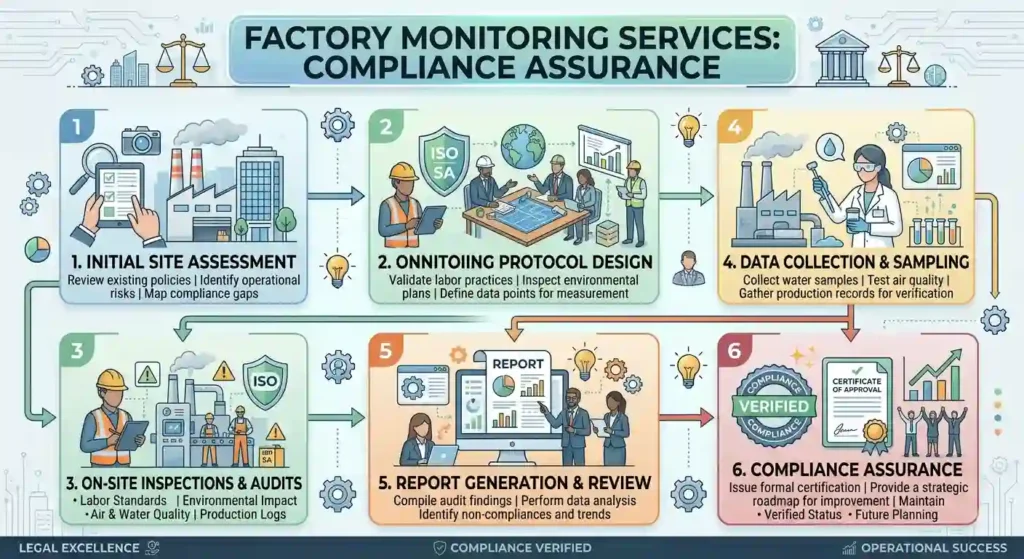
Factory monitoring services help businesses identify legal, safety, environmental, labour, and operational compliance risks. Regular monitoring also reduces accidents, regulatory notices, production interruptions, and avoidable litigation. Since 21 November 2025, the Occupational Safety, Health and Working Conditions Code, 2020 has an enforcement date. Therefore, factories should reassess existing compliance systems against current statutory requirements. Monitoring should cover licences, workplace safety, employee welfare, hazardous processes, registers, inspections, and returns. Additionally, environmental permissions and pollution-control obligations require continuous oversight. A compliance audit should identify each obligation, responsible person, deadline, evidence, and corrective action. Paramount Law House can coordinate legal reviews with technical and compliance professionals. Our services support manufacturers, employers, contractors, investors, and industrial establishments. Consequently, proactive monitoring strengthens compliance assurance and business continuity.
Factory Monitoring Services: Compliance Assurance – Paramount Law House
Labour and Occupational Safety Compliance
Factory compliance increasingly requires systematic attention to occupational health, workplace safety, and employee welfare. The OSH Code contains provisions covering safety standards, welfare facilities, working hours, records, and factory requirements. Employers should monitor machinery safeguards, protective equipment, emergency systems, workplace conditions, and worker training. Additionally, accident reporting and dangerous occurrence procedures require timely attention. Contract labour arrangements also require appropriate licensing and principal-employer compliance. Therefore, monitoring should include contractor records, worker registers, wages, working hours, and statutory returns. Safety committees and safety officers may apply depending upon statutory requirements. Regular inspections can identify unsafe practices before accidents create serious legal consequences. Paramount Law House can review workplace policies, inspection reports, and corrective-action records. This approach supports occupational safety compliance while reducing disputes involving employees and regulators.
Factory Licences and Registrations
Factories must maintain applicable registrations, approvals, licences, and operational permissions before conducting regulated activities. The OSH Code addresses factory approval and licensing within its factory-specific provisions. Monitoring should verify licence validity, approved capacity, premises details, and authorised manufacturing activities. Changes to machinery, production processes, premises, or hazardous operations may require regulatory review. Furthermore, businesses should maintain copies of approvals and renewal evidence. Missing or expired permissions can trigger notices, penalties, restrictions, or operational disruption. Therefore, compliance teams should maintain a central licence register with renewal alerts. Legal counsel can examine whether proposed expansions require fresh approvals or amendments. Industrial establishments should also verify state-specific rules and competent authority requirements. Paramount Law House assists clients with licence compliance reviews and regulatory representation. Proper documentation provides stronger protection during inspections and enforcement proceedings.
Workplace Health and Safety Audits
Workplace safety audits should examine actual factory conditions rather than relying exclusively on written policies. Auditors should inspect machinery, electrical systems, fire protection, chemical storage, ventilation, and emergency exits. Additionally, they should examine personal protective equipment and worker training records. The OSH Code recognises safety responsibilities and occupational health requirements for covered establishments. Therefore, safety monitoring should connect physical observations with statutory documentation. Incident records can reveal recurring hazards requiring immediate corrective measures. Furthermore, employees should have appropriate mechanisms for reporting imminent dangers. Management should document corrective actions, responsible persons, and completion dates. Legal review becomes important when serious hazards, accidents, or regulatory notices arise. Paramount Law House can help develop compliance reports and risk-based remediation strategies. Continuous monitoring ultimately supports safer workplaces and stronger regulatory defensibility.
Environmental Compliance Monitoring
Environmental compliance forms an important component of factory monitoring services. Industrial facilities may require consent, authorisations, environmental permissions, and pollution-control approvals. The Environment Protection Act, 1986 provides the central statutory framework for environmental protection. Factories should monitor emissions, effluent discharge, hazardous substances, waste handling, and prescribed environmental records. Additionally, businesses should verify conditions attached to permissions issued by competent authorities. Pollution Control Boards can conduct inspections and initiate proceedings for non-compliance. Therefore, factories should maintain testing reports, manifests, consent documents, and compliance submissions. Environmental incidents require prompt investigation and appropriate regulatory response. Legal support can help assess notices, remediation obligations, penalties, and appeal options. Paramount Law House can coordinate environmental compliance reviews with relevant technical consultants. Such monitoring reduces environmental liability and supports responsible industrial operations.
Machinery, Hazardous Process and Emergency Controls
Factories involving machinery or hazardous processes require enhanced compliance monitoring and documented safety controls. The OSH Code contains specific provisions addressing dangerous operations and hazardous processes. Monitoring should assess machine guarding, maintenance schedules, isolation procedures, and emergency shutdown systems. Chemical inventories should remain accurate, accessible, and consistent with actual factory operations. Emergency response plans should address fire, explosion, chemical exposure, evacuation, and medical emergencies. Additionally, employees should receive suitable training and periodic emergency drills. Accident investigation should identify root causes rather than merely recording immediate events. Therefore, management should track corrective actions until verified closure. Regulatory inspections can become particularly serious following workplace accidents or hazardous incidents. Paramount Law House can provide legal guidance concerning notices, investigations, and statutory responses. Effective controls protect workers while reducing corporate and managerial liability.
Monitoring Records and Regulatory Evidence
Registers, Returns and Compliance Documentation
Accurate records provide essential evidence during factory inspections and regulatory proceedings. The OSH Code specifically addresses maintenance of registers, records, and filing of returns. Companies should maintain employment records, safety documents, accident reports, inspection findings, and statutory submissions. Environmental records should also match actual production and waste-management activities. Additionally, licences, approvals, testing certificates, and training records should remain readily accessible. Digital records can improve retrieval, monitoring, and compliance reporting. However, electronic systems should preserve authenticity, access controls, and reliable audit trails. Missing records can weaken an employer’s position during regulatory investigations. Therefore, compliance teams should conduct periodic documentation audits. Paramount Law House can review records and identify evidentiary gaps before inspections occur. Proper documentation also assists legal teams during appeals, litigation, and enforcement proceedings.
Contractor and Worker Compliance
Contractor compliance requires separate monitoring because principal employers can face statutory responsibilities. Factories should verify contractor licences, worker details, wage records, attendance, safety training, and statutory registrations. Additionally, contractors should follow factory safety procedures and emergency requirements. The OSH Code contains specific provisions concerning contract labour and principal-employer responsibilities. Monitoring should therefore extend beyond direct employees to eligible contract workers. Contractor agreements should allocate responsibilities clearly without attempting to exclude mandatory statutory duties. Periodic audits can reveal wage, safety, licensing, and recordkeeping deficiencies. Consequently, factories should maintain contractor compliance scorecards and corrective-action records. Serious violations may require suspension, remediation, or legal intervention. Paramount Law House can review contractor arrangements and advise employers on statutory exposure. Effective contractor governance reduces operational disruption and employment-related disputes.
Inspections and Inspector-Cum-Facilitators
The OSH Code provides for Inspector-cum-Facilitators and defines their inspection-related powers. Factories should therefore maintain inspection readiness throughout the year rather than preparing immediately before visits. Compliance teams should organise licences, registers, safety reports, training records, and environmental documents. Additionally, management should nominate responsible personnel for regulatory interactions. Inspection observations should receive written responses and tracked corrective actions. Companies should avoid inaccurate statements or incomplete submissions during regulatory interactions. Where inspectors identify deficiencies, management should evaluate the legal and technical implications promptly. Serious allegations may require specialist representation and evidence preservation. Paramount Law House can assist with inspection responses, legal notices, and regulatory communications. Appropriate advice can also prevent inconsistent statements from different company representatives. Continuous readiness helps factories respond professionally and reduce avoidable enforcement risks.
Compliance Risk Identification
Common Factory Legal Issues
Factory monitoring can identify diverse legal issues before they become expensive disputes. Common concerns include expired licences, unsafe machinery, inadequate training, environmental violations, and incomplete records. Wage disputes, contractor issues, working-hour breaches, and accident reporting can create additional exposure. Furthermore, hazardous processes require closer scrutiny because consequences can include serious injury and regulatory action. Pollution complaints may also lead to inspections, notices, prosecution, or remediation directions. Therefore, factories should maintain a risk register covering legal, operational, environmental, and employment issues. Each risk should identify its statutory source, likelihood, impact, and responsible officer. Corrective measures should receive deadlines and documented closure evidence. Legal counsel should review high-risk findings before management adopts remedial decisions. Paramount Law House provides factory compliance legal support tailored to industrial operations. Early intervention can prevent minor compliance gaps from developing into major disputes.
Corporate and Director Liability
Factory compliance failures can create consequences for companies, occupiers, managers, contractors, and responsible officers. Liability depends upon the applicable statute, specific duties, factual circumstances, and available statutory defences. Therefore, monitoring should identify responsibilities assigned to individual management personnel. Directors should receive appropriate compliance reports concerning significant factory risks. Additionally, companies should preserve evidence showing reasonable compliance systems and corrective action. Accident investigations require careful handling because statements can later become legally significant. Environmental violations may similarly create corporate and managerial consequences under applicable laws. Legal counsel can assess potential exposure before management communicates with authorities. Paramount Law House can advise companies regarding notices, investigations, and defence strategies. Where individual liability arises, separate representation may become necessary. Strong governance demonstrates proactive risk management and supports defensible corporate decision-making.
Legal Remedies and Compliance Assurance
Regulatory Response and Dispute Management
Notices, Penalties and Adjudication
Factories receiving statutory notices should respond promptly and within prescribed timelines. Management should first identify the authority, alleged violation, relevant provision, and requested corrective action. Additionally, companies should preserve the inspection report and supporting compliance evidence. Legal review can determine whether allegations involve factual errors or genuine statutory breaches. Where violations exist, corrective action should proceed alongside an appropriate legal response. Penalties may depend upon the governing statute and circumstances of the alleged offence. Therefore, companies should not rely on generic responses or unsupported explanations. Regulatory proceedings can require written representations, hearings, evidence, or professional assistance. Paramount Law House can assess notices and formulate proportionate response strategies. Appropriate remedies may include compliance correction, representation, appeal, review, or statutory challenge. Early legal intervention can protect business interests while encouraging responsible regulatory cooperation.
Appeals, Tribunals and Courts
Factory disputes may involve labour authorities, Pollution Control Boards, designated regulatory officers, tribunals, or courts. Jurisdiction depends upon the statute governing the specific dispute. The OSH Code includes an appeal provision and also addresses civil-court jurisdiction. Consequently, companies should identify the correct forum before commencing proceedings. Environmental matters may involve statutory authorities and specialised environmental adjudication mechanisms. Employment disputes may follow labour-specific forums and procedures. Regulatory orders can sometimes require appeal within strict statutory periods. Therefore, delay can prejudice otherwise available legal remedies. Paramount Law House can assess jurisdiction, limitation, evidence, and procedural requirements. Lawyers can also coordinate technical evidence with legal submissions where necessary. A forum-specific strategy improves the prospects of obtaining effective relief.
Criminal Complaints and Police Assistance
Some factory incidents may involve allegations of criminal conduct beyond regulatory non-compliance. Examples can include negligence allegations, deliberate environmental offences, fraud, or document-related misconduct. BNS governs substantive criminal offences, while BNSS governs criminal procedure. BSA governs evidence under the current criminal-law framework. Therefore, companies should distinguish regulatory breaches from criminal allegations before approaching police authorities. Police stations may become relevant where facts disclose cognisable criminal conduct. However, ordinary licensing or inspection disagreements usually require regulatory remedies instead. Legal counsel can assess whether a police complaint, defence, representation, or court application is appropriate. Paramount Law House can assist with criminal-law coordination when factory incidents escalate. Evidence preservation should begin immediately after serious incidents or allegations. Careful legal strategy helps protect employees, managers, companies, and other affected stakeholders.
Preventive Compliance Legal Support
Preventive legal support helps factories address risks before authorities initiate enforcement proceedings. Paramount Law House can conduct compliance assessments covering labour, safety, environmental, licensing, and contractual obligations. Our lawyers can review inspection findings and create legally prioritised remediation plans. Additionally, we can examine policies, contractor agreements, statutory records, and regulatory communications. Compliance teams can receive issue-based legal opinions for complex operational decisions. We also support regulatory responses, appeals, negotiations, and appropriate litigation. Furthermore, our services can integrate legal monitoring with management reporting systems. This structure helps senior executives understand their highest-priority compliance risks. Factories can then allocate resources according to legal exposure and operational importance. Consequently, preventive monitoring becomes an ongoing governance function rather than an annual exercise. Paramount Law House supports industrial establishments seeking practical, defensible, and jurisdiction-focused compliance assurance.
Factory Compliance Monitoring Checklist
A structured monitoring checklist provides a practical framework for continuous factory compliance assurance. Companies should review the following areas regularly:
- Factory registration, licence, and approval status.
- Worker safety, welfare, training, and protective equipment.
- Machinery safeguards, maintenance, and emergency systems.
- Contractor licences, worker records, and statutory compliance.
- Accident reporting, investigation, and corrective actions.
- Environmental consents, emissions, effluent, and waste records.
- Statutory registers, returns, inspection reports, and certificates.
- Regulatory notices, appeals, penalties, and pending proceedings.
Additionally, management should assign responsibility and deadlines for every identified deficiency. Legal counsel should review high-risk issues before closure. Paramount Law House can convert audit findings into documented remediation plans. Regular monitoring supports stronger compliance, safer workplaces, and better regulatory preparedness.
Frequently Asked Questions
1. What are factory monitoring services?
Factory monitoring services systematically review safety, labour, environmental, licensing, records, and regulatory obligations. They identify compliance gaps and recommend corrective legal measures.
2. Which law currently governs factory safety?
The Occupational Safety, Health and Working Conditions Code, 2020 is now enforced. It covers factory safety, welfare, records, inspections, and hazardous processes.
3. Can lawyers assist during factory inspections?
Yes. Lawyers can review inspection notices, advise management, examine alleged violations, prepare responses, preserve evidence, and coordinate appropriate regulatory representation.
4. What happens after a factory receives a notice?
Management should identify the allegation, authority, deadline, and evidence immediately. Legal counsel can assess remedies, corrective action, representation, appeal, or further proceedings.
5. Can factory accidents create criminal liability?
Potentially. Serious incidents may create regulatory and criminal consequences depending upon facts. BNS, BNSS, and BSA may become relevant where criminal proceedings arise.
6. Why choose Paramount Law House?
Paramount Law House provides practical factory compliance support covering safety, labour, environmental, licensing, inspections, regulatory disputes, appeals, and litigation strategy.
Read More
- Document Legal Verification: Ensure Authenticity and Legitimacy
- Building Monitoring Services: Protect Your Investment
- DTCP Land Approval Services: Ensure Compliance and Approval
- Family Settlement Agreement Drafting: Legal Expertise
- Family Settlement Suit Representation: Experienced Lawyers
- Ministry of Labour & Employment, Government of India