Landlord Legal Support: Protect Your Rights Effectively
Landlord Legal Support – Landlords need clear legal strategies to protect property ownership, rental income, and peaceful possession. Indian tenancy disputes can…
Landlord Legal Support – Landlords need clear legal strategies to protect property ownership, rental income, and peaceful possession. Indian tenancy disputes can involve rent defaults, unauthorized occupation, property damage, subletting, or unlawful alterations. Therefore, landlords should understand contractual rights before disputes escalate into litigation. The Transfer of Property Act, 1882 governs important aspects of leases and landlord-tenant relationships. State-specific rent control legislation can also modify rights, procedures, and grounds for eviction. Additionally, the Registration Act, 1908 may apply to leases requiring registration. Consequently, landlords should obtain legal advice before issuing notices or commencing proceedings. A properly drafted lease can establish rent, deposit, maintenance, termination, and possession obligations. Furthermore, documented transactions provide stronger evidence during judicial proceedings. Paramount Law House assists landlords with lease reviews, notices, negotiations, eviction proceedings, and property dispute litigation.
Landlord Legal Support: Protect Your Rights Effectively – Paramount Law House
Lease Agreement and Contractual Protection
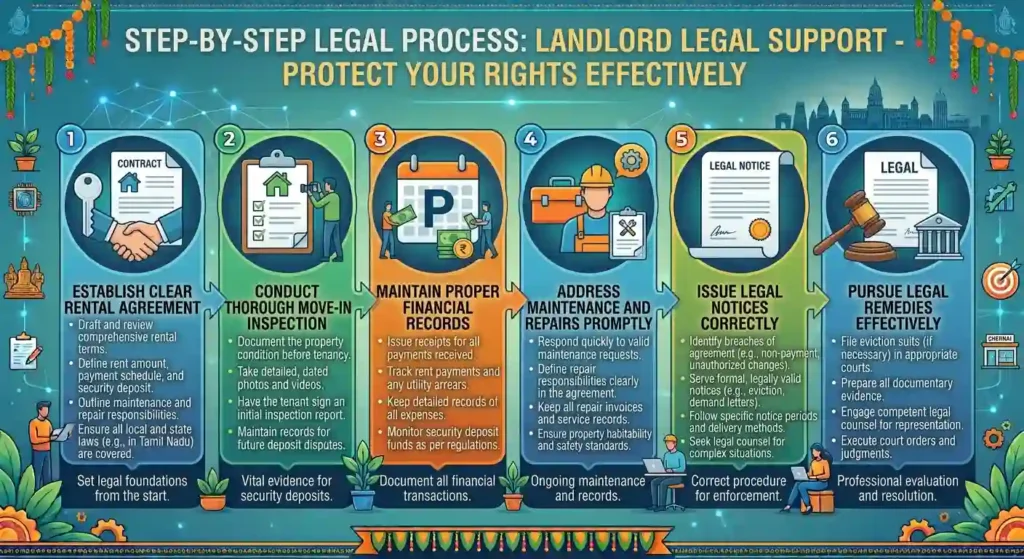
A comprehensive lease agreement provides the foundation for effective landlord legal protection. The document should clearly identify parties, premises, rent, deposit, duration, permitted use, and termination conditions. Additionally, it should address repairs, utilities, subletting, alterations, inspection rights, and possession obligations. Registration requirements depend upon lease duration and applicable law. Therefore, landlords should assess registration and stamp-duty requirements before executing the agreement. A carefully drafted contract can reduce ambiguity when disagreements arise later. Furthermore, landlords should retain signed agreements, payment records, correspondence, and property-condition evidence. Digital communications can supplement formal records but should remain authentic and properly preserved. Consequently, professional lease drafting can prevent costly disputes and strengthen enforcement options. Paramount Law House can review existing agreements and identify contractual weaknesses before tenancy problems become serious.
Rent Defaults and Recovery Strategies
Rent arrears remain among the most common landlord-tenant disputes in India. Landlords should maintain accurate rent ledgers showing every demand, payment, adjustment, and outstanding amount. Therefore, immediate documentation can strengthen subsequent recovery proceedings. A landlord should issue an appropriate demand or termination notice when contractual or statutory requirements arise. The notice should identify arrears, relevant dates, contractual provisions, and required compliance. Additionally, landlords should avoid unlawful self-help measures such as forceful eviction or utility disconnection. Courts generally expect parties to follow lawful procedures when recovering possession. Consequently, rent recovery may require negotiation, mediation, statutory proceedings, or civil litigation. Depending on jurisdiction, specialized rent-control forums may also determine disputes. Legal counsel can assess limitation, jurisdiction, evidence, and the appropriate remedy before proceedings begin.
Eviction, Possession and Property Disputes
Lawful Eviction Procedures
Landlords cannot ordinarily remove tenants through force merely because rent remains unpaid. Legal eviction requires compliance with the applicable lease terms and statutory requirements. Therefore, the first step involves determining the legal basis for termination. Grounds may include rent default, unauthorized subletting, misuse, expiry, breach, or other legally recognized circumstances. State rent-control laws may impose additional protections or procedural requirements. Additionally, the lease agreement may prescribe notice periods and termination mechanisms. A defective notice can create unnecessary procedural disputes and delay possession recovery. Consequently, lawyers should review the tenancy documents before issuing termination notices. Once the tenancy legally ends, the landlord may pursue the appropriate possession remedy. Paramount Law House can prepare notices and represent landlords before competent courts and tribunals. Lawful procedure protects both property rights and the landlord’s litigation position.
Unauthorized Subletting and Property Misuse
Tenants sometimes transfer possession, create unauthorized subtenancies, or use premises beyond agreed purposes. Such conduct may breach contractual terms and applicable tenancy legislation. Landlords should gather reliable evidence before alleging unauthorized occupation or misuse. Useful evidence can include photographs, inspection records, correspondence, advertisements, and witness statements. However, landlords should respect privacy and avoid unlawful surveillance or coercive evidence collection. Furthermore, commercial premises may require compliance with municipal, licensing, zoning, and safety regulations. Unauthorized alterations can also create structural, financial, or regulatory risks for property owners. Therefore, landlords should obtain legal advice before demanding restoration or initiating eviction proceedings. Appropriate remedies may include injunctions, possession claims, damages, or statutory eviction proceedings. Paramount Law House can evaluate evidence and formulate a proportionate legal strategy for disputed premises.
Security Deposit and Property Damage Claims
Security deposits often generate disputes when tenants vacate leased premises. Landlords should maintain records showing the deposit amount, agreed deductions, and relevant contractual provisions. Therefore, deductions should correspond with genuine contractual or legally recoverable liabilities. Ordinary wear and tear should remain distinct from actual property damage. Photographs taken before occupation and after surrender can provide useful comparative evidence. Additionally, landlords should document repair estimates, invoices, utility dues, and outstanding rent. Transparent accounting can reduce disputes and support negotiation. However, landlords should avoid arbitrary deductions unsupported by the lease or applicable law. Courts may scrutinize evidence concerning damage, causation, and actual financial loss. Consequently, a documented handover process provides important protection. Legal assistance can help landlords calculate legitimate claims and pursue recovery when tenants dispute deductions.
Police Complaints and Criminal Allegations
Landlord disputes sometimes involve allegations of trespass, intimidation, property damage, forgery, or other criminal conduct. Such allegations require careful separation from ordinary contractual tenancy disputes. BNS governs substantive criminal offences, while BNSS governs criminal procedure. BSA governs evidence applicable to proceedings under the new criminal-law framework. Therefore, landlords should identify whether conduct genuinely constitutes a criminal offence. Police stations may receive complaints involving independent criminal allegations, but police cannot ordinarily decide civil tenancy rights. Accordingly, landlords should avoid using criminal complaints merely to bypass civil eviction procedures. Evidence should remain factual, contemporaneous, and legally obtained. Where criminal conduct exists, counsel can advise on complaint drafting and appropriate procedural steps. Paramount Law House can coordinate civil and criminal legal strategies while preserving the landlord’s legitimate property rights.
Courts, Forums and Legal Remedies
Civil Courts and Rent Control Authorities
Landlord disputes may fall within civil courts, rent-control authorities, or other statutory forums. Jurisdiction depends upon property location, tenancy legislation, agreement terms, and the nature of relief sought. Therefore, landlords should identify the correct forum before filing proceedings. The Code of Civil Procedure, 1908 governs many civil procedural matters where applicable. However, special tenancy statutes can create distinct procedures or jurisdictional restrictions. Courts may consider claims involving possession, injunctions, damages, arrears, declarations, or contractual enforcement. Additionally, commercial disputes may enter Commercial Courts where statutory conditions are satisfied. Consequently, forum selection affects costs, timelines, evidence, and available remedies. A lawyer should examine jurisdiction before drafting pleadings or serving formal notices. Paramount Law House provides landlord representation before competent courts, authorities, and dispute-resolution forums.
Mediation and Negotiated Settlement
Mediation can offer landlords an efficient alternative to prolonged tenancy litigation. Parties can negotiate rent payment, surrender dates, restoration obligations, deposits, and possession arrangements. Therefore, mediation may preserve commercial relationships while reducing procedural expenses. Courts increasingly encourage suitable disputes toward alternative dispute-resolution mechanisms. A written settlement should clearly specify obligations, deadlines, possession arrangements, and consequences for default. Additionally, settlement documents should address withdrawal or disposal of pending proceedings where necessary. Negotiation remains especially useful where both parties want predictable commercial outcomes. However, landlords should avoid informal settlements that leave possession or payment obligations uncertain. Legal counsel can structure enforceable settlement terms and verify compliance requirements. Consequently, professional mediation support can convert prolonged conflict into a documented and commercially practical resolution.
Injunctions, Damages and Possession Remedies
Landlords may seek several legal remedies depending upon the underlying dispute. Possession proceedings can address unlawful occupation after lawful termination. Money claims can address unpaid rent, contractual charges, or proven property damage. Injunctions may restrain unauthorized alterations, interference, or other unlawful conduct. Therefore, the remedy should correspond directly with the legal injury and available evidence. Courts may also consider declarations, specific contractual relief, or other appropriate remedies. Landlords should quantify monetary claims carefully and preserve supporting documents. Additionally, limitation periods can affect the ability to pursue certain claims. Prompt legal review helps prevent procedural delays from weakening legitimate rights. Paramount Law House can assess facts, identify available remedies, and prepare appropriate litigation or settlement strategies.
Evidence, BSA and Digital Records
Strong evidence often determines the outcome of landlord-tenant litigation. Landlords should preserve leases, rent receipts, bank statements, notices, photographs, emails, messages, inspection reports, and repair invoices. BSA provides the current statutory framework for evidence in relevant criminal proceedings. Civil proceedings may involve evidentiary principles under applicable procedural and substantive laws. Therefore, landlords should preserve original records and reliable electronic copies. Digital evidence should retain context, authenticity, dates, and relevant metadata where necessary. Additionally, witnesses should provide consistent accounts supported by documentary records. Courts may scrutinize disputed communications or unsupported allegations carefully. Consequently, evidence preservation should begin when a dispute first appears. Legal professionals can assess admissibility, relevance, authentication, and evidentiary strategy before litigation begins.
Professional Landlord Legal Support
Lease Review and Legal Notices
Professional landlord support should begin before signing a lease and continue throughout the tenancy. Lawyers can review clauses concerning rent, deposits, renewal, termination, repairs, subletting, and dispute resolution. Therefore, legal review can identify provisions that create avoidable future disputes. Counsel can also prepare rent-demand notices, termination notices, possession notices, and responses to tenant communications. Notices should comply with contractual and statutory requirements relevant to the property. Additionally, lawyers can advise landlords about registration, stamp duty, and local regulatory requirements. A professionally drafted notice can establish the landlord’s position clearly and preserve future remedies. Consequently, landlords should seek advice before sending aggressive or legally defective communications. Paramount Law House provides tailored landlord legal support for residential and commercial properties.
Litigation, Appeals and Enforcement
Landlord litigation may require representation through multiple procedural stages. Lawyers can prepare pleadings, evidence, applications, written submissions, and arguments before competent forums. Additionally, successful parties may need assistance enforcing possession, monetary awards, or settlement obligations. Appeals require strict attention to statutory limitation periods and applicable procedural rules. Therefore, landlords should obtain legal advice immediately after receiving an unfavorable order. The appropriate appellate forum depends upon the original forum and governing statute. High Courts may exercise appellate or constitutional jurisdiction in suitable circumstances. However, not every dispute permits immediate High Court intervention. Consequently, counsel should evaluate statutory remedies before selecting an appellate strategy. Paramount Law House can assist landlords with litigation, appeals, negotiation, execution, and related property-law remedies.
Landlord Compliance and Preventive Strategy
Preventive compliance can reduce landlord disputes before they develop into expensive litigation. Landlords should maintain updated agreements, payment records, property inventories, inspection documents, and tenant communications. Furthermore, periodic legal reviews can identify outdated clauses or regulatory changes affecting the tenancy. Property owners should also verify local municipal requirements affecting intended property use. Commercial landlords may require additional licenses, approvals, or contractual protections. Therefore, preventive legal support should address both tenancy law and wider property obligations. A structured compliance process can improve evidence quality and reduce misunderstandings. Additionally, landlords should document every material variation agreed during the tenancy. Clear records help lawyers respond quickly when disputes arise. Paramount Law House provides preventive legal consultation, documentation review, dispute management, and representation for landlords across applicable Indian forums.
Frequently Asked Questions
Can a landlord evict a tenant without notice? Generally, landlords should follow contractual and statutory termination requirements. Special tenancy laws may impose additional protections or procedures.
Can landlords recover unpaid rent legally? Yes. Landlords may pursue contractual, statutory, mediation, or court remedies, depending upon the tenancy and applicable jurisdiction.
Can a landlord file a police complaint against a tenant? Police complaints may address genuine criminal conduct. However, police ordinarily cannot replace lawful civil eviction procedures.
Can landlords deduct property damage from security deposits? Landlords may make legitimate contractual deductions for proven liabilities. Proper documentation helps establish the basis and amount of deductions.
Which court handles landlord-tenant disputes? Jurisdiction depends upon property location, tenancy legislation, agreement terms, and requested relief. Civil courts or specialized rent forums may apply.
How can Paramount Law House help landlords? Paramount Law House provides lease review, legal notices, rent recovery, eviction assistance, mediation, litigation, appeals, and property dispute representation.
Conclusion: Protect Your Landlord Rights
Landlords can protect their interests through strong agreements, accurate records, lawful notices, and timely legal advice. Therefore, property owners should address tenancy problems before arrears or unauthorized occupation become substantial. Proper documentation strengthens negotiation and litigation positions. Furthermore, landlords should choose remedies according to the governing statute and dispute forum. CPC, BNS, BNSS, and BSA may apply in different contexts, but tenancy law remains central. Police intervention should remain limited to genuine criminal allegations requiring lawful investigation. Consequently, landlords should avoid coercive self-help measures that create additional legal exposure. Professional legal assistance can support prevention, negotiation, possession recovery, rent claims, and appeals. Paramount Law House helps landlords protect property rights through practical, jurisdiction-focused legal strategies. Early intervention remains the most effective way to reduce financial loss and prolonged tenancy disputes.
Read More
- Factory Monitoring Services: Compliance Assurance
- Document Legal Verification: Ensure Authenticity and Legitimacy
- Building Monitoring Services: Protect Your Investment
- DTCP Land Approval Services: Ensure Compliance and Approval
- Department of Justice, Ministry of Law and Justice
- How to Verify Property Ownership Before Buying Land in India?