Lease Deed Review: Ensure Compliance and Validity
Lease Deed Review – Lease deeds govern legal relationships between landlords, tenants, businesses, and institutional property occupants across India. However, poorly drafted…
Lease Deed Review – Lease deeds govern legal relationships between landlords, tenants, businesses, and institutional property occupants across India. However, poorly drafted lease agreements frequently create expensive disputes and prolonged litigation risks. Therefore, proper lease deed review remains essential before executing residential or commercial property arrangements. Paramount Law House: Property Lawyers 24×7 assists clients with lease verification, compliance analysis, and dispute prevention strategies. Chennai property owners regularly face disputes involving unpaid rent, illegal occupation, and unauthorized subletting practices. Additionally, businesses encounter operational restrictions because of defective lease clauses and zoning violations. Courts examine lease duration, rental obligations, termination conditions, and possession rights during adjudication proceedings. Nearby sub-registrar offices supervise registration compliance for long-term lease agreements and property documentation. Consequently, experienced property lawyers analyze every contractual provision carefully before execution. Strong legal review safeguards ownership interests while reducing future litigation risks before civil courts, tribunals, and regulatory authorities.
Lease Deed Review: Ensure Compliance and Validity – Paramount Law House
Understanding Lease Deeds Under Indian Property Laws
Indian property laws regulate lease agreements through statutory provisions and judicially recognized contractual principles consistently. Lease deeds establish legal rights regarding possession, rent payment, maintenance obligations, and termination procedures. Moreover, registration laws mandate compulsory registration for leases exceeding prescribed statutory durations nationwide. Chennai landlords and tenants frequently dispute security deposits, rental escalation, and renewal obligations before courts. Civil courts examine contractual clauses, payment records, and communication history carefully during litigation proceedings. Additionally, BNS provisions apply when fraudulent documentation, trespass, or criminal intimidation accompanies lease disputes. The CPC governs eviction suits, injunction claims, and recovery proceedings involving leased properties. Furthermore, BSA evidentiary standards regulate electronic communications and digital tenancy documentation effectively. Therefore, parties should verify ownership documents and property approvals before executing lease arrangements. Legal professionals also examine municipal regulations and zoning permissions affecting commercial and residential lease usage rights.
Common Legal Issues Arising From Defective Lease Agreements
Defective lease deeds frequently create disputes involving possession rights and contractual interpretation challenges later. Several agreements contain vague clauses regarding maintenance obligations and security deposit adjustments. Consequently, landlords and tenants interpret responsibilities differently during occupancy periods and termination proceedings. Chennai courts regularly handle disputes involving unauthorized subletting and illegal commercial usage allegations. Businesses occasionally suffer financial losses because lease restrictions affect operational continuity and licensing requirements. Additionally, property owners face unauthorized occupation and delayed possession recovery because agreements lack enforceable clauses. Nearby police stations investigate criminal trespass and property damage complaints under relevant BNS provisions. Consumer forums sometimes address builder-leased property disputes involving deficient services and delayed possession issues. Therefore, comprehensive legal review helps identify ambiguities and statutory noncompliance before execution. Experienced property lawyers strengthen contractual protections while minimizing future litigation and enforcement complications across residential and commercial leasing arrangements.
Importance of Registration and Stamp Duty Compliance
Lease registration and stamp duty compliance determine enforceability and evidentiary value during legal disputes significantly. Indian registration laws require mandatory registration for long-term lease agreements involving immovable properties nationwide. Moreover, insufficient stamp duty frequently weakens contractual enforcement and admissibility before judicial authorities. Chennai sub-registrar offices supervise lease registrations, document authentication, and record maintenance procedures efficiently. Courts carefully examine registration compliance during eviction suits and rental recovery proceedings regularly. Several property disputes arise because parties rely upon unregistered agreements and oral tenancy arrangements. Consequently, landlords face challenges while proving possession rights and contractual obligations before courts. Tenants also encounter difficulties enforcing renewal clauses and security deposit recovery claims. Therefore, property lawyers verify stamp duty calculations and registration formalities before agreement execution. Proper legal compliance strengthens contractual validity while safeguarding both landlords and tenants against future civil and criminal litigation complications.
Jurisdiction and Forums Handling Lease Disputes
Lease dispute jurisdiction depends upon property location, agreement value, and dispute nature involved. Civil courts generally adjudicate eviction suits, rent recovery claims, and contractual enforcement proceedings. Rent control tribunals handle tenancy disputes governed by applicable state rent legislation provisions. Additionally, consumer commissions hear complaints involving leased commercial spaces and deficient builder services occasionally. Criminal courts address trespass, cheating, intimidation, and forged documentation offences under BNS provisions effectively. Chennai residents also approach police stations regarding unlawful occupation and property damage complaints. The CPC governs procedural requirements involving injunctions, evidence presentation, and execution proceedings comprehensively. Moreover, the BNSS regulates criminal investigations connected with lease-related offences and fraudulent documentation practices. Therefore, proper forum selection remains crucial for obtaining timely judicial remedies and enforcement relief. Experienced property lawyers evaluate jurisdictional requirements carefully before initiating proceedings before competent courts, tribunals, and regulatory authorities across Tamil Nadu.
Legal Compliance Strategies for Lease Deed Validity
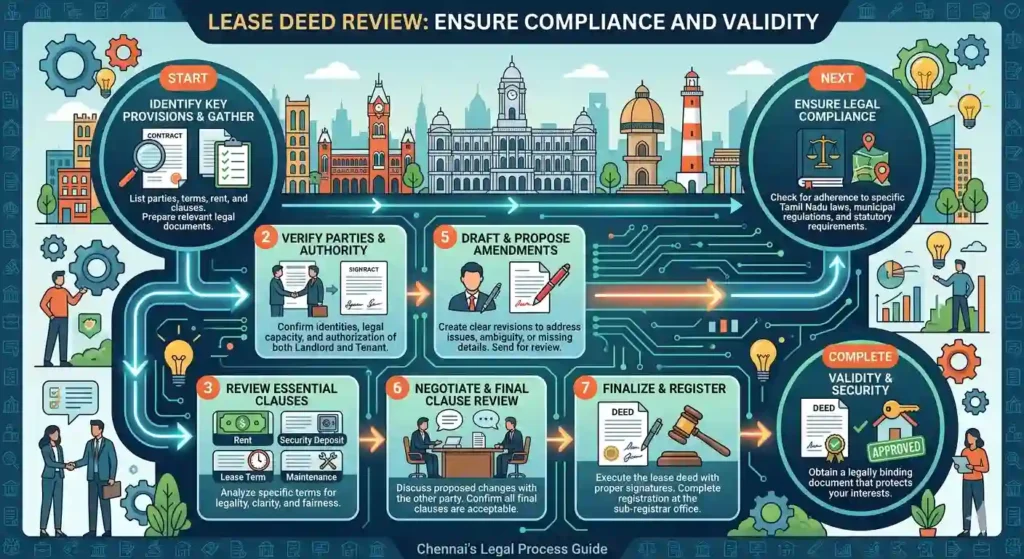
Strategic legal compliance protects landlords and tenants from avoidable disputes and contractual enforcement failures. Property lawyers initially examine title deeds, municipal approvals, and ownership records carefully before drafting agreements. Furthermore, advocates verify zoning permissions and licensing restrictions affecting intended property usage rights. Chennai commercial leases frequently involve taxation clauses, maintenance liabilities, and operational compliance obligations. Several residential agreements also require clauses regarding visitor restrictions and maintenance contributions. Consequently, professional drafting reduces ambiguity and strengthens enforceability before judicial authorities effectively. Courts often reject vague contractual terms lacking clarity regarding possession and termination procedures. Additionally, digital evidence receives statutory recognition under BSA provisions and procedural frameworks. Therefore, parties should preserve rent receipts, emails, and electronic communications securely during tenancy periods. Strong legal compliance safeguards property interests while reducing litigation expenses and enforcement complications across commercial, institutional, and residential lease arrangements throughout Chennai.
Role of Property Lawyers During Lease Deed Review
Property lawyers protect clients through detailed lease scrutiny and preventive legal advisory services consistently. They analyze contractual clauses relating to rent escalation, termination rights, and dispute resolution mechanisms carefully. Moreover, advocates identify hidden liabilities and statutory noncompliance affecting lease enforceability and commercial viability. Chennai businesses frequently seek legal assistance regarding office leases, warehouse agreements, and industrial tenancy arrangements. Lawyers also verify property ownership, encumbrance details, and municipal approvals before execution stages. Several lease disputes involve forged signatures and unauthorized documentation requiring forensic investigation and criminal complaints. Consequently, experienced legal representation strengthens evidentiary support and procedural compliance during litigation proceedings. Nearby courts rely upon CPC procedures and BSA evidentiary standards during tenancy adjudication matters regularly. Therefore, professional lease deed review remains essential for protecting financial investments and operational continuity. Strong legal drafting additionally prevents misunderstandings while preserving landlord and tenant relationships across evolving property markets.
Eviction Proceedings and Possession Recovery Remedies
Eviction proceedings arise when tenants violate contractual obligations or unlawfully retain leased properties after termination. Landlords commonly initiate civil suits for possession recovery and unpaid rental dues before courts. Additionally, courts grant injunctions preventing unauthorized subletting and structural modifications during pending proceedings. Chennai landlords frequently encounter disputes involving defaulted rent payments and illegal commercial property usage. The CPC governs procedural requirements involving pleadings, evidence submission, and decree execution comprehensively. Furthermore, BNS provisions apply where tenants commit property damage, criminal intimidation, or fraudulent occupation activities. Nearby police stations assist during enforcement against trespass and unlawful possession resistance incidents occasionally. Property lawyers prepare legal notices, eviction petitions, and documentary evidence supporting ownership and contractual claims. Therefore, timely legal intervention significantly improves recovery prospects and possession enforcement outcomes. Effective eviction strategies protect property rights while discouraging unlawful tenancy practices across residential and commercial sectors.
| Lease Issue | Concerned Forum | Legal Remedy |
|---|---|---|
| Unpaid rent | Civil Court | Recovery decree |
| Illegal occupation | Police Station | Criminal complaint |
| Security deposit dispute | Rent Tribunal | Refund direction |
| Lease fraud | Criminal Court | Prosecution |
| Builder-leased disputes | Consumer Commission | Compensation |
Commercial Lease Agreements and Business Compliance Risks
Commercial lease agreements involve complex operational obligations affecting business continuity and regulatory compliance requirements. Businesses frequently lease office spaces, warehouses, factories, and retail establishments throughout Chennai’s expanding commercial sectors. However, defective lease clauses may restrict signage rights, operational hours, and commercial licensing permissions. Consequently, companies face financial losses and regulatory penalties because agreements lack legal clarity. Property lawyers review maintenance obligations, tax liabilities, and termination provisions carefully before execution. Municipal authorities and planning departments also regulate zoning compliance and permitted commercial activities. Several disputes involve parking rights, common area access, and infrastructure maintenance responsibilities between parties. Therefore, professional legal review remains essential for safeguarding operational flexibility and contractual enforceability. Courts examine lease terms, payment records, and correspondence carefully during commercial tenancy litigation proceedings. Strong compliance strategies ultimately protect business investments while reducing disruptions arising from contractual ambiguities and property-related disputes.
Criminal Remedies for Lease Fraud and Property Misuse
Lease fraud frequently involves forged agreements, unauthorized occupation, and deliberate misrepresentation regarding ownership rights and property conditions. Criminal remedies protect landlords and tenants against dishonest conduct and fraudulent tenancy practices effectively. Nearby police stations investigate cheating, criminal breach of trust, and forgery offences under applicable BNS provisions. Additionally, cybercrime authorities handle digital forgery and fraudulent online lease transaction complaints regularly. The BNSS regulates criminal investigations, evidence collection, and prosecution procedures during lease-related criminal proceedings. Courts may impose imprisonment, fines, and compensation orders against convicted offenders and fraudulent intermediaries. Chennai property owners should immediately report suspicious lease activities and unauthorized documentation practices. Legal professionals coordinate police complaints, civil proceedings, and document verification for stronger protection strategies. Therefore, prompt criminal action prevents continuing losses and discourages organized property fraud networks effectively. Strong enforcement mechanisms preserve public confidence within Chennai’s rapidly expanding residential and commercial leasing sectors.
Preventive Legal Measures for Landlords and Tenants
Preventive legal planning significantly reduces tenancy disputes and contractual enforcement complications during occupancy periods. Landlords should verify tenant identity, financial capacity, and intended property usage before execution stages. Furthermore, tenants must examine ownership documents and municipal approvals carefully before occupying leased premises. Chennai property disputes frequently emerge because parties neglect written communication and documentary evidence preservation. Several lease agreements also omit clauses regarding maintenance liability and utility payment responsibilities. Consequently, courts face interpretational conflicts involving repair obligations and possession rights during litigation. Property lawyers recommend detailed agreements containing termination clauses, inspection rights, and dispute resolution mechanisms. Nearby registration offices provide certified copies and document authentication supporting contractual enforceability effectively. Therefore, early legal consultation prevents future litigation and financial losses for both parties. Strong preventive measures safeguard residential and commercial lease relationships while promoting transparent property management practices across Tamil Nadu.
Evidence Collection and Lease Litigation Strategies
Strong documentary evidence substantially improves success rates during lease litigation and settlement negotiations consistently. Courts examine registered agreements, rent receipts, emails, and possession records before granting judicial relief. Electronic evidence receives statutory recognition under BSA provisions and procedural frameworks nationwide. Consequently, landlords and tenants should preserve digital communications and payment confirmations securely. Property lawyers organize documentary evidence strategically according to jurisdictional and procedural requirements during litigation proceedings. Chennai courts frequently review photographs, inspection reports, and municipal records during tenancy disputes. Additionally, witness testimony supports allegations involving property damage, unauthorized occupation, and contractual violations effectively. Several lease matters require forensic analysis of disputed signatures and fabricated tenancy documents. Therefore, timely evidence preservation strengthens legal arguments and judicial credibility substantially. Effective litigation strategies combine documentary proof, procedural compliance, and negotiation techniques for favorable outcomes. Comprehensive evidence management also accelerates settlements and reduces unnecessary legal delays across property and tenancy proceedings.
- Verify ownership records carefully.
- Register long-term lease agreements promptly.
- Preserve digital payment records securely.
- Review termination clauses thoroughly.
- Conduct periodic property inspections legally.
Government Departments and Regulatory Authorities Involved
Several government departments regulate lease transactions, property records, and municipal compliance obligations across Tamil Nadu. Registration departments supervise lease deed registration and document authentication procedures efficiently. Revenue authorities maintain land ownership records and mutation entries affecting tenancy arrangements occasionally. Municipal corporations regulate zoning permissions, occupancy approvals, and commercial usage compliance requirements. Additionally, police authorities investigate trespass, fraud, and criminal intimidation connected with tenancy disputes regularly. Chennai residents frequently interact with sub-registrar offices and municipal departments during lease execution procedures. Courts rely upon official records maintained by these authorities during property litigation proceedings. Therefore, accurate government documentation significantly strengthens contractual enforcement and legal protection strategies. Property lawyers coordinate with regulatory authorities regarding compliance verification and dispute resolution mechanisms consistently. Effective departmental coordination prevents fraudulent tenancy arrangements while promoting transparent leasing practices across residential, institutional, and commercial property sectors.
Legal Support for NRI and Institutional Lease Transactions
NRI property owners and institutional investors frequently lease residential and commercial properties throughout Chennai and Tamil Nadu. However, cross-border transactions often involve documentation complexities and regulatory compliance obligations under Indian laws. Property lawyers assist NRIs regarding power of attorney documentation and lease registration procedures efficiently. Institutions additionally require customized agreements addressing taxation, liability, and operational compliance considerations carefully. Several disputes involve unauthorized occupation and delayed rent recovery because owners reside outside India. Consequently, legal professionals monitor tenancy compliance and initiate proceedings before competent authorities strategically. Courts examine lease documentation, digital communications, and banking records carefully during dispute adjudication proceedings. Therefore, professional legal support remains essential for safeguarding overseas and institutional property investments. Strong compliance management protects rental income while reducing litigation risks and operational disruptions. Effective legal oversight ultimately strengthens contractual validity and ownership security across complex domestic and international lease arrangements.
FAQs
1. Why should parties review lease deeds before signing?
Lease review identifies hidden liabilities, vague clauses, compliance risks, and unlawful conditions before contractual obligations become enforceable.
2. Is lease registration mandatory for long-term agreements?
Yes. Indian registration laws require registration for specified lease durations involving immovable properties and tenancy arrangements.
3. Which court handles eviction and rent recovery disputes?
Civil courts and rent tribunals generally handle eviction proceedings, unpaid rent claims, and possession recovery litigation matters.
4. Can criminal action apply during lease fraud disputes?
Yes. Forgery, cheating, trespass, and criminal intimidation attract prosecution under BNS and BNSS procedural provisions.
5. What documents strengthen lease litigation successfully?
Registered lease deeds, rent receipts, emails, inspection reports, photographs, and digital payment records support tenancy claims strongly.
6. How do property lawyers assist during lease deed review?
Lawyers verify ownership, analyze clauses, ensure compliance, draft protections, and prevent future tenancy disputes effectively.
Read More
- Legal Heir Certificate Obtained: Smooth Inheritance Process
- Legal Notice Assistance: Protect Your Rights Effectively
- Multi-storey Building Issue Resolution: Legal Support
- Legal Notice Reply Representation: Swift Responses
- NRI Property Legal Consultation: Expert Assistance Available
- National Generic Document Registration System (NGDRS)