Property Title Search in India: What Every Buyer Must Check
Why Property Title Search Matters Before Buying Understanding the Importance of a Clear Property Title A Clear Title Protects Your Investment Start…
Why Property Title Search Matters Before Buying
Understanding the Importance of a Clear Property Title
A Clear Title Protects Your Investment
Start With Ownership Verification
A property title search establishes whether the seller can legally transfer ownership to you. Therefore, buyers should never rely only on sale advertisements or broker statements. A registered deed records a transaction, but registration alone does not guarantee perfect ownership. The Supreme Court has recently reiterated this important distinction in property transactions. Buyers should examine the ownership chain and supporting documents before paying substantial consideration. The Transfer of Property Act, 1882 governs important aspects of transfers between parties. The Registration Act, 1908 governs registration requirements and related records. A proper property title search should examine both legal documents and government records. It should also identify mortgages, claims, litigation, restrictions, and competing ownership assertions. Paramount Law House can assist buyers with title verification, document review, and property due diligence. This approach can reduce disputes involving possession, inheritance, partition, mortgages, and fraudulent transfers. Consequently, buyers gain stronger protection before executing the final sale deed.
Trace the Complete Chain of Title
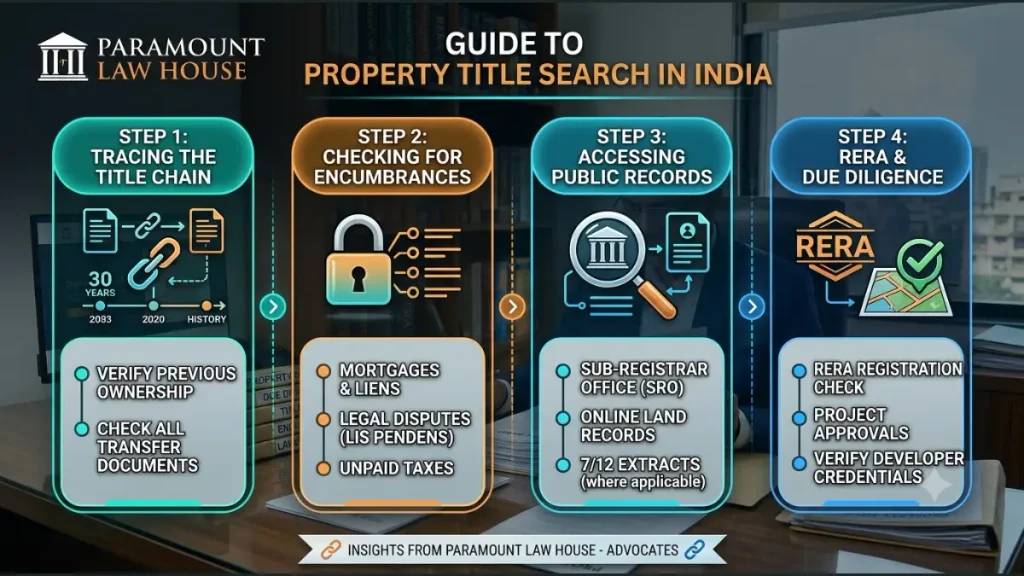
A buyer should trace the property’s ownership history through earlier conveyances and supporting records. This process commonly requires examining several previous documents and transactions. Each transfer should connect logically with the next transfer in the ownership chain. Therefore, missing links can create serious questions about the seller’s present authority. Important documents may include sale deeds, gift deeds, partition deeds, settlement deeds, release deeds, and court decrees. In inherited properties, succession documents and death certificates may also require examination. Additionally, legal-heir documents can help establish the connection between deceased owners and successors. The Supreme Court has noted the importance of detailed title searches under India’s presumptive registration system. Buyers should also compare names, survey numbers, boundaries, measurements, and property descriptions. A mismatch can require further investigation before proceeding. Professional property lawyers can prepare a title flow and identify gaps requiring clarification. This step remains especially important for ancestral land and jointly owned properties.
Examine Seller Authority and Capacity
The seller’s identity and legal capacity require careful verification before completing any property transaction. Buyers should compare the seller’s identity documents with registered property records. Companies, firms, trusts, societies, and other entities require additional authority checks. A company’s property sale may require board approvals or authorised signatory verification. Similarly, a trust transaction may require examination of the trust deed and governing rules. Properties belonging to minors require particular attention to applicable legal requirements and permissions. Joint ownership also requires participation or legally valid authority from all necessary owners. Furthermore, a power of attorney transaction requires careful examination of its scope and validity. The Registration Act contains requirements concerning presentation and recognised powers of attorney. Buyers should never accept an informal authority letter as sufficient protection. Lawyers should verify whether the person signing documents possesses the required legal authority. This process helps prevent later challenges based on incapacity, unauthorised representation, or defective execution.
Documents Every Property Buyer Should Examine
Registered Deeds and Supporting Instruments
Review the Parent Documents
Parent documents provide the historical foundation for determining property ownership. Buyers should obtain copies of earlier deeds supporting the seller’s present title. These records may include sale deeds, conveyances, gift deeds, settlements, partitions, releases, and exchange deeds. Each document should identify the same property through consistent descriptions. Survey numbers, subdivision numbers, boundaries, extent, and location deserve particular attention. Additionally, registration details should match the relevant Sub-Registrar records. A defective parent document can affect later transactions connected with that property. Therefore, buyers should not stop their investigation at the seller’s latest sale deed. The Registration Act establishes mechanisms for recording property-related instruments and accessing registration information. Buyers should obtain certified copies when original documents remain unavailable. Legal professionals can compare documents chronologically and identify unexplained ownership changes. They can also examine whether previous transfers contained restrictions, conditions, or unresolved obligations. This systematic approach supports a stronger marketable-title assessment before purchase.
Check Encumbrance and Mortgage Records
An Encumbrance Certificate can help identify registered transactions and certain recorded interests affecting property. However, buyers should understand its limitations before treating it as complete proof of title. An EC search should cover an appropriate historical period based on the property’s circumstances. Older transactions may require additional searches and certified copies. Buyers should also investigate mortgages, releases, charges, attachments, and court-related registrations. A loan closure should have proper documentation supporting discharge of the mortgage. Banks and financial institutions may retain original title documents until repayment and formal release. Therefore, buyers should verify the lender’s release documentation before completing payment. Registration records can provide important information about transactions affecting immovable property. Furthermore, a lawyer should compare EC entries against the actual title chain. An apparently clean EC cannot replace comprehensive legal due diligence. Buyers should investigate discrepancies immediately rather than relying on verbal explanations. This process helps reduce risks involving undisclosed liabilities and competing claims.
Revenue and Municipal Records
Verify Patta and Land Records
Revenue records provide important information about land classification, possession records, and administrative entries. In Tamil Nadu, buyers may review available land records through government services. However, revenue entries should not automatically be treated as conclusive proof of ownership. Buyers should compare patta information with registered title documents and physical property details. Survey numbers and subdivision references should remain consistent across relevant records. Changes in ownership should also be examined for supporting documentation. Buyers should investigate whether the land carries agricultural, residential, commercial, or other classification. Land conversion issues can create additional legal and planning concerns. Similarly, government acquisition proposals may affect the property’s future use or ownership. Revenue authorities can provide records concerning mutation and related administrative matters. The Supreme Court’s case classifications recognise land revenue disputes, mutation issues, and land law matters. Consequently, buyers should treat revenue records as part of broader due diligence. Paramount Law House can coordinate legal review of title and supporting land records.
Verify Municipal and Planning Approvals
Municipal and planning records help determine whether the property’s development complies with applicable regulations. Buyers of buildings should inspect sanctioned plans, completion documents, and applicable approval records. Chennai properties may involve records maintained by the Chennai Metropolitan Development Authority and local authorities. CMDA publishes planning permission approval information for various categories of development. Buyers should compare approved plans with the building’s actual construction. Unapproved additional floors or structural changes can create serious compliance concerns. Furthermore, layout approval should be checked where the transaction concerns plotted developments. Road access, setbacks, land use, and development restrictions can also affect value. Buyers should investigate applicable zoning and planning regulations before purchasing developed property. Therefore, title verification should cover both ownership and lawful development status. A clear title cannot automatically legalise unauthorised construction. Professional legal assistance can help coordinate title, revenue, planning, and municipal verification. This broader review provides stronger protection for residential and commercial property buyers.
Legal Due Diligence for Property Buyers
Identifying Common Property Title Risks
Litigation, Claims and Disputes
Search for Pending Property Litigation
Pending litigation can materially affect a property’s ownership, possession, transferability, or market value. Buyers should conduct reasonable litigation searches before finalising a transaction. Civil disputes may involve partition, declaration, injunction, possession, specific performance, or cancellation of documents. Courts may also issue interim orders affecting transfers or possession. Therefore, buyers should ask sellers for complete litigation disclosures. Independent searches should also examine available court records and relevant case information. The Supreme Court provides online facilities for searching judgments, proceedings, and case information. Buyers should investigate cases involving the seller, previous owners, and the property itself. A pending suit does not always establish that a claim will succeed. However, undisclosed litigation creates substantial transaction risk. Lawyers can review pleadings, interim orders, decrees, and settlement records where available. If litigation exists, buyers should obtain specific legal advice before proceeding. A cautious buyer should never depend solely upon the seller’s verbal assurance regarding disputes.
Check Family, Succession and Partition Claims
Family ownership issues frequently create property disputes after transactions appear complete. An ancestral property may involve several legal heirs with independent or overlapping interests. Therefore, buyers should identify the original owner and subsequent successors carefully. Death certificates, wills, legal-heir records, succession documents, and partition instruments may require review. Hindu succession issues can involve coparcenary rights and inherited interests. Other personal laws can create different succession consequences. Joint family properties require particularly careful ownership analysis before purchase. A registered sale by one family member may not resolve every competing claim. Similarly, a release deed should identify the parties and property interests accurately. Partition decrees and settlement deeds should be checked against current revenue and registration records. Buyers should also investigate whether any heir remains omitted from previous transactions. Professional property lawyers can prepare a family-title map before recommending completion. This process can reduce future partition suits, cancellation claims, and possession disputes.
Detect Fraud, Forgery and Misrepresentation
Property fraud can involve forged deeds, impersonation, fabricated powers of attorney, and false ownership claims. Buyers should verify documents directly through appropriate government records whenever possible. Suspicious alterations, inconsistent signatures, unusual registration details, or unexplained ownership changes require further investigation. Criminal conduct may create consequences beyond ordinary civil property disputes. The Bharatiya Nyaya Sanhita, 2023 now forms part of India’s current criminal law framework. The Bharatiya Nagarik Suraksha Sanhita, 2023 governs criminal procedure from July 2024. The Bharatiya Sakshya Adhiniyam, 2023 governs evidence-related matters under the current framework. Where fraud appears, buyers should preserve original documents and transaction communications. A nearby police station may have territorial jurisdiction over relevant criminal allegations. However, civil remedies may remain necessary for title, possession, or document cancellation. Lawyers can coordinate appropriate civil and criminal legal support.
Government Departments and Property Verification
Identify the Correct Authorities
Registration Department and Sub-Registrar Office
The Registration Department remains central to examining registered property transactions and document history. Buyers should identify the Sub-Registrar Office having jurisdiction over the property. Registration records can help establish transaction history and identify registered instruments. Certified copies can assist lawyers when original documents remain unavailable. The Registration Act specifies rules concerning registration offices and document presentation. Buyers should verify sale deeds, mortgages, releases, gifts, settlements, and other relevant instruments. Registration records should also be compared with the seller’s documents. Any discrepancy deserves written clarification and further investigation. Buyers should avoid paying final consideration while material title questions remain unresolved. The Registration Department does not replace independent legal title analysis. Registration provides important public records, but registration itself does not create guaranteed ownership. Consequently, buyers should combine registration searches with revenue, municipal, planning, and litigation checks. Paramount Law House can assist with coordinated property document verification and transaction review.
Revenue Authorities and Land Administration
Revenue authorities maintain important records concerning land administration and related changes. Depending on the property, relevant records may include patta, mutation, survey details, and land classification. Buyers should verify whether revenue records correspond with registered ownership documents. A mismatch may indicate an unresolved transaction or administrative issue. Revenue records can also reveal changes requiring further documentation. However, buyers should avoid treating mutation as independent proof of title. Legal title depends on the applicable substantive law and valid underlying instruments. Buyers should therefore obtain legal advice when revenue entries conflict with registered documents. Land classification also deserves attention before purchasing agricultural or converted land. Government acquisition notifications and restrictions can materially affect property interests. Lawyers can identify the appropriate revenue office based on property jurisdiction. They can also advise on correction, mutation, representation, or challenge procedures. Proper verification can prevent avoidable disputes after registration. Therefore, buyers should complete revenue due diligence before executing final transaction documents.
Local Planning and Development Authorities
Planning authorities become especially relevant when buyers purchase plots, apartments, commercial buildings, or development projects. Buyers should verify approved layouts and building permissions before committing funds. Planning records can reveal whether proposed development received necessary statutory approvals. Chennai buyers should examine applicable CMDA and local authority records. CMDA maintains online information concerning approved planning permissions across several development categories. Buyers should compare approved plans against physical construction during site inspections. Deviations may create enforcement, regularisation, demolition, or financing complications. Developers should provide approval documents supporting the project and specific property. Buyers should also verify applicable RERA registration where the project falls within RERA requirements. RERA authorities and appellate forums can address specified disputes involving registered real estate projects. However, RERA remedies do not replace every civil title remedy. Title defects may require proceedings before competent civil courts. Therefore, buyers should combine regulatory checks with independent property title verification.
Courts, Tribunals and Legal Forums
Selecting the Appropriate Legal Forum
Civil Courts and Property Litigation
Civil courts commonly address disputes involving title, possession, injunctions, declarations, partition, and document cancellation. The Code of Civil Procedure, 1908 continues to provide the procedural framework for civil litigation. The appropriate court depends on jurisdiction, valuation, subject matter, and applicable state laws. Buyers should identify territorial jurisdiction based on the property’s location and dispute circumstances. Lawyers can assess whether a suit for declaration or injunction remains appropriate. Specific performance claims may arise when contractual obligations remain unfulfilled. Cancellation claims may arise where defective or fraudulent documents require judicial intervention. Interim injunctions may protect property from further alienation during litigation. Therefore, urgent legal action can sometimes prevent further complications. Buyers should preserve agreements, receipts, deeds, correspondence, and official records. Courts may require documentary and electronic evidence supporting factual assertions. Legal strategy should depend upon the precise nature of the title problem.
RERA, DRT and Other Forums
Different property disputes may fall within specialised statutory forums rather than ordinary civil proceedings. RERA authorities can address covered disputes involving real estate projects and promoter obligations. RERA appellate tribunals provide appellate mechanisms under the governing framework. Debt Recovery Tribunals can become relevant when secured creditors enforce certain mortgage-related rights. Consumer forums may address eligible service deficiencies involving real estate transactions. However, jurisdiction depends upon statutory provisions and the facts of each case. Buyers should therefore avoid filing proceedings solely because a forum appears convenient. Lawyers should first identify the legal cause of action and available remedy. Multiple proceedings may also create procedural complications when overlapping issues arise. A forum’s jurisdiction should be assessed before filing any complaint or application. Paramount Law House can evaluate the appropriate forum based on property documents and dispute circumstances. This helps buyers pursue remedies through legally suitable channels. Proper forum selection can save substantial time, expense, and procedural difficulty.
High Court and Appellate Remedies
High Courts may become involved through appeals, revisions, writ proceedings, or other jurisdictionally appropriate remedies. However, the available remedy depends on the statute and nature of the dispute. A buyer should first identify the original order, forum, and applicable appellate provision. Constitutional remedies may apply in appropriate cases involving public authorities and legal rights. Ordinary private title disputes generally require the remedy provided by substantive and procedural law. High Court proceedings can become important when lower courts issue challenged orders. Lawyers should examine limitation periods before preparing an appeal or revision. Certified copies of orders and relevant pleadings may become essential for procedural compliance. The Supreme Court also provides online case and judgment search facilities for legal research. Therefore, appellate strategy should follow the actual procedural history. Buyers should avoid assuming that every property dispute can directly reach a High Court. Proper legal advice helps identify the correct procedural route.
Practical Property Purchase Checklist and Remedies
Pre-Purchase Verification Process
Follow a Structured Due Diligence Checklist
Verify the Property Identity
Property identity should remain consistent across every relevant document and government record. Buyers should compare survey numbers, subdivision numbers, boundaries, measurements, and municipal identifiers. Physical inspection should also confirm access roads, boundaries, structures, and possession. Discrepancies can indicate subdivision issues, encroachment, or incorrect documentation. Therefore, buyers should document significant inconsistencies before negotiating final terms. A site survey may help resolve boundary and measurement questions. Buyers should also compare the physical property with approved layout or building plans. Neighbouring property records may help clarify boundary disputes when descriptions remain unclear. Photographs and inspection notes can provide useful transaction records. Lawyers can coordinate document review with survey and technical professionals when necessary. This approach supports stronger evidence before registration. Buyers should avoid relying solely on broker-prepared property descriptions. Accurate identification remains the foundation of effective property title search in India.
Verify Financial and Statutory Dues
Outstanding dues can create practical complications even when ownership documents appear satisfactory. Buyers should investigate property tax, utility charges, association dues, and other applicable liabilities. Apartment purchases may involve maintenance dues owed to resident associations. Commercial properties may carry additional statutory or contractual obligations. Buyers should request receipts and current clearance statements wherever relevant. Municipal records can assist with property tax verification. Banks may also require specific documents before releasing financed transactions. Therefore, buyers should establish who will discharge outstanding amounts before completion. The sale agreement should clearly allocate responsibility for known dues. Lawyers can include appropriate representations, warranties, indemnities, and closing conditions. These clauses can strengthen contractual protection if undisclosed liabilities later emerge. However, contractual clauses cannot always eliminate third-party statutory rights. Consequently, independent verification remains important. Buyers should obtain written evidence rather than relying on oral assurances about outstanding payments.
Verify Possession and Physical Encumbrances
Legal title and physical possession should be examined together during property due diligence. A seller may hold documents while another person occupies the property. Tenants, licensees, family members, caretakers, or unauthorised occupants may create possession complications. Buyers should inspect the property and identify every person using the premises. Existing tenancy agreements should receive careful legal review before purchase. Buyers should also investigate boundary encroachments and access rights. Easements can affect roads, pathways, drainage, water access, and other property uses. Physical inspection should therefore accompany documentary title verification. Photographs, measurements, and inspection notes can support future dispute resolution. Lawyers can advise whether vacant possession should become a contractual closing condition. They can also recommend indemnities for specified possession-related risks. A buyer should avoid accepting possession arrangements without written documentation. Proper verification reduces the likelihood of post-registration possession litigation.
Contract and Registration Safeguards
Protect the Buyer Before Registration
Draft a Strong Sale Agreement
A properly drafted sale agreement can establish important obligations before final registration. It should accurately identify the property, parties, consideration, payment schedule, and completion requirements. The agreement should also address title defects and document delivery obligations. Sellers should provide warranties concerning ownership, encumbrances, litigation, and authority. Buyers can request indemnities for specified losses caused by seller defaults. The agreement should define consequences for failure to complete the transaction. It should also specify responsibility for taxes, dues, registration charges, and other expenses. Therefore, professional drafting can reduce uncertainty between agreement and sale deed stages. Buyers should avoid using generic online templates for complex properties. Each transaction can involve different title, succession, financing, or regulatory issues. Lawyers can tailor contractual protections to the identified risks. Proper drafting does not replace title verification, but it strengthens transaction management. This step becomes particularly important for high-value and commercial property transactions.
Complete Registration Carefully
Registration remains a critical stage for completing many immovable property transfers. The Registration Act prescribes requirements concerning registration and presentation of documents. Buyers should ensure the final deed accurately reflects the agreed transaction. Names, addresses, consideration, property description, boundaries, and measurements require careful checking. Payment details should correspond with the contractual arrangement and applicable law. Stamp duty and registration charges should also be addressed correctly. Parties should use proper identification and authorised representatives where legally permitted. Photographs and fingerprints form part of specified registration requirements for property transfers. Buyers should collect the registered document and relevant registration records after completion. Original supporting documents should be preserved securely after the transaction. Registration creates an important public record, but buyers should remember its legal limitations. A registered deed does not automatically cure an underlying defective title.
Preserve Documents and Evidence
Property buyers should maintain an organised record of every document connected with the transaction. The file should include agreements, registered deeds, payment records, approvals, tax receipts, and correspondence. Digital copies can provide useful backup when physical documents become unavailable. Buyers should retain certified copies of critical historical title documents. Legal notices and court orders should also remain with the property file. Electronic communications may become relevant when disputes involve representations or contractual promises. The Bharatiya Sakshya Adhiniyam, 2023 forms part of India’s current evidence framework. Therefore, buyers should preserve electronic records in an organised and reliable manner. Cloud backups can provide additional protection against physical loss. Lawyers can help identify documents that deserve permanent preservation. A well-maintained property file supports future resale, financing, inheritance, and litigation requirements. Consequently, document management remains an important part of long-term property protection.
Remedies for Property Title Problems
Respond Quickly When Problems Appear
Civil Remedies for Defective Title
Buyers facing title defects may require declarations, injunctions, cancellation, specific performance, possession, or damages. The appropriate remedy depends on the underlying facts and applicable law. A declaration may become relevant when ownership rights require judicial determination. Injunctions may restrict unlawful transfer, construction, interference, or possession activities. Cancellation may address legally challengeable documents under appropriate circumstances. Specific performance may become relevant when contractual obligations remain enforceable. Partition remedies can address competing rights among co-owners or family members. Possession proceedings may become necessary when lawful ownership does not translate into physical possession. Lawyers should assess limitation periods before selecting a remedy. Evidence should support the buyer’s title, contractual rights, and factual allegations. The Code of Civil Procedure provides the procedural framework for many civil proceedings. Therefore, early legal review can prevent procedural mistakes. Paramount Law House can assist with legal notices, negotiations, pleadings, and property litigation strategy.
Criminal Remedies for Property Fraud
Property fraud involving forgery, cheating, impersonation, or fabricated documents may require criminal action. Buyers should preserve suspicious documents and avoid altering potentially relevant evidence. A complaint may be considered before the appropriate police authority based on jurisdiction. A nearby police station may receive information when it has appropriate territorial or legal jurisdiction. The BNSS provides the current criminal procedure framework. The BNS provides the current substantive criminal law framework for applicable offences. Criminal proceedings do not automatically resolve every civil title question. Therefore, civil proceedings may remain necessary for declaration, cancellation, possession, or injunction. Lawyers should evaluate whether both civil and criminal remedies have a legal basis. Buyers should avoid making unsupported allegations against sellers or intermediaries. Evidence should support every material allegation presented to authorities. Prompt legal advice can help preserve evidence and select appropriate proceedings. This coordinated approach can protect the buyer’s legal and financial interests.
Remedies Through Negotiation and Mediation
Not every title dispute requires prolonged court litigation when parties can lawfully resolve the issue. Negotiation can address document deficiencies, payment adjustments, releases, or transaction cancellation. Mediation can provide a structured setting for settlement discussions between disputing parties. Settlement terms should accurately record obligations and timelines. Lawyers can draft settlement agreements and ensure necessary documents receive appropriate execution. However, settlement cannot validate an unlawful transaction or defeat mandatory statutory requirements. Parties should verify whether third-party rights or government interests affect the proposed settlement. A settlement involving property may also require registration depending on its legal nature. Therefore, legal review should precede execution of settlement documents. Mediation can sometimes reduce cost and delay compared with contested proceedings. However, its suitability depends on the dispute and parties’ willingness to participate. Paramount Law House can assist with negotiation, mediation, documentation, and transaction restructuring. Early settlement discussions may preserve commercial relationships while addressing genuine title concerns.
Legal Support for Buyers
How Paramount Law House Can Assist
Property Title Search Services
Paramount Law House provides legal assistance for property title verification and transaction due diligence. The process can include ownership tracing, document review, encumbrance analysis, and litigation checks. Lawyers can examine registered deeds and identify gaps within the ownership chain. They can also compare revenue records, municipal information, and planning documents. Buyers can receive legal guidance concerning potential title risks before committing funds. The firm can support residential, commercial, agricultural, inherited, and jointly owned property matters. NRI buyers can also obtain legal assistance for transactions conducted through authorised representatives. Corporate buyers may require additional authority and corporate-document verification. Therefore, legal due diligence should reflect the buyer’s specific transaction structure. The firm’s support can extend to sale agreements, sale deeds, legal notices, and dispute resolution. Where disputes arise, lawyers can assess appropriate courts, tribunals, authorities, and remedies. This integrated approach helps buyers make informed decisions before completing property transactions.
Property Dispute and Transaction Assistance
Property disputes can develop from title defects, inheritance claims, boundary issues, fraudulent documents, or possession conflicts. Transaction support can help address risks before they become formal disputes. Paramount Law House can assist with legal notices, negotiations, document review, and litigation preparation. Lawyers can also evaluate civil, criminal, regulatory, and revenue remedies where appropriate. Courts, tribunals, registration authorities, revenue offices, planning bodies, and police authorities have different functions. Therefore, choosing the correct forum remains an important part of legal strategy. Buyers should provide complete documents and accurate transaction information during the initial consultation. This allows lawyers to identify missing records and potential legal issues. The firm can also assist with due diligence for resale and refinancing transactions. Proper legal support becomes particularly valuable when property records contain inconsistencies. Consequently, buyers should seek advice before signing irreversible transaction documents. Early review can identify issues while negotiation remains possible and practical.
24×7 Legal Assistance for Property Matters
Property transactions can involve urgent decisions, deadlines, payment commitments, and document execution schedules. Prompt legal support can help buyers avoid irreversible mistakes. Paramount Law House offers 24×7 legal assistance for property disputes and transactions. Support may cover title searches, document verification, agreements, registration issues, notices, and litigation strategy. Buyers should provide the available property documents for preliminary legal assessment. Lawyers can then identify records requiring further verification or certified copies. Urgent disputes may require immediate consideration of injunctions or other protective remedies. Fraud situations may also require prompt preservation of documents and evidence. The applicable remedy always depends on the facts and governing law. Therefore, professional advice should precede significant action against sellers or third parties. Buyers should also avoid making large payments while material title defects remain unresolved. A structured legal review can provide greater clarity throughout the purchase process. Paramount Law House can support buyers through preventive due diligence and dispute-resolution stages.
Frequently Asked Questions
What Is a Property Title Search in India?
A property title search checks ownership history, registered deeds, encumbrances, litigation, revenue records, approvals, and transfer authority. It helps buyers identify legal risks before purchase.
Is a Registered Sale Deed Proof of Perfect Title?
A registered deed records a transaction, but registration does not guarantee perfect ownership. Buyers should independently examine the complete title chain and supporting government records.
How Many Years Should a Property Title Search Cover?
The required period depends on property history, local practice, documents, and transaction circumstances. Lawyers may recommend deeper searches where ownership gaps or risks appear.
Does an Encumbrance Certificate Guarantee Clear Title?
No. An Encumbrance Certificate provides useful registration information, but it cannot replace comprehensive title, litigation, revenue, possession, and document verification.
Which Court Handles Property Title Disputes?
Jurisdiction depends on the dispute, property location, valuation, applicable statute, and remedy. Civil courts, RERA forums, tribunals, and High Courts may have different roles.
Can a Buyer Take Criminal Action for Property Fraud?
Potentially, where facts disclose a cognisable criminal offence. The BNS and BNSS now govern relevant substantive offences and criminal procedure, subject to applicable legal requirements.
Read More
how to check property title in india online, 30 years property title search checklist india, how to check encumbrance certificate online in india, list of documents for property title verification in india, how to verify property ownership chain in india, property title search lawyer near me, property title verification advocate cost in india, best property title verification legal services in india, how to check land mutation status online in india, hire advocate for property title verification, rera property title verification checklist, how to check if a property has a bank mortgage in india, sample title search report format for property in india, online land records verification step by step guide india, legal due diligence process for property purchase in india, cost of title search report in india, how to check lis pendens court cases on property in india, property legal scrutiny report online service india, property title search services in chennai, how to verify seller title deed before buying property