Document Legal Verification: Ensure Authenticity and Legitimacy
Document legal verification confirms whether a document is genuine, legally valid, and supported by reliable records. Individuals, businesses, NGOs, investors, and NRIs…
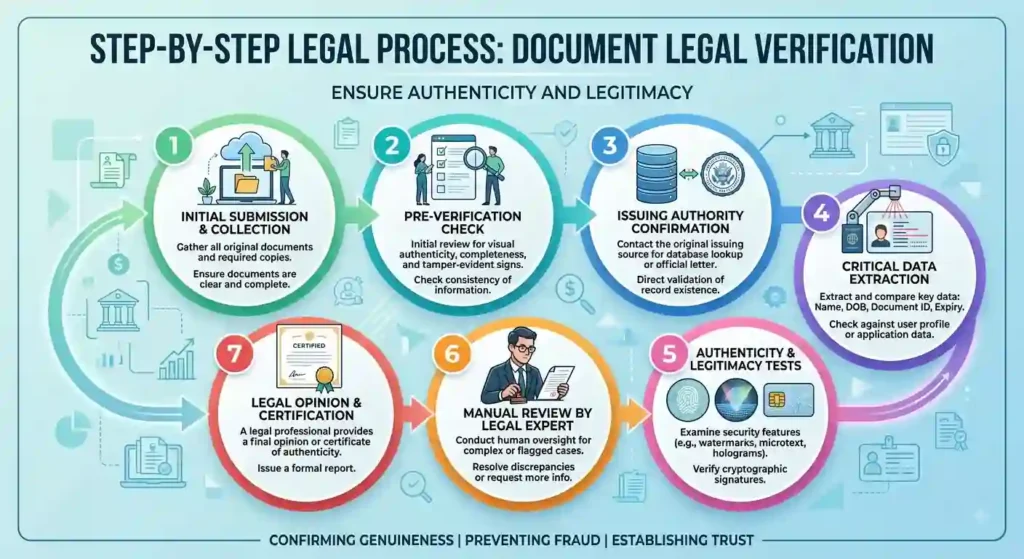
Document legal verification confirms whether a document is genuine, legally valid, and supported by reliable records. Individuals, businesses, NGOs, investors, and NRIs often depend upon documents for important transactions. Therefore, verification can prevent fraud, defective ownership, forged signatures, and unenforceable agreements. Property documents require especially careful scrutiny before purchase, mortgage, lease, or development. Similarly, corporate records require checks before investments, acquisitions, or business contracts. Lawyers examine execution, registration, authority, ownership, dates, signatures, stamps, and supporting records. Furthermore, verification can identify inconsistencies between original documents and government records. The Bharatiya Sakshya Adhiniyam, 2023 governs important evidence-related issues involving documents and electronic records. Consequently, proper verification should precede reliance upon significant legal documents. Paramount Law House provides document verification services covering property, corporate, commercial, contractual, financial, and personal records. Early legal scrutiny can reduce litigation risks and protect valuable financial and legal interests.
Document Legal Verification: Ensure Authenticity and Legitimacy – Paramount Law House
Documents Commonly Requiring Legal Verification
Legal document verification services cover numerous records used by individuals and organisations. Property transactions commonly require title deeds, sale deeds, gift deeds, partition deeds, encumbrance certificates, and revenue records. Businesses may require verification of incorporation documents, board resolutions, contracts, licences, and statutory filings. Furthermore, lenders may require examination of mortgage deeds, guarantees, promissory notes, and security documents. NGOs may need verification of trust deeds, registration certificates, grants, leases, and governing documents. NRIs frequently require verification of Indian property records, powers of attorney, succession documents, and sale agreements. Additionally, employment, partnership, franchise, intellectual property, and vendor agreements require careful review. Lawyers compare documents against authoritative records and applicable legal requirements. They also identify missing pages, suspicious alterations, inconsistent names, and questionable execution. Therefore, professional document authentication helps establish reliability before transactions proceed. Proper verification can also support future litigation, registration, financing, compliance, and dispute resolution.
Authenticity, Validity and Enforceability
Document authenticity differs from legal enforceability, although both concepts remain important during legal verification. Authenticity concerns whether a document genuinely originated from the claimed person or authority. Validity concerns compliance with applicable statutory and contractual requirements. Enforceability concerns whether a competent forum can legally enforce the document. Therefore, a genuine document may still contain defects affecting enforceability. Lawyers examine signatures, execution capacity, authority, consideration, stamping, registration, and contractual terms. Furthermore, statutory requirements may vary according to document type and jurisdiction. Electronic documents require additional consideration under current evidence law. The BSA provides the contemporary statutory framework for evidence in India. Consequently, lawyers should verify both physical and electronic records through reliable sources. Where necessary, they may obtain certified copies from competent government offices. They can also compare registration details with official databases and institutional records. This comprehensive approach reduces uncertainty and strengthens legal protection. Thus, authenticity verification should always form part of broader legal due diligence.
Legal Verification Process, Forums and Remedies
Property Document Verification and Title Due Diligence
Property document verification protects buyers against defective titles, encumbrances, competing claims, and fraudulent transactions. Lawyers generally examine the title chain for the legally relevant historical period. They review sale deeds, parent documents, partition records, release deeds, settlement deeds, and inheritance documents. Additionally, advocates examine encumbrance certificates and applicable revenue records. They may verify patta, tax receipts, survey details, approvals, and possession evidence. Furthermore, they compare property descriptions across documents to identify inconsistencies. Registration records can provide crucial evidence concerning registered transactions and instruments. Where necessary, lawyers investigate pending litigation, acquisition proceedings, mortgages, and statutory restrictions. Civil courts may decide title disputes, while registration authorities handle registration functions. Therefore, proper title verification should precede payment of substantial consideration. A written legal opinion should identify defects, risks, missing records, and recommended remedies. Paramount Law House can conduct structured property due diligence for purchasers, sellers, lenders, developers, and NRIs.
Government Records and Registration Verification
Government record verification provides important evidence supporting document authenticity and transaction history. Registration departments maintain records concerning registered instruments and property transactions. Revenue authorities maintain records concerning land-related entries, assessments, and possession indicators. However, revenue records do not always conclusively establish title. Therefore, lawyers should distinguish title evidence from revenue administration records. Additionally, certified copies can help verify documents when originals remain unavailable. Lawyers may examine registration particulars, document numbers, dates, parties, consideration, and property descriptions. They should also compare these details with the underlying transaction documents. Furthermore, discrepancies can indicate clerical errors, fraud, or incomplete documentation. Appropriate government departments may include Sub-Registrar Offices, revenue authorities, municipal bodies, and development authorities. The exact authority depends upon the document and property’s location. Consequently, jurisdiction-specific verification remains essential. Professional assistance helps coordinate records from different departments and identify contradictions. This process creates stronger evidence before registration, financing, litigation, or settlement.
Corporate and Commercial Document Verification
Corporate document verification protects companies and investors from false representations and unauthorised transactions. Lawyers can examine incorporation records, constitutional documents, director details, charges, shareholding information, and statutory filings. MCA records provide important corporate information for due diligence and compliance assessments. Furthermore, board resolutions should demonstrate proper authority for significant corporate transactions. Share certificates, registers, financial records, and agreements may require additional examination. Additionally, lawyers should verify whether signatories possess contractual and statutory authority. A defective corporate document can create disputes involving directors, shareholders, creditors, or counterparties. NCLT may handle certain company-law disputes, while NCLAT hears eligible statutory appeals. Therefore, corporate verification should consider applicable provisions of the Companies Act, 2013. Lawyers may also examine insolvency records where transactions involve financially distressed companies. Consequently, comprehensive due diligence can identify governance risks before investments or contracts proceed. Paramount Law House assists businesses with corporate document authentication and transaction-focused legal verification.
Contract, Agreement and Signature Verification
Contract verification determines whether agreements contain valid terms, authorised signatures, proper execution, and enforceable obligations. Lawyers review parties, consideration, representations, warranties, conditions, termination provisions, indemnities, and dispute-resolution clauses. Furthermore, they examine stamp duty and registration requirements applicable to particular instruments. Certain agreements may require registration to achieve legal effectiveness or evidentiary advantages. Electronic contracts require appropriate attention to electronic records and authentication. The BSA governs evidence-related questions concerning documentary and electronic material. Therefore, parties should preserve original electronic communications and relevant transaction records. Lawyers can compare signatures with available records and investigate suspicious alterations. They can also verify whether powers of attorney authorise the relevant execution. Additionally, witness details and execution dates may affect legal analysis. If disputes arise, courts or designated tribunals may examine contractual validity and evidence. Consequently, legal review before signing can prevent expensive disputes. Paramount Law House provides contract verification and legal opinion services for individuals and organisations.
Power of Attorney and NRI Document Verification
Power of attorney verification becomes particularly important when representatives execute transactions for absent principals. NRIs frequently use powers of attorney for Indian property, banking, inheritance, and commercial matters. Lawyers should verify the principal’s identity, authority, execution, authentication, and applicable registration requirements. Furthermore, the attorney’s powers must correspond precisely with the proposed transaction. Broad or ambiguous powers can create significant legal risks. Consular authentication, apostille requirements, stamping, and Indian registration rules may also become relevant. Therefore, NRIs should obtain jurisdiction-specific legal advice before sending documents for execution. Lawyers can verify whether the instrument permits sale, mortgage, lease, litigation, or registration activities. They can also identify conflicting powers or previously executed instruments. Where disputes arise, civil courts may determine authority and contractual consequences. Additionally, evidence law governs proof of documents and electronic communications. Consequently, careful verification protects NRIs from unauthorised transactions and fraudulent representations. Professional legal support can simplify cross-border documentation and Indian property transactions.
Affidavits, Certificates and Identity Document Verification
Certificate verification helps establish whether official or private records genuinely represent the claimed facts. Common documents include birth certificates, death certificates, marriage certificates, educational certificates, income records, identity documents, and affidavits. Lawyers examine issuing authorities, registration numbers, dates, seals, signatures, and supporting records. Furthermore, they compare names, addresses, dates, and identification details across documents. Minor inconsistencies can create serious problems in property, succession, employment, immigration, and litigation matters. Therefore, verification should identify both authenticity concerns and correction requirements. Forged certificates may create civil, administrative, or criminal consequences. The BNS contains offences relevant to forgery, cheating, and fraudulent conduct. BNSS governs applicable criminal procedures where criminal allegations arise. Consequently, suspected forgery may require evidence preservation and an appropriate police complaint. Lawyers should avoid making unsupported allegations before examining reliable records. Proper verification can protect individuals and organisations from relying upon fraudulent certificates. It also strengthens subsequent proceedings before competent authorities or courts.
Digital Documents and Electronic Evidence
Digital document verification has become essential because businesses increasingly rely upon electronic contracts and records. Emails, digitally signed documents, electronic invoices, messages, databases, and scanned records may become evidence. Lawyers should verify source, integrity, authorship, timestamps, and applicable authentication requirements. Furthermore, parties should preserve electronic records without unnecessary alteration. Screenshots alone may not provide complete evidentiary context. The Bharatiya Sakshya Adhiniyam, 2023 provides the current statutory framework for evidence in India. Therefore, electronic evidence should receive appropriate legal and technical handling. Lawyers can advise clients about preservation, certification, metadata, and evidentiary presentation. Cyber-related disputes may also involve police cybercrime units and competent criminal forums. Additionally, contractual disputes may proceed before civil courts or specialised tribunals. Consequently, digital verification requires coordination between legal, technical, and evidentiary considerations. Early preservation can prevent accidental destruction of important records. Paramount Law House can assist with electronic-document review and evidence-focused legal strategy.
Fraudulent Documents, Forgery and Police Remedies
Fraudulent document disputes may involve forged signatures, fabricated certificates, altered deeds, false powers of attorney, or manipulated records. Such conduct can create independent criminal and civil consequences. The BNS provides the current substantive criminal framework, while BNSS governs criminal procedure. Therefore, suspected forgery requires careful assessment before initiating criminal action. Lawyers can help prepare complaints supported by specific documents and factual chronology. The appropriate police station depends upon territorial and statutory jurisdiction. Chennai residents should identify the police station connected with the alleged offence or relevant transaction. Furthermore, lawyers can seek preservation of records that may establish document manipulation. Civil courts may also provide remedies concerning declarations, cancellation, injunctions, or damages. Consequently, criminal and civil remedies can sometimes operate alongside each other. However, parties should maintain consistent factual positions across proceedings. Professional representation helps avoid exaggerated allegations and procedural mistakes. Early legal intervention can protect property, money, reputation, and documentary evidence.
Legal Remedies for Defective or Fake Documents
Legal remedies for defective documents depend upon the document type, transaction, parties, and resulting harm. Courts may grant declarations concerning rights, cancellation of instruments, injunctions, damages, or other appropriate relief. Furthermore, parties may seek rectification where documents contain genuine errors requiring correction. Registration authorities may provide administrative remedies for certain registration-related issues. Consumer forums may become relevant where deficient professional services caused qualifying consumer loss. Tribunals may possess jurisdiction over specialised corporate, insolvency, tax, or financial disputes. Therefore, lawyers must select the forum according to statutory jurisdiction. The Code of Civil Procedure, 1908 governs procedure in ordinary civil litigation, subject to special laws. Additionally, limitation periods can restrict otherwise valid claims. Consequently, delayed legal advice may reduce available remedies. Lawyers should assess limitation, jurisdiction, evidence, court fees, and reliefs before filing. Paramount Law House provides document verification, legal opinions, notices, negotiation, litigation, and dispute-resolution support. Early advice can preserve remedies and reduce unnecessary litigation costs.
Legal Opinion and Professional Verification Support
A legal verification opinion converts documentary findings into a structured assessment of authenticity, validity, risks, and recommended action. Lawyers identify verified records, unresolved discrepancies, missing documents, and potential legal consequences. Furthermore, they classify risks according to transaction importance and available remedies. A professional opinion should distinguish confirmed facts from assumptions requiring additional evidence. It should also identify government records reviewed and limitations affecting the conclusion. Additionally, lawyers can recommend corrective documents, indemnities, conditions precedent, or transaction safeguards. Where litigation appears likely, counsel can advise on jurisdiction and evidence preservation. NCLT, NCLAT, consumer commissions, civil courts, and other tribunals may have specialised jurisdiction. Therefore, the opinion should identify the appropriate forum when a dispute already exists. Criminal concerns may require separate advice under BNS and BNSS. Consequently, a comprehensive legal verification process provides more than simple document checking. It creates a practical risk-management strategy for transactions and disputes. Paramount Law House offers professional document verification support based on applicable Indian law.
FAQs on Document Legal Verification
Can a lawyer verify whether a property document is genuine?
Yes. A lawyer can compare documents with registration, revenue, and supporting records. Verification can identify authenticity issues, ownership risks, and missing links.
Can fake documents create criminal liability?
Yes. Forgery, cheating, and related conduct can attract criminal consequences under applicable provisions. Lawyers can assess evidence before recommending appropriate police or court action.
Can NRIs verify Indian property documents remotely?
Yes. NRIs can appoint authorised representatives through appropriate powers of attorney. Lawyers can coordinate government-record verification, title checks, and transaction documentation.
Can electronic documents receive legal recognition?
Yes. Electronic records can serve as evidence when they satisfy applicable legal requirements. The BSA provides India’s current statutory evidence framework.
What remedies exist for a fraudulent registered document?
Depending upon circumstances, remedies can include declaration, cancellation, injunction, damages, and criminal proceedings. The appropriate forum depends upon jurisdiction and facts.
Why should documents undergo legal verification before signing?
Verification can identify defects before they create financial or litigation risks. It helps confirm authority, authenticity, ownership, compliance, enforceability, and available legal protections.
Read More
- Building Monitoring Services: Protect Your Investment
- DTCP Land Approval Services: Ensure Compliance and Approval
- Family Settlement Agreement Drafting: Legal Expertise
- Family Settlement Suit Representation: Experienced Lawyers
- Gift Deed Drafting Services: Expert Legal Assistance
- Ministry of Corporate Affairs (MCA)