Building Monitoring Services: Protect Your Investment
Building monitoring services help owners, associations, companies, NGOs, and investors identify compliance risks before disputes become expensive. Property managers must monitor approvals,…
Building monitoring services help owners, associations, companies, NGOs, and investors identify compliance risks before disputes become expensive. Property managers must monitor approvals, maintenance, safety systems, contracts, finances, and statutory obligations. Moreover, apartment projects can involve promoters, associations, contractors, occupants, municipal authorities, and regulators. RERA regulates covered real-estate projects and protects interests through dedicated authorities and appellate mechanisms. Therefore, monitoring should combine property management with legal compliance reviews.
Building Monitoring Services: Protect Your Investment – Paramount Law House
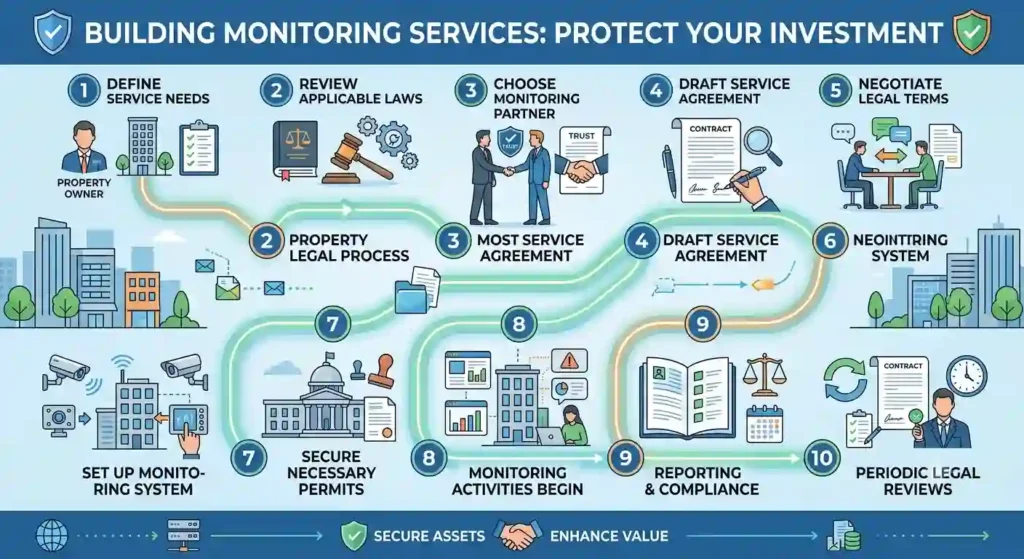
A practical monitoring program should examine:
- sanctioned plans and occupancy permissions;
- maintenance contracts and vendor compliance;
- fire and structural safety requirements;
- common-area records and association decisions;
- municipal taxes, licences, and notices.
Additionally, local building regulations can vary across States and municipalities. MoHUA’s Model Building Bye-Laws provide national reference material, while local authorities enforce applicable requirements. Legal monitoring therefore protects property value, safety, governance, and regulatory standing.
Identifying Common Apartment Management Risks
Apartment management creates several recurring legal and operational risks for property owners. These risks may involve maintenance charges, unauthorized alterations, common-area use, parking allocation, contractor disputes, or association governance. Furthermore, delayed repairs can create liability when residents or visitors suffer foreseeable harm. Property managers should maintain inspection reports, complaint registers, photographs, invoices, contracts, and compliance certificates. Such documentation can establish responsible management when disputes arise. Meanwhile, owners should verify whether management decisions follow registered documents, applicable State laws, and association rules. RERA remedies may apply to covered promoter-allottee disputes, while other disputes may require civil, consumer, cooperative, or municipal forums. Consequently, legal classification should precede litigation. Proper monitoring can reveal problems involving:
- unauthorized construction;
- defective common facilities;
- unpaid statutory dues;
- unsafe electrical systems;
- disputed maintenance collections.
Early intervention generally reduces repair costs and litigation exposure.
Legal Duties of Property Managers
Monitoring Building Approvals and Permissions
Property managers should maintain a complete regulatory file for every managed building. That file should include sanctioned plans, completion documents, occupancy permissions, fire approvals, lift records, and relevant municipal permissions. Moreover, managers should compare actual conditions against approved plans periodically. Unauthorized structural changes can create municipal action, safety concerns, insurance complications, and disputes among occupants. RERA may provide remedies for certain project-related violations, particularly where promoter obligations remain relevant. However, completed apartment buildings may also involve municipal, cooperative, apartment-ownership, or local property laws. Therefore, a nationwide monitoring policy should include State-specific compliance checks. Managers should immediately escalate discrepancies involving:
- additional floors or structures;
- altered fire exits;
- converted common areas;
- unauthorized commercial use;
- deviations from approved layouts.
Legal counsel can examine notices and determine whether representation, regularisation, appeal, injunction, or other remedies remain available.
Maintaining Fire, Structural and Common-Area Safety
Safety compliance remains central to responsible property management because common facilities affect many occupants simultaneously. Managers should schedule inspections covering fire equipment, emergency exits, electrical installations, lifts, generators, water systems, and structural concerns. Furthermore, maintenance records should identify inspection dates, defects, contractors, corrective action, and follow-up verification. Building requirements depend upon applicable local regulations, approvals, and safety authorities. MoHUA’s Model Building Bye-Laws provide guidance covering several building-planning and safety matters. However, local authorities may impose additional requirements. Property owners should therefore obtain specialist technical reports when structural concerns arise. If an accident occurs, legal consequences may involve civil liability or criminal allegations. The BNS currently governs applicable criminal offences, while BNSS governs criminal procedure. Prompt documentation and professional advice can reduce avoidable legal exposure.
Governance, Contracts and Financial Controls
Association and Society Management
Preventing Governance Disputes
Apartment associations and housing societies require transparent governance because management decisions affect collective property rights. Disputes may concern elections, voting rights, maintenance charges, common facilities, records, committee powers, or expenditure approvals. Moreover, the governing legal framework varies according to the property’s structure and applicable State legislation. Managers should therefore verify the registered association documents, bylaws, declarations, resolutions, and applicable statutory provisions. Every major decision should have a documented agenda, attendance record, resolution, and supporting financial material. Additionally, owners should receive information through legally recognised communication channels. A lawyer can review disputed resolutions and determine whether internal remedies or statutory proceedings should follow. Depending upon the State, disputes may reach cooperative authorities, civil courts, consumer forums, RERA authorities, or other competent bodies. Consequently, property monitoring should include governance audits. Transparent records can prevent allegations involving mismanagement, discrimination, financial irregularity, or unauthorized decision-making.
Protecting Maintenance Funds and Financial Records
Maintenance collections represent significant financial assets, particularly within large residential communities. Managers should maintain separate records showing collections, expenses, vendor payments, deposits, statutory deductions, and approved budgets. Furthermore, committees should establish financial controls preventing unauthorized withdrawals or unsupported expenditure. Annual accounts and audit requirements depend upon the applicable legal structure and State legislation. Property managers should retain invoices, quotations, work orders, payment approvals, and bank records. Suspicious transactions require immediate internal review and appropriate legal advice. If fraud or misappropriation allegations arise, criminal-law implications may require careful assessment under the BNS. Criminal procedure now falls under BNSS for applicable offences. However, financial disagreements do not automatically constitute criminal conduct. Counsel should distinguish accounting disputes from dishonest conduct. Appropriate remedies may include recovery proceedings, injunctions, internal audit, statutory complaints, police complaints, or civil litigation.
Contractual Risk Management
Reviewing Vendors and Service Agreements
Property managers frequently appoint security agencies, housekeeping contractors, lift companies, electricians, plumbers, facility managers, and maintenance specialists. Poorly drafted agreements can create substantial liability when services fail or accidents occur. Therefore, every major service contract should define scope, standards, payment terms, insurance, indemnity, warranties, termination rights, records, and dispute resolution. Vendor due diligence should also verify licences, registrations, qualifications, insurance, and statutory compliance. Moreover, contracts should require prompt reporting of safety incidents and regulatory notices. Managers should maintain performance records because contractual enforcement depends upon documentary evidence. If a contractor breaches obligations, remedies may include notices, cure periods, damages, termination, arbitration, or civil proceedings. The appropriate forum depends upon the contract and applicable law. Consequently, legal review before execution can prevent expensive disputes. A structured vendor-management system also improves accountability and protects owners against recurring service failures.
Handling Defects and Construction Liability
Defective construction can affect structural safety, waterproofing, plumbing, electrical systems, lifts, fire installations, and common amenities. Owners should document defects through photographs, engineering reports, correspondence, invoices, and inspection records. Furthermore, the responsible party may differ depending upon whether the defect arose from construction, maintenance, alteration, or contractor negligence. RERA provides statutory rights and remedies for covered promoter-allottee relationships. However, limitation, contractual terms, possession dates, defect timing, and project status require careful assessment. Legal remedies may include rectification, compensation, interest, injunctions, consumer remedies, RERA proceedings, or civil claims. Property managers should avoid unsupported admissions when communicating with developers or contractors. Instead, they should obtain technical evidence and preserve contractual documents. If serious defects threaten occupants, immediate safety measures should take priority. Subsequently, counsel can coordinate technical assessment, notices, settlement discussions, and appropriate proceedings.
Enforcement, Disputes and Legal Remedies
Responding to Regulatory and Property Disputes
Municipal and Regulatory Action
Managing Notices and Enforcement Proceedings
Municipal authorities may issue notices concerning unauthorized construction, property use, building deviations, taxes, sanitation, parking, safety, or other regulatory matters. Ignoring such notices can increase penalties and enforcement risks. Therefore, property managers should immediately record the notice date, issuing authority, property details, allegations, response deadline, and available appeal mechanism. A lawyer should then examine the underlying approval documents and applicable local regulations. Additionally, technical consultants may need to verify measurements, sanctioned plans, structural conditions, or usage classifications. Depending upon the matter, remedies may include representation, rectification, regularisation where legally permitted, appeal, revision, injunction, or judicial review. Civil courts may have jurisdiction over some disputes, while statutory authorities may control specialised remedies. Consequently, forum selection requires careful legal analysis. Managers should never alter documents or conceal unauthorized work after receiving a notice. Transparent corrective action can significantly improve regulatory compliance and dispute resolution prospects.
Police Complaints and Criminal Liability
Property disputes sometimes develop into allegations involving trespass, intimidation, cheating, misappropriation, forgery, criminal damage, or unlawful construction activities. Since July 2024, applicable criminal offences operate under the BNS, while criminal procedure operates under BNSS. Therefore, property managers should classify allegations carefully before approaching police authorities. A complaint should provide specific facts, supporting documents, dates, witnesses, and identifiable conduct. Nearby police stations may receive complaints when territorial jurisdiction applies, subject to current procedural law. However, every contractual or maintenance dispute does not justify criminal proceedings. Counsel should distinguish civil breaches from conduct satisfying criminal-law elements. Electronic evidence should also receive careful preservation because the BSA provides India’s current statutory evidence framework. Appropriate remedies can include police complaints, representations, bail advice, civil injunctions, recovery proceedings, or statutory applications. Early legal assessment prevents escalation through inappropriate criminal allegations.
Consumer, RERA and Civil Remedies
Property disputes can involve multiple forums, and choosing the correct remedy remains crucial. RERA establishes regulatory authorities, adjudicating mechanisms, and appellate tribunals for matters within its statutory scope. Consumer forums may address eligible consumer disputes involving deficient services or unfair practices. Civil courts can handle matters falling within their jurisdiction, subject to statutory exclusions and specialised remedies. Additionally, State-specific cooperative or apartment laws may provide separate dispute mechanisms. Legal counsel should therefore examine the parties, transaction, property status, cause of action, limitation, and relief sought. Possible remedies include:
- rectification of defects;
- compensation and interest;
- injunctions against unlawful acts;
- recovery of maintenance amounts;
- declarations concerning property rights.
Furthermore, an appeal may lie before the designated appellate authority or tribunal. Proper forum selection prevents dismissal, duplication, and unnecessary delay. A coordinated strategy can protect both property interests and regulatory compliance.
Building a Proactive Monitoring System
Nationwide Compliance Strategy
Creating a Property Compliance Register
A compliance register converts building monitoring into a measurable legal-management process. Every managed property should maintain a central register containing approvals, licences, inspections, contracts, complaints, notices, renewals, and corrective actions. Moreover, each entry should identify its responsible person and completion deadline. Managers should periodically reconcile physical conditions against regulatory records. The register can include:
- municipal permissions;
- fire-safety documentation;
- lift inspection records;
- structural assessments;
- insurance policies;
- vendor agreements;
- tax and statutory payment records;
- association resolutions.
Digital backups should preserve important documents against accidental loss. Furthermore, access controls can protect sensitive financial and personal information. Regular legal audits should identify expired approvals and unresolved notices. Where State rules differ, the register should contain jurisdiction-specific requirements. Consequently, nationwide property management requires local legal verification rather than one universal checklist. This approach enables owners to detect compliance gaps before authorities, tenants, buyers, or residents raise disputes.
Using Technology for Building Monitoring
Technology can improve building monitoring when managers combine digital records with physical inspections. Property-management platforms can track complaints, maintenance schedules, vendor performance, payments, inspections, and document renewals. Furthermore, cameras, sensors, access systems, and digital logs can help identify operational incidents. However, managers must respect applicable privacy, contractual, and data-protection requirements. Evidence systems should preserve reliable timestamps and prevent unauthorized alteration. Additionally, digital records should remain accessible for audits, disputes, insurance claims, and regulatory responses. Technology cannot replace qualified engineers, safety professionals, lawyers, or statutory authorities. Instead, it should support timely decision-making and evidence preservation. If a dispute reaches court or tribunal, records should demonstrate authenticity and continuity. Counsel can advise on retention policies and lawful evidence collection. Thus, technology becomes most valuable when integrated with documented governance procedures. A reliable digital monitoring system can reduce missed deadlines, recurring defects, financial leakage, and compliance failures.
Protecting Owners, NRIs and Institutional Investors
Property monitoring becomes especially important when owners live outside the property’s jurisdiction. NRIs, companies, NGOs, trusts, and institutional investors may struggle to supervise local maintenance and regulatory compliance personally. A professional monitoring arrangement can provide inspections, document verification, vendor oversight, notice tracking, and legal escalation. Moreover, owners should execute appropriate authority documents defining the manager’s permitted responsibilities. The arrangement should preserve financial controls and require regular reporting. For companies and NGOs, board or governing-body approvals may also matter when property decisions involve significant expenditure. NRIs should ensure that local representatives act within documented authority. Furthermore, cross-border communication should preserve invoices, approvals, inspection photographs, and payment records. If disputes arise, counsel can coordinate local authorities, police, courts, RERA forums, consumer commissions, or civil proceedings. Effective monitoring therefore protects absentee owners from unnoticed liabilities. It also helps maintain property value, regulatory compliance, safety, and transparent administration.
Legal Support for Property Protection
Selecting the Appropriate Remedy
Legal Audit and Preventive Representation
Preventive legal audits can identify risks before they develop into costly property disputes. Lawyers should review title-related documents, association records, contracts, approvals, notices, maintenance structures, and regulatory correspondence. Furthermore, technical specialists can support lawyers when structural or engineering questions arise. The audit should classify risks according to urgency and potential financial impact. High-risk matters require immediate corrective action and documented follow-up. Medium-risk matters should receive scheduled remediation, while low-risk matters require periodic monitoring. Legal counsel can also prepare notices, representations, contracts, resolutions, compliance policies, and dispute-response protocols. Where regulatory authorities issue notices, lawyers can evaluate jurisdiction, limitation, evidence, and available remedies. Consequently, preventive representation often costs less than prolonged litigation. Owners should also review insurance coverage and contractual indemnities regularly. A structured legal audit protects property investments while supporting responsible management. Ultimately, compliance should operate as a continuing process rather than a one-time document exercise.
Court, Tribunal and Statutory Remedies
Building-management disputes can reach different forums depending upon the legal issue and governing legislation. RERA authorities and Real Estate Appellate Tribunals handle matters falling within RERA’s statutory jurisdiction. Consumer Commissions can address eligible consumer disputes, while civil courts can provide remedies within their jurisdiction. Municipal authorities may decide building-permission and enforcement matters under applicable local laws. Police authorities may investigate cognizable offences under the current criminal-law framework. Courts can also grant appropriate interim or final relief where statutory jurisdiction permits. Therefore, legal counsel should identify the cause of action before selecting a forum. Possible remedies include:
- injunctions;
- compensation;
- rectification;
- recovery;
- declarations;
- appeals;
- judicial review;
- criminal-law remedies.
Moreover, limitation periods can determine whether otherwise valid claims remain enforceable. Early advice allows owners to preserve evidence and select effective proceedings.
Paramount Law House: Building Monitoring Legal Support
Paramount Law House can assist property owners, associations, companies, NGOs, trusts, and NRIs with comprehensive building-monitoring legal support. Our approach focuses on regulatory compliance, documentation, preventive risk management, and effective dispute resolution. We can review property-management contracts, association resolutions, municipal notices, maintenance disputes, regulatory permissions, and vendor obligations. Furthermore, legal support can coordinate with engineers, architects, accountants, facility managers, and other specialists when technical issues arise. We can also assist with notices, representations, negotiations, RERA matters, consumer disputes, civil proceedings, and appropriate criminal-law responses. The applicable forum depends upon the property, transaction, parties, cause of action, and State-specific legislation. Therefore, each matter requires individual legal assessment. Our objective remains practical: identify risks early, protect property interests, and maintain regulatory compliance. For complex disputes, timely legal intervention can preserve evidence, prevent escalation, and improve available remedies. Professional monitoring ultimately helps transform property management into proactive legal risk protection.
Frequently Asked Questions
What are building monitoring services?
Building monitoring services combine property inspections, regulatory checks, maintenance oversight, document reviews, vendor supervision, and legal compliance monitoring for apartment and property owners.
Why should apartment owners monitor compliance?
Regular monitoring identifies unsafe conditions, unauthorized alterations, expired approvals, contractual breaches, financial irregularities, and regulatory notices before they create significant liability.
Does RERA apply to every apartment dispute?
No. RERA applies according to its statutory scope. The property’s status, parties, transaction, and applicable State rules determine whether RERA remedies apply.
Can property managers handle police complaints?
Managers may report appropriate criminal allegations, but lawyers should first assess whether the dispute involves a genuine criminal offence or contractual disagreement.
Which forum handles building disputes?
The forum depends upon the dispute. RERA authorities, consumer commissions, civil courts, municipal authorities, cooperative forums, and criminal courts may have different jurisdictions.
Can NRIs obtain building monitoring support?
Yes. NRIs can appoint appropriate representatives and obtain professional monitoring covering inspections, compliance records, vendors, notices, payments, and legal proceedings within India.
Read More
- DTCP Land Approval Services: Ensure Compliance and Approval
- Family Settlement Agreement Drafting: Legal Expertise
- Family Settlement Suit Representation: Experienced Lawyers
- Gift Deed Drafting Services: Expert Legal Assistance
- Hire Purchase Agreement Assistance: Ensure Compliance
- Ministry of Housing and Urban Affairs (MoHUA)