Rental Agreement Drafting: Ensure Your Rights Are Protected
Renting property—whether residential or commercial—has become a common part of modern living. However, many landlords and tenants overlook one of the most…
Renting property—whether residential or commercial—has become a common part of modern living. However, many landlords and tenants overlook one of the most important steps in the process: drafting a clear and legally sound rental agreement. At Paramount Law House: Property Lawyers 24×7, we often handle disputes that could have been easily avoided if the agreement had been written properly from the start.
A rental agreement is not just a piece of paper. It’s a binding legal document that defines the rights, duties, and obligations of both the landlord and the tenant. Without it, misunderstandings and financial losses can arise quickly. Let’s explore how a carefully drafted rental agreement ensures your rights are fully protected.
Rental Agreement Drafting: Ensure Your Rights Are Protected: Paramount Law House
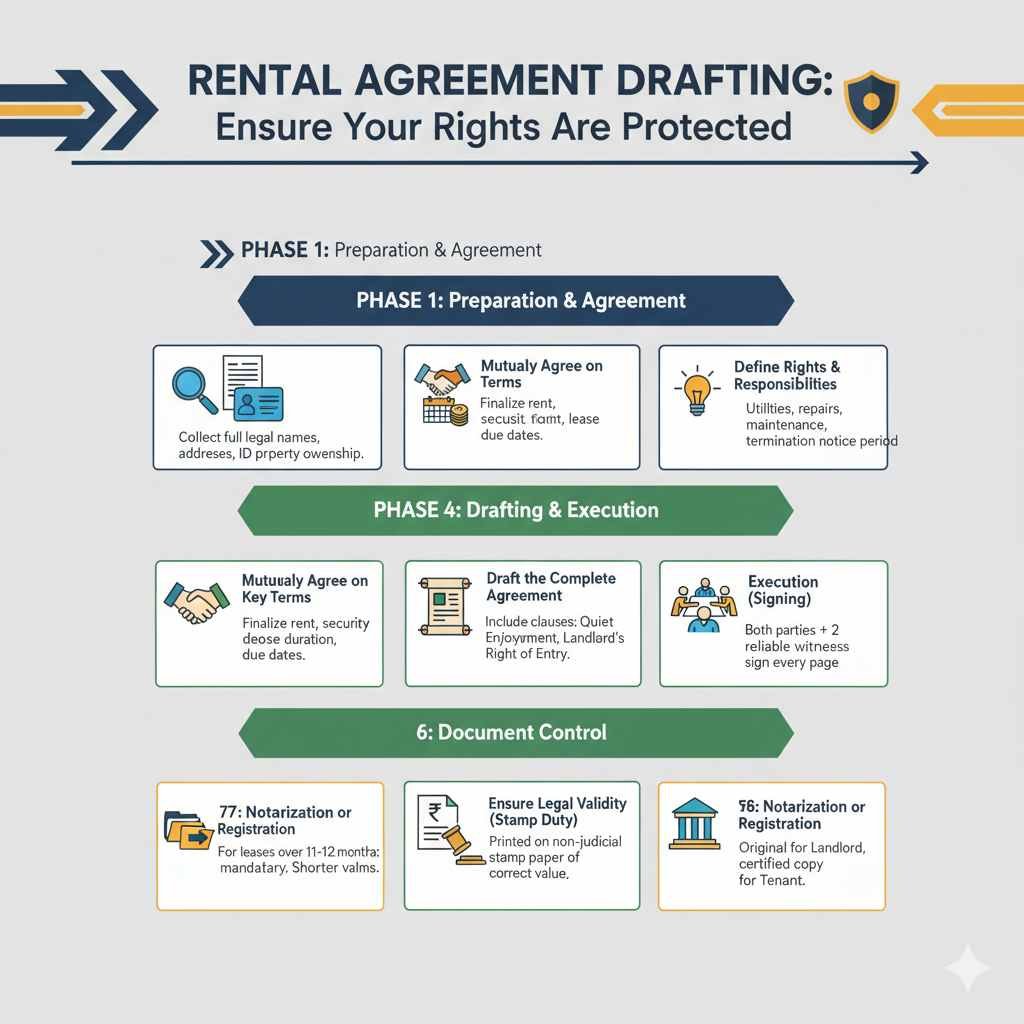
Understanding the Basics of a Rental Agreement
A rental agreement is a contract between the landlord and the tenant, outlining the terms and conditions of renting a property. It usually includes details like the rent amount, security deposit, duration of the lease, and responsibilities of both parties.
The agreement acts as a legal safeguard, providing evidence in case of disputes. More importantly, it helps both sides understand their boundaries clearly—avoiding confusion later on.
In India, rental agreements are governed mainly by the Indian Contract Act, 1872, and the Rent Control Acts applicable in each state. Therefore, knowing these laws and ensuring compliance is crucial during drafting.
Essential Clauses Every Rental Agreement Must Include
When drafting a rental agreement, every detail counts. Here are the most important clauses that must be included:
- Names and Addresses of Parties
Both landlord and tenant details should be accurate and up to date. If the property is co-owned, all owners must be listed. - Property Description
The property’s complete address, along with details like floor number, size, and boundaries, should be clearly mentioned. - Rent Amount and Payment Terms
State the exact rent, due date, mode of payment, and penalties for late payment. Always specify if utilities like water or electricity are included. - Security Deposit
Mention the amount, purpose, and refund conditions for the security deposit. Also, clarify if any deductions will be made for damages. - Duration of Tenancy
Specify whether the agreement is for 11 months (common for residential leases) or a longer period. The start and end dates should be clear. - Maintenance Responsibilities
Define who is responsible for regular maintenance and repairs. This avoids disputes over damaged fittings or broken fixtures. - Renewal and Termination Clause
Explain how the agreement can be renewed or terminated. Include notice periods and renewal rent terms to prevent surprises later. - Use of Property
State that the property should only be used for residential or commercial purposes, as agreed. Unauthorized use can lead to eviction. - Subletting Restrictions
Specify whether the tenant is allowed to sublet the property. If not, mention that any violation will lead to termination. - Dispute Resolution
Add a clause mentioning how disputes will be resolved—through negotiation, mediation, or legal action in court.
Each of these clauses ensures legal clarity and protects both sides from unnecessary tension or conflict.
Legal Formalities: Registration and Stamp Duty
A rental agreement is legally valid only when it follows proper formalities. In India, agreements exceeding 11 months must be registered with the Sub-Registrar’s office under the Registration Act, 1908.
The document must also be executed on a non-judicial stamp paper of appropriate value, as per the stamp duty rates in your state. Failure to register or pay the correct stamp duty can make the agreement invalid in court.
At Paramount Law House, our lawyers handle the entire process—drafting, stamping, and registration—to ensure your document stands firm legally.
Common Mistakes People Make in Rental Agreements
Many property owners and tenants use online templates or verbal agreements without realizing the risks involved. Some common mistakes include:
- Leaving out crucial clauses such as renewal terms or maintenance duties.
- Using generic templates that don’t match the property type or state laws.
- Failing to mention the security deposit refund timeline.
- Not registering the agreement, making it hard to enforce in court.
- Ignoring termination notice periods, leading to sudden disputes.
Such errors often lead to tenant evictions, rent recovery issues, or property damage claims. That’s why expert drafting by a property lawyer ensures every clause works in your favor.
Why You Need a Property Lawyer
While it’s tempting to download a free rental agreement template, it can’t replace professional legal advice. Every property transaction is unique, and so should be the rental agreement. A property lawyer can:
- Customize the document according to your specific needs and local laws.
- Identify potential legal risks and close loopholes.
- Ensure fair terms for both landlord and tenant.
- Handle registration and verification of all related documents.
At Paramount Law House: Property Lawyers 24×7, our experts specialize in property contracts and lease agreements. We help clients create legally strong rental agreements that stand up in court—protecting both their property and peace of mind.
Protecting Landlord’s Rights
For landlords, a rental agreement acts as a shield. It protects them from tenants who might:
- Delay rent payments,
- Misuse the property,
- Violate terms of use, or
- Refuse to vacate after the term ends.
By clearly defining conditions and including eviction and penalty clauses, a well-drafted agreement ensures the landlord can act confidently and lawfully if problems arise.
Moreover, landlords can include clauses allowing annual rent escalation, security for unpaid dues, and inspection rights. These help maintain transparency and accountability throughout the tenancy.
Protecting Tenant’s Rights
Tenants also benefit from a fair and detailed rental agreement. It ensures they are not overcharged, evicted unfairly, or denied essential services.
A proper agreement helps tenants:
- Know the exact rent and deposit terms,
- Prevent sudden rent hikes,
- Ensure timely repairs and maintenance, and
- Enjoy peaceful possession of the property without interference.
At Paramount Law House, we draft tenant-friendly clauses that maintain fairness while still protecting the landlord’s legitimate interests. Our approach ensures both sides walk away satisfied.
When Disputes Arise: Legal Remedies
Even with a detailed agreement, disputes can sometimes occur. Common issues include rent defaults, property damage, or unauthorized subletting.
In such cases, the rental agreement serves as strong evidence in court. It helps prove the terms that were agreed upon. Legal remedies may include:
- Eviction proceedings under Rent Control laws,
- Recovery of unpaid rent,
- Compensation for damages, or
- Injunctions to prevent misuse of property.
Having a well-written agreement saves time, effort, and money during such disputes.
Drafting Tips from Paramount Law House Experts
Our property lawyers recommend these best practices for landlords and tenants alike:
- Always involve both parties during drafting to maintain transparency.
- Avoid vague terms—use specific language for every condition.
- Review the local rent control laws before finalizing.
- Include digital payment details for rent to maintain clear records.
- Add a clause on renewal discussions well before expiry.
- Ensure both parties sign each page of the agreement.
- Keep digital and physical copies safely for future use.
Following these tips guarantees that your agreement remains valid and enforceable at all times.
The Role of Technology in Rental Agreements
Today, technology has made the process easier and faster. You can now digitally sign and register rental agreements online in many Indian states. This not only saves time but also ensures authenticity.
At Paramount Law House, we assist clients with e-stamping, e-registration, and online verification to make the process completely hassle-free. Our experts ensure every digital agreement complies with legal standards and retains full enforceability.
Frequently Asked Questions
A written rental agreement clearly defines the rights and duties of both the landlord and tenant. It helps prevent misunderstandings about rent, maintenance, and notice periods. Most importantly, it serves as legal proof in case of disputes, protecting both sides from unfair claims or misuse of property.
A valid rental agreement should include clauses on rent amount, payment date, security deposit, duration, renewal terms, maintenance duties, and notice period for termination. It should also mention whether subletting is allowed and how disputes will be resolved. These clauses ensure legal clarity and fairness for both parties.
Yes, if the rental period exceeds 11 months, registration is mandatory under the Registration Act, 1908. Unregistered agreements may not be accepted as evidence in court. Registration also makes the document legally enforceable, providing stronger protection to both landlord and tenant.
A property lawyer customizes the agreement based on state laws and the client’s needs. They ensure all clauses are valid, close legal loopholes, and handle stamp duty and registration. Legal experts at Paramount Law House guarantee that every term in your agreement safeguards your rights.
A poorly drafted or unregistered agreement can lead to serious issues like rent disputes, delayed eviction, or loss of deposit. Without a valid contract, enforcing rights in court becomes difficult. Professional drafting ensures your property and interests remain fully protected under the law.
Conclusion: Protect Your Property and Peace of Mind
In the end, a rental agreement is your legal shield—protecting your rights, defining your responsibilities, and preventing future disputes. Whether you are a landlord leasing out your property or a tenant moving into a new home, a well-drafted agreement ensures fairness and clarity.
At Paramount Law House: Property Lawyers 24×7, we believe prevention is better than litigation. Our team of experienced property lawyers ensures that every clause, every word, and every term in your rental agreement truly safeguards your interests.
Read More
- Rental Deposit Issues Resolved: Legal Expertise
- Residential Land Law Consultation: Expert Guidance
- Sale Deed Review: Ensure Legally Binding Documents
- Settlement of Self-acquired Property: Legal Solutions
- Stay Order Assistance: Protect Your Property Interests
- The Model Tenancy Act, 2021 (approved by the Union Cabinet) — full text PDF on the Ministry of Housing & Urban Affairs (MoHUA) site