House Owner Tenant Issue Resolution: Legal Support Available
House Owner Tenant Issue Resolution – House owner tenant disputes frequently arise due to rent defaults, eviction concerns, maintenance issues, and agreement…
House Owner Tenant Issue Resolution – House owner tenant disputes frequently arise due to rent defaults, eviction concerns, maintenance issues, and agreement violations. Therefore, legal support helps landlords and tenants understand their rights under applicable Indian laws. Property lawyers provide guidance regarding rental agreements, notices, court proceedings, and settlement options. Additionally, legal professionals examine documents, communication records, and payment details before suggesting remedies.
House Owner Tenant Issue Resolution: Legal Support Available – Paramount Law House
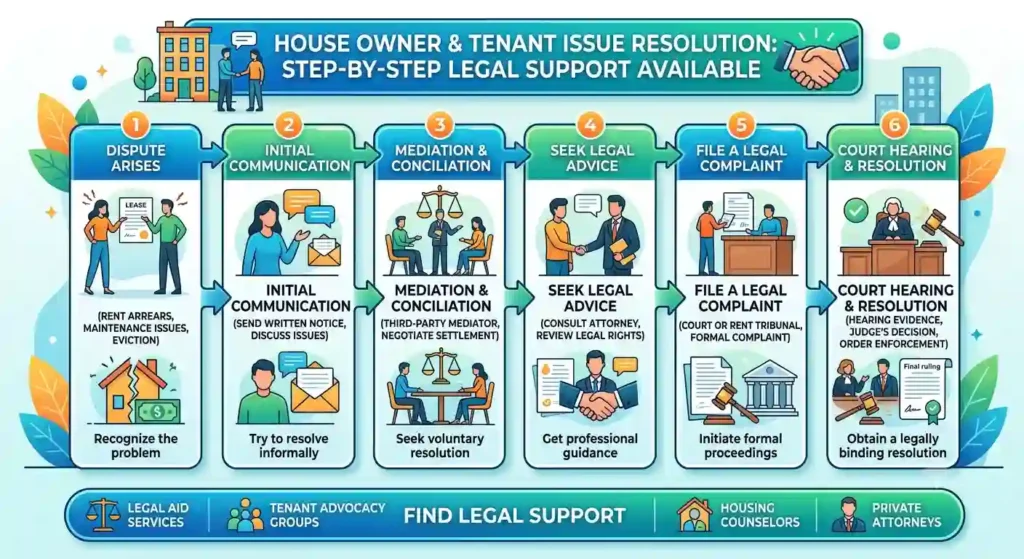
Common disputes include:
- Non-payment of rent by tenants.
- Illegal eviction attempts by owners.
- Security deposit recovery issues.
- Property damage claims.
- Rental agreement interpretation disputes.
Moreover, lawyers assist clients before appropriate forums, including civil courts, Rent Control Authorities, and tribunals. Hence, proper legal advice prevents unnecessary conflicts and protects lawful interests. The Civil Procedure Code, Indian Contract Act, BNS, BNSS, and BSA provisions may apply depending on the dispute nature.
Tenant Rights and Owner Responsibilities
House owners and tenants must follow legal obligations created through rental agreements and applicable state tenancy laws. Furthermore, tenants have rights against unlawful eviction, harassment, and improper property possession demands. Similarly, owners can seek remedies against rent defaults, misuse, and unauthorized alterations. Legal assistance helps both parties understand responsibilities clearly.
Important legal considerations include:
- Valid rental agreement preparation.
- Proper rent payment records.
- Lawful eviction procedures.
- Written communication between parties.
- Compliance with local tenancy regulations.
Additionally, lawyers help negotiate settlements without lengthy litigation whenever possible. However, serious disputes may require filing cases before competent courts or authorities. Therefore, professional legal guidance ensures proper documentation and strategic action. Legal experts also advise clients about evidence requirements under the Bharatiya Sakshya Adhiniyam, 2023.
Filing Civil Cases for Rental Disputes
The Civil Procedure Code governs many procedures followed during landlord tenant litigation in India. Therefore, property disputes involving possession, recovery, injunctions, and damages often proceed through civil courts. Lawyers prepare pleadings, collect evidence, and represent clients during hearings. Additionally, advocates explain limitation periods, jurisdiction requirements, and procedural compliance.
Common civil remedies include:
- Recovery of unpaid rent.
- Possession recovery suits.
- Permanent injunction applications.
- Temporary injunction petitions.
- Compensation claims.
Moreover, courts evaluate rental agreements, payment receipts, notices, and witness statements. The BSA provides rules regarding documentary and electronic evidence presentation. Hence, maintaining proper records becomes essential for successful legal proceedings. Furthermore, experienced lawyers identify whether matters require District Courts, High Courts, Rent Authorities, or alternative dispute resolution mechanisms.
Rental Agreement Review and Legal Compliance
A properly drafted rental agreement prevents many future disputes between owners and tenants. Therefore, legal review before signing agreements protects both parties from unclear obligations. Lawyers examine clauses related to rent increase, maintenance charges, termination conditions, and dispute resolution methods.
Essential agreement elements include:
| Agreement Term | Legal Importance |
|---|---|
| Rent Amount | Establishes payment obligation |
| Security Deposit | Protects financial interests |
| Tenure Period | Defines occupancy duration |
| Termination Clause | Controls ending procedures |
Additionally, registration and stamp duty requirements may apply under state laws. Therefore, legal professionals verify compliance before execution. Moreover, advocates assist with renewal agreements, notices, and modifications. Proper drafting reduces litigation risks and creates stronger legal protection for owners and tenants.
Eviction Notices and Legal Procedures
Eviction disputes require careful handling because owners cannot remove tenants through force or illegal methods. Therefore, landlords must follow lawful procedures prescribed under applicable tenancy laws. Lawyers prepare legally valid notices stating reasons, timelines, and required actions.
Eviction may involve:
- Rent default cases.
- Breach of agreement cases.
- Unauthorized occupation matters.
- Property misuse claims.
- Personal requirement grounds.
Additionally, tenants can challenge unlawful eviction attempts through courts or authorities. Furthermore, evidence regarding notices, payments, and communications becomes important. Legal professionals guide clients regarding filing procedures and hearing representation. Hence, lawful eviction protects ownership rights while respecting tenant protections.
Criminal Complaints Regarding Property Misuse
Some landlord tenant disputes may involve criminal elements requiring police assistance. Therefore, parties may approach nearby police stations when offences involve threats, trespass, intimidation, or property damage. The Bharatiya Nyaya Sanhita and Bharatiya Nagarik Suraksha Sanhita provide modern criminal law procedures.
Possible criminal issues include:
- Criminal intimidation.
- Trespass into premises.
- Theft allegations.
- Property destruction.
- Harassment complaints.
Additionally, lawyers assist clients during police complaints, investigations, and legal proceedings. However, every dispute does not become a criminal matter. Therefore, advocates evaluate facts before recommending criminal remedies. Moreover, proper evidence collection supports genuine complaints. Legal support ensures clients follow lawful procedures while protecting their rights.
Mediation as an Effective Legal Remedy
Mediation provides a practical solution for resolving house owner tenant disputes without prolonged court battles. Therefore, parties can discuss concerns with the assistance of neutral mediators and legal professionals. This process saves time, reduces expenses, and maintains privacy between owners and tenants. Additionally, mediation helps preserve relationships when disputes involve residential properties, commercial spaces, or family-owned buildings. Common settlement areas include:
- Pending rent payments.
- Security deposit refunds.
- Repair responsibility.
- Agreement termination.
- Possession handover.
Moreover, courts encourage alternative dispute resolution under the CPC principles. Therefore, lawyers recommend mediation before initiating lengthy litigation whenever suitable. Furthermore, settlements reached through mediation can provide clear obligations for both parties. Legal experts draft settlement terms carefully to avoid future disagreements. Hence, professional mediation support creates legally sustainable solutions.
Lok Adalat and Conciliation Remedies
Lok Adalat provides an affordable mechanism for resolving eligible landlord tenant disputes through compromise. Therefore, parties can approach Legal Services Authorities for settlement assistance. These forums reduce litigation burdens and encourage faster dispute resolution. Additionally, advocates guide clients regarding eligibility, documentation, and settlement procedures.
Important advantages include:
- Faster resolution process.
- Lower legal expenses.
- Mutual agreement opportunities.
- Simple procedures.
- Binding settlement outcomes.
Moreover, Lok Adalat proceedings operate through legal aid mechanisms established under Indian law. Therefore, eligible parties can seek assistance from Legal Services Authorities. Lawyers also help prepare documents and represent clients during proceedings. Hence, alternative forums provide valuable support for rental conflicts.
Legal Action Against Defaulting Tenants
House owners facing rent defaults can seek legal remedies through appropriate courts and authorities. Therefore, landlords may initiate recovery proceedings after following contractual and statutory requirements. Lawyers evaluate rental agreements, payment records, and communication history before filing cases. Additionally, advocates prepare legal notices demanding payment and compliance.
Available remedies include:
- Rent recovery suits.
- Eviction proceedings.
- Damage compensation claims.
- Possession recovery petitions.
- Injunction applications.
Moreover, courts examine evidence presented by both parties before granting relief. The BSA provisions help determine admissibility of documents and electronic records. Therefore, maintaining rent receipts, bank statements, and messages becomes important. Legal professionals also advise owners regarding jurisdiction and limitation periods. Hence, timely action improves chances of obtaining effective remedies.
Tenant Remedies Against Illegal Eviction
Tenants facing unlawful eviction attempts have legal protection under Indian laws. Therefore, owners cannot forcibly remove occupants without following proper procedures. Lawyers assist tenants in obtaining suitable remedies from courts and authorities. Additionally, legal professionals examine rental agreements and possession documents before initiating action.
Tenant remedies may include:
| Remedy | Purpose |
|---|---|
| Injunction Suit | Prevents illegal eviction |
| Police Complaint | Addresses criminal threats |
| Civil Proceedings | Protects lawful possession |
| Mediation | Resolves disputes peacefully |
Furthermore, tenants can challenge harassment, unauthorized entry, and wrongful possession attempts. However, tenants must maintain evidence proving lawful occupation. Legal guidance ensures proper filing before competent forums. Hence, professional representation protects tenant rights effectively.
Security Deposit Recovery and Property Damage Claims
Handling Deposit Disputes Through Legal Channels
Security deposit disputes remain common between landlords and tenants after agreement termination. Therefore, legal assistance helps determine whether deductions are legally justified. Lawyers examine rental agreements, inspection records, payment proofs, and repair bills. Additionally, advocates send legal notices requesting refund when owners wrongfully retain deposits.
Legal solutions include:
- Negotiated settlement.
- Legal notice issuance.
- Civil recovery proceedings.
- Mediation assistance.
- Court representation.
Moreover, owners can also claim genuine damages caused by tenants. Therefore, proper documentation protects both parties from unfair claims. The BSA supports evidence evaluation during proceedings. Hence, photographs, invoices, and communication records become valuable legal materials. Professional legal support ensures balanced resolution of deposit-related conflicts.
Courts and Tribunals for Tenancy Matters
Selecting the correct forum is essential for effective resolution of landlord tenant disputes. Therefore, lawyers analyse dispute value, property location, and applicable tenancy laws before filing proceedings. Different states have separate rent control laws and authorities managing tenancy matters.
Possible forums include:
- Civil Courts.
- Rent Control Authorities.
- District Courts.
- High Courts.
- Consumer Forums in suitable matters.
- Legal Services Authorities.
Additionally, appeals may proceed before higher courts according to applicable procedures. The CPC governs civil litigation stages, including pleadings, evidence, and appeals. Therefore, legal strategy depends on dispute facts and available remedies. Experienced advocates help clients approach the correct authority. Hence, proper forum selection avoids unnecessary delays and procedural complications.
Government Departments Supporting Property Disputes
Various government departments provide information and assistance concerning property ownership and tenancy matters. Therefore, citizens should understand available official resources before pursuing legal action. Lawyers help clients access relevant departments and comply with procedures.
Important authorities include:
- Department of Registration and Stamps.
- State Housing Departments.
- Rent Control Offices.
- District Legal Services Authorities.
- Police Departments.
Moreover, government portals provide information regarding registration, legal aid, and property records. Therefore, verifying ownership documents strengthens legal claims. Additionally, lawyers coordinate with concerned departments when disputes involve documentation issues. Hence, government assistance combined with professional legal advice provides stronger dispute resolution support.
Legal Consultation and Case Strategy
Property lawyers provide essential guidance for resolving complex house owner tenant disputes. Therefore, early legal consultation helps clients understand available remedies and possible outcomes. Advocates review agreements, notices, payment records, ownership documents, and communication evidence. Additionally, lawyers identify suitable forums, including civil courts, Rent Authorities, mediation centres, and appellate courts.
Legal support services include:
- Rental agreement drafting and review.
- Legal notice preparation.
- Court representation.
- Settlement negotiation.
- Evidence preparation.
Moreover, lawyers explain applicable provisions under CPC, BNS, BNSS, and BSA. Therefore, clients receive structured advice based on current legal procedures. Furthermore, professional representation reduces procedural mistakes during litigation. Hence, legal consultation protects property interests while ensuring compliance with Indian laws.
Legal Notice Services for Rental Disputes
A legal notice often becomes the first formal step in resolving landlord tenant conflicts. Therefore, advocates prepare notices explaining violations, demands, and timelines for compliance. Proper notices create documented communication between parties and may encourage settlement.
Legal notices commonly address:
- Unpaid rent demands.
- Security deposit recovery.
- Agreement violations.
- Property damage claims.
- Possession requests.
Additionally, lawyers ensure notices contain accurate facts and legal grounds. Therefore, professionally drafted notices strengthen future proceedings if litigation becomes necessary. Moreover, notices help demonstrate reasonable efforts before approaching courts. Hence, legal notice services provide an effective remedy for rental disputes.
Maintaining Evidence for Future Protection
Proper documentation prevents many house owner tenant disputes and supports successful legal remedies. Therefore, both parties should maintain complete records throughout the tenancy period. Lawyers recommend preserving agreements, payment proofs, notices, and property condition reports.
Important records include:
| Document | Purpose |
|---|---|
| Rental Agreement | Defines legal obligations |
| Rent Receipts | Proves payment history |
| Bank Statements | Confirms transactions |
| Repair Bills | Supports damage claims |
Additionally, electronic communication records may become relevant under the BSA. Therefore, parties should preserve emails, messages, and digital payment details. Furthermore, regular documentation reduces misunderstandings regarding responsibilities. Legal professionals advise clients about compliance requirements and dispute prevention strategies. Hence, proper records provide stronger protection during legal proceedings.
Drafting Strong Rental Agreements
A carefully drafted rental agreement creates clarity between property owners and tenants. Therefore, legal professionals prepare agreements covering essential terms and possible future issues. Clear clauses reduce disputes regarding rent, maintenance, termination, and possession.
Important agreement clauses include:
- Rent payment conditions.
- Maintenance responsibilities.
- Notice period requirements.
- Subletting restrictions.
- Dispute resolution methods.
Moreover, lawyers customize agreements according to property type and client requirements. Therefore, commercial and residential agreements receive appropriate legal attention. Additionally, registration and stamp duty compliance strengthen enforceability. Hence, professional drafting provides long-term protection for both parties.
Criminal Protection During Tenant Owner Conflicts
Recent criminal law reforms introduced through BNS and BNSS changed procedures relating to criminal complaints and investigations. Therefore, property-related offences require updated legal understanding. Lawyers assist clients in matters involving trespass, intimidation, cheating, and property damage allegations.
Legal assistance includes:
- Police complaint guidance.
- FIR related support.
- Investigation assistance.
- Bail representation.
- Court proceedings.
Additionally, BNSS procedures influence criminal case handling from complaint registration to trial stages. Therefore, legal professionals ensure clients follow updated requirements. Furthermore, BSA provisions guide evidence collection and presentation. Hence, expert legal support becomes important during criminal aspects of tenancy disputes.
Digital Evidence and Online Rental Disputes
Modern tenancy disputes frequently involve digital communications and online transactions. Therefore, electronic evidence has become important during legal proceedings. Lawyers help clients preserve digital records according to BSA requirements.
Digital evidence may include:
- Online rent transfers.
- Messaging conversations.
- Email communications.
- Digital agreements.
- Property photographs.
Additionally, advocates verify authenticity before presenting electronic evidence before courts. Therefore, proper preservation methods improve legal reliability. Moreover, digital documentation helps establish timelines and responsibilities. Hence, technology-based evidence now plays a significant role in rental dispute resolution.
Official Portals for Property and Legal Services
Citizens can access various government resources for information regarding property registration, legal aid, and dispute resolution. Therefore, these portals help owners and tenants understand procedures and available services.
Useful government resources include:
| Department | Website |
|---|---|
| Ministry of Law and Justice | https://legislative.gov.in |
| National Legal Services Authority | https://nalsa.gov.in |
| Department of Justice | https://doj.gov.in |
| India Code Laws Portal | https://www.indiacode.nic.in |
Additionally, state legal services authorities provide free legal assistance for eligible persons. Therefore, individuals can seek guidance before initiating proceedings. Furthermore, government portals provide access to legal information and statutory provisions. Hence, combining official resources with professional legal advice improves dispute resolution outcomes.
Protecting Property Rights Through Professional Advocacy
Paramount Law House provides legal assistance for landlords and tenants facing rental disputes. Therefore, the firm focuses on practical solutions through negotiation, documentation, and litigation support. Legal professionals assist clients with notices, agreements, court cases, and dispute settlements.
Services include:
- Tenancy agreement consultation.
- Eviction dispute assistance.
- Rent recovery proceedings.
- Security deposit disputes.
- Property litigation support.
Additionally, the firm evaluates each matter according to facts, evidence, and applicable laws. Therefore, clients receive suitable strategies for achieving legal remedies. Furthermore, professional representation helps reduce risks during complex disputes. Hence, Paramount Law House supports clients through every stage of house owner tenant issue resolution.
Frequently Asked Questions
1. Can a landlord remove a tenant without legal notice?
No. A landlord must follow lawful eviction procedures and cannot forcibly remove tenants without proper legal authority.
2. What legal action can owners take for unpaid rent?
Owners can issue notices and file recovery or eviction proceedings according to applicable tenancy laws.
3. Can tenants challenge illegal eviction attempts?
Yes. Tenants may seek court protection through injunctions and other legal remedies against unlawful eviction.
4. Which court handles landlord tenant disputes?
Civil courts, Rent Authorities, and other competent forums handle tenancy matters depending on state laws.
5. Are rental agreements legally necessary in India?
Yes. Written agreements clearly define rights, duties, rent terms, and dispute resolution procedures.
6. How can lawyers help in rental disputes?
Lawyers provide notices, negotiations, documentation support, court representation, and legal strategies for resolving conflicts.
Read More
- Housing Development Law Consultation: Expert Advice
- Illegal Possession of Immovable Property: Legal Remedies
- Indian Easements: Legal Assistance for Property Owners
- Industrial Land Law Consultation: Expert Guidance
- Injunction Order Representation: Protect Your Property Interests
- Ministry of Housing and Urban Affairs (MoHUA), Government of India